| Key points | Details to remember |
|---|---|
| 🌱 Origin | Ravintsara comes from Madagascar, Tea Tree from Australia. |
| 💪 Immunity | Ravintsara supports natural defenses. |
| 🛡️ Anti-infectious | Tea Tree proves powerful against bacteria and fungi. |
| 🌬️ Respiration | Ravintsara facilitates respiratory comfort. |
| ⚠️ Precautions | Limited topical use diluted to a maximum of 5%. |
| 🧴 Methods | Inhalation, diffusion, and diluted massage. |
| 🎯 Choice | Ravintsara for immunity and respiration, Tea Tree for local antisepsis. |
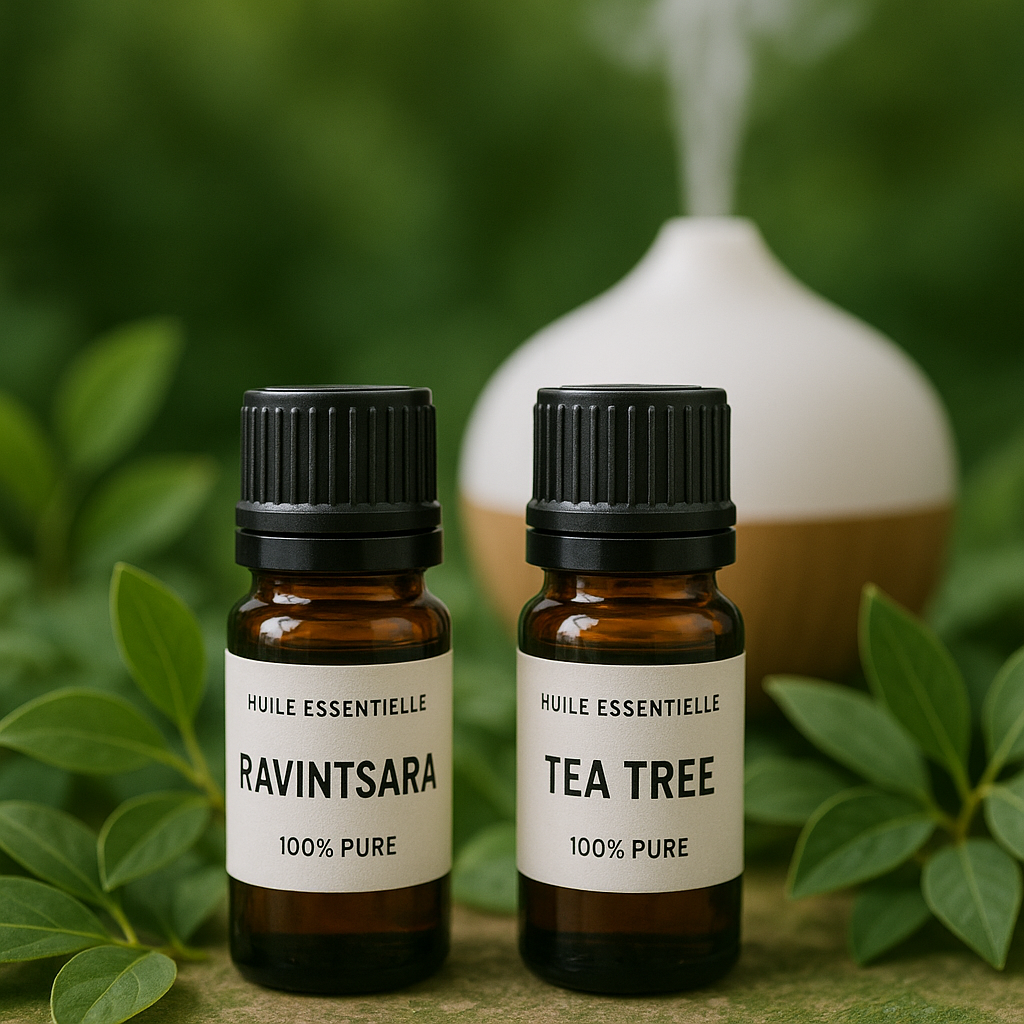
Between the lively scents of Madagascar and the fresh aroma of Australia, it is not always easy to know which one to turn to. Ravintsara and Tea Tree vie for the same place in your aromatic kit, but their profiles differ significantly. In this dossier, we explore their origins, virtues, modes of use, and recommendations to consider in order to select the essential oil best suited to your daily life.
Sommaire
1. Origins and extraction: understanding the mother plant
1.1 Ravintsara, the fragrant leaf of the red island
The term Ravintsara refers to the species Cinnamomum camphora, cultivated in tropical climates. Its dark green leaves contain a terpene-rich blend high in cineole. The whole plant is distilled, which gives it a broad spectrum of active compounds: eucalyptol, limonene, and sesquiterpenes. Some practitioners praise its mentholated freshness, ideal for a boost at the end of the day.
1.2 Tea Tree, the antimicrobial tree of Oceania
Derived from Melaleuca alternifolia, Tea Tree oil has earned its antiseptic reputation thanks to terpinen-4-ol. Selected for its high content of antibacterial molecules, it comes from crushed leaves then distilled. The iconic spicy and resinous aroma is appreciated for purifying the air or targeting weakened areas, especially in cases of minor wounds or fungal infections.
2. Properties and fields of action
2.1 Immune Support and Respiratory Tracts
In the realm of natural defenses, Ravintsara stands out for its action on the respiratory system. Inhalation of a few drops placed on a handkerchief is enough to clear congested bronchi. A protocol approved by many aromatherapists notes that it pairs perfectly with eucalyptus radiata. To further explore its effects on bronchitis or colds, consult the dedicated file on the respiratory tracts.
2.2 Antiseptic Action and Localized Care
Tea Tree reigns supreme in the treatment of skin conditions. One drop mixed with two drops of vegetable oil is enough to soothe an insect bite or treat a stubborn pimple. Studies confirm its effectiveness against moderate inflammation, sometimes rivaling more conventional solutions.
3. Usage Methods
- Atmospheric diffusion: prefer 5 to 10 minutes, once or twice a day.
- Dry inhalation: 2 drops under the pillow or on a handkerchief.
- Diluted massage: 5% in a vegetable oil (100 ml), up to two applications daily.
- Skin care: Tea Tree at 2–3% to disinfect, Ravintsara at 1–2% to soothe.
4. Safety and Contraindications
Despite their natural profile, these essential oils require caution. Pregnant women, children under six years old, and epileptic subjects should refrain or consult a professional. In case of irritation, rinse immediately and discontinue use. Allergic reactions remain rare, but a skin test on the elbow crease 24 hours before application ensures optimal tolerance.
5. Choice According to Your Profile
| Goal | Recommended Oil |
|---|---|
| Strengthen immunity | Ravintsara |
| Sooth nasal congestion | Ravintsara |
| Disinfect a small wound | Tea Tree |
| Treat a skin fungus | Tea Tree |
| Maintain ambient air | Equal parts blend |
FAQ
Can I mix Ravintsara and Tea Tree in the same diffuser?
Absolutely. A balanced dosage of 3 drops of each oil in a diffuser with about 200 ml of water creates a fresh and purifying scent, while benefiting from complementary effects on the ambient air.
How long can an essential oil be stored?
Protected from light and heat, a tightly closed bottle can be kept for about 2 to 3 years. The scent itself evolves: the longer the time passes, the less sharp the fresh note becomes.
Are there any drug interactions?
These two oils are not known for serious interactions. However, if you are undergoing anticoagulant or expectorant treatment, medical advice is still recommended.
Can children benefit from them?
After 6 years old, Ravintsara can be introduced by inhalation. Tea Tree remains reserved for those over 12 years old and always diluted to less than 1% on the skin.