
| Key Points | Details to Remember |
|---|---|
| 🌷 Definition | Wintergreen: essential oil derived from wintergreen, rich in methyl salicylate. |
| 🔥 Key Properties | Anti-inflammatory and pain-relieving to target painful areas. |
| 👴 Application Method | Diluted massage, hot/cold poultice or portable roll-on. |
| 🤤 DIY Recipes | Homemade balm, roll-on or clay-based poultice. |
| ⚠️ Recommended Dosage | 2% to 5% dilution depending on skin sensitivity. |
| ❗ Precautions | Skin test, avoid during pregnancy and for children under 6 years old. |
When the joint creaks or the morning dawns with a stiff knee, wintergreen essential oil can become a precious ally. Derived from the leaves of American wintergreen, it concentrates a molecule similar to aspirin. But using this oil is not just a matter of location and dosage: it is a balance between dilution, chosen carrier, and application rhythm. Follow the guide to integrate wintergreen into your pain relief routine.
Sommaire
Origin and Characteristics of Wintergreen Essential Oil
A Natural Extract Rich in Methyl Salicylate
Creeping wintergreen, another name for this plant found in cool environments, releases its aromas when its leaves are steam distilled. The result? A yellow-green essential oil dominated by methyl salicylate. This molecule is a chemical cousin of salicylic acid, the base of aspirin, but applied locally, it limits inflammation and soothes pain without passing through the stomach.
Quality and Labels to Watch For
Not all oils are equal: prefer a 100% pure and chemotyped wintergreen (CT “Gaulthia aromatica”), preferably from organic cultivation. A bottle labeled “organic E.O.” and bearing an ISO code guarantees the absence of additives and a consistent molecular profile. The higher the quality, the more powerful and rapid the local action will be.
Therapeutic properties targeted at the joints
Anti-inflammatory action
At the heart of wintergreen, methyl salicylate inhibits prostaglandins, those chemical mediators responsible for swelling and burning sensations. In massage, a measurable reduction in swelling is often observed within two hours following application. This is why athletes and people with osteoarthritis increasingly trust it.
Analgesic effect and localized warming
Beyond reducing inflammation, this oil provides a pleasant “warmth” sensation as soon as it comes into contact with the skin. This little warming effect promotes muscle relaxation around the joint, which enhances the pain-relieving effect. Sometimes it is referred to as a double effect: pain relief and relaxation, both targeted and diffuse.
Effective application methods
Diluted massage: the basic technique
One of the most common uses is to dilute wintergreen essential oil in a vegetable oil (sweet almond, jojoba, apricot kernel…). For an adult, count 3 to 5 drops of wintergreen for 10 ml of vegetable oil, i.e. a concentration of 3% to 5%. Gently massage the painful area for 3 to 5 minutes, in circular motions, twice a day.
| Target area | Number of drops | Volume of vegetable oil |
|---|---|---|
| Knee or ankle | 5 | 10 ml |
| Wrist or elbow | 3 | 10 ml |
| Multiple joints | 6–8 | 15 ml |
Nomadic roll-on for instant relief
For those who move around frequently, a small roll-on is ideal. Prepare it by mixing 15 ml of vegetable oil with 8 drops of wintergreen. Shake and check the ball: it should glide easily. Apply directly to the painful area as soon as the sensation of discomfort appears.

Hot or cold clay poultice
You can mix 2 drops of wintergreen with green or white clay and a little lukewarm water to obtain a paste. Heated for a few seconds in the microwave, the hot poultice deeply relaxes; applied cold, it more quickly reduces acute inflammation. Do not keep it on the skin for more than 15 minutes.
Homemade recipes: balm and ready-to-use blends
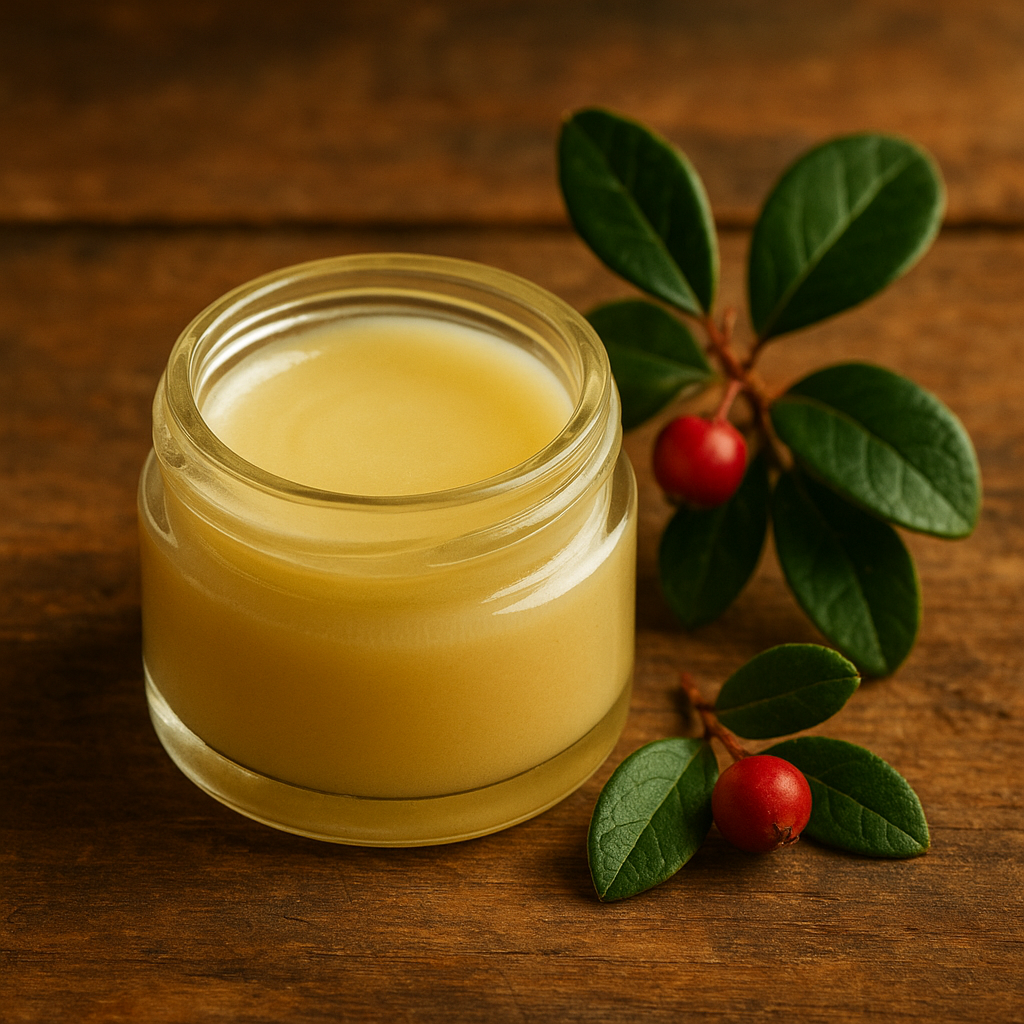
To go further, make a versatile balm. Melt 50 g of shea butter over low heat, remove from heat, add 20 drops of wintergreen, 10 drops of spike lavender, and 100 drops of calendula oil. Pour into a sterilized jar and let it solidify. This balm concentrates anti-inflammatory and healing synergy.
Comparison with other essential oils
| Essential oil | Main property | Recommended use |
|---|---|---|
| Wintergreen | Anti-inflammatory | Osteoarthritis, tendinitis |
| Lemon eucalyptus | Pain reliever | Muscle aches, cramps |
| Spike lavender | Skin repair | Bruises, contusions |
Precautions and Contraindications
« Always perform a tolerance test on the forearm 24 hours before any extensive application. »
Wintergreen essential oil remains very potent: it is not recommended for pregnant women, breastfeeding mothers, and children under 6 years old. People on anticoagulant treatment or allergic to aspirin must absolutely seek the advice of a healthcare professional.
Frequently Asked Questions
Can pure wintergreen essential oil be used?
No, it is imperative to dilute it in a vegetable oil to avoid irritation and skin sensitization.
How long before feeling an effect?
Most users report relief within an hour after the massage, with the maximum effect often occurring after two to three applications.
Can I combine it with an ongoing medical treatment?
Yes, but consultation with your doctor or pharmacist is recommended to avoid interactions, especially if you are taking oral anti-inflammatory drugs.
Is there an alternative for sensitive skin?
Prefer lemon eucalyptus or immortelle essential oil, which are lower in salicylates, and increase the dilution to 1%.
How should I store my homemade blend?
Keep it away from light and heat, in a tinted bottle, and use it within 3 months.