
| Key Points | Details to Remember |
|---|---|
| 🌱 Definition | Buckwheat seeds soaked then sprouted to release enzymes and nutrients. |
| 🍽️ Benefits | Enhanced supply of proteins, fibers, and antioxidants. |
| 🛠️ Method | Soak, rinse, let sprout 24–48 h. |
| 🧪 Nutritional Profile | Rich in magnesium, iron, B vitamins, and amino acids. |
| 🍲 Applications | Salads, smoothies, pancakes, porridges. |
| 🧊 Storage | Refrigerate and consume within 5 days. |
Sprouted buckwheat transforms these small brown seeds into true nutritional nuggets. By going through the soaking step, enzymes are activated that ease digestion and awaken a profile rich in proteins and vitamins. In an ordinary kitchen, this preparation requires neither sophisticated equipment nor endless waiting, just a bit of organization and some simple steps. Here is how to proceed at home and what nutritional treasure you are about to discover.
Sommaire
How to sprout buckwheat at home?
1. Choose quality seeds
Start with hulled and organic buckwheat, guaranteeing the absence of pesticides. The seeds should appear firm, without dust or traces of mold. Favor those intended for sprouting rather than crushing or flour, which adds a little bonus of vitality.
2. Soaking materials and settings
In a large jar or sprouter, pour about 100 g of buckwheat and cover with cold water to a height one and a half times the seeds. Once submerged, the seeds swell and start their internal process. Let rest for 4 hours at room temperature, neither too warm to avoid uncontrolled fermentation nor too cool, which would delay sprouting.
3. Rinsing and draining
After soaking, pour out the water by tilting the jar and rinse under a gentle stream. Drain by tilting again or using a fine sieve. Repeat the operation twice a day, morning and evening, to keep a moist but not soaked environment. The seeds whiten, swell, and the seed releases a small white radicle.
4. Sprouting period
After 24 hours, the small root is generally visible. At 36 hours, the network of filaments is more visible, a sign of well-advanced sprouting. For a slightly crunchy taste, stop as soon as the radicle reaches 2–3 mm. Some let it sprout up to 48 hours for maximal nutritional blast and a softer texture.
5. Storage and Preservation
When the sprouts are ready, rinse one last time then dry the excess water with a clean cloth or paper towel. Store in an airtight container in the refrigerator: it stays fresh and active for 4 to 5 days. You can also portion and freeze to extend availability, while knowing that some nutrients stabilize less well under freezing.
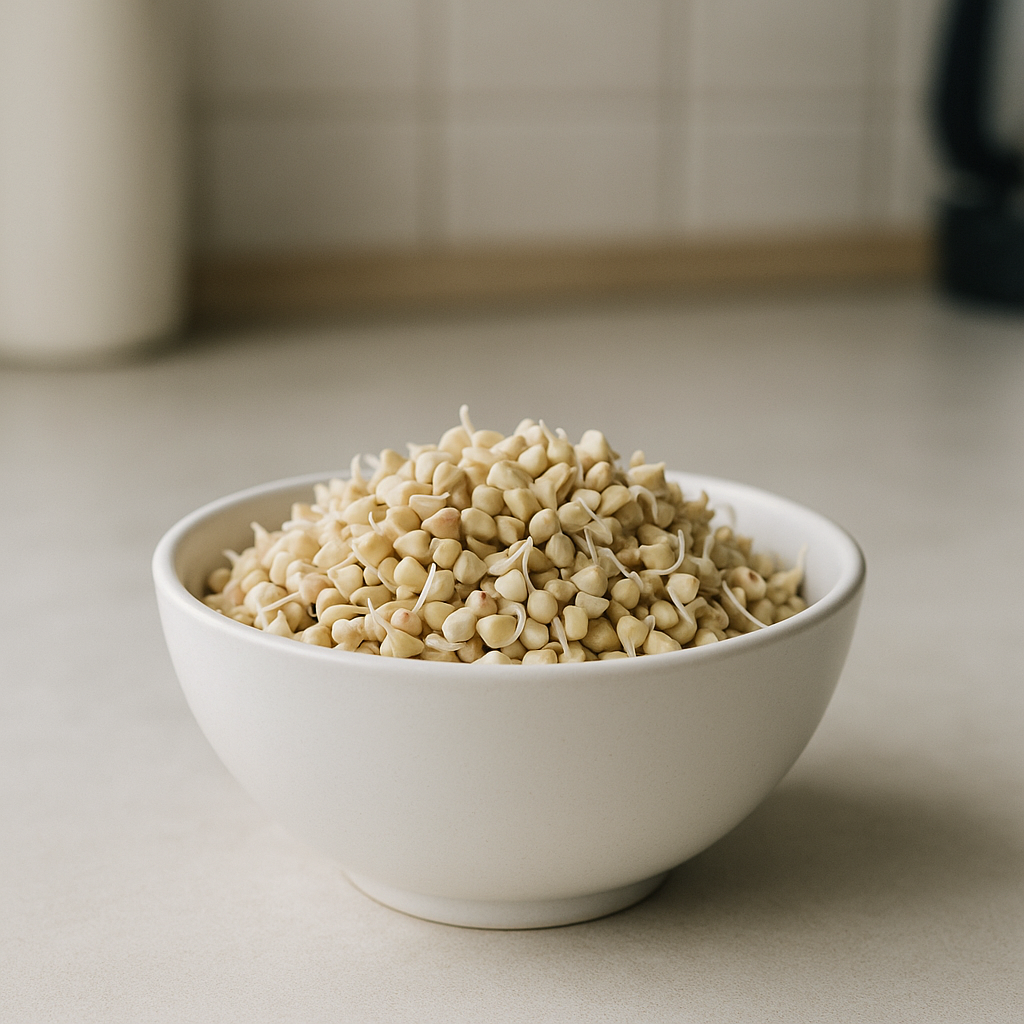
Nutritional Profile of Sprouted Buckwheat
The germination step profoundly modifies the chemical composition of buckwheat. Activated enzymes break down some anti-nutrients, facilitating mineral absorption. Furthermore, there is a slight increase in vitamins B and C, which are rare in dry seeds.
Proteins and Amino Acids
A 100 g portion of sprouted buckwheat provides about 12 g of complete proteins, including all essential amino acids. This profile often rivals certain legumes, while remaining gluten-free, which is particularly appealing to sensitive or intolerant individuals.
Fibers and Carbohydrates
With 8 to 10 g of fiber, sprouted buckwheat helps regulate bowel movements and stabilize blood sugar. Carbohydrates are divided between more digestible starch and simple sugars, resulting from enzymatic breakdown, for a quicker energy supply.
Minerals and Vitamins
- Magnesium (about 80 mg): essential for muscle and nerve tone.
- Iron (2 mg): more easily absorbed than in the dry state.
- Vitamin B6 and B2: promote metabolism and vitality.
- Vitamin C (up to 5 mg): increases iron absorption.
Culinary Uses
Sprouted buckwheat adds a fresh and crunchy note while enriching the dish. It can be incorporated without complication:
- In a composed salad, combined with colorful vegetables and a lemon vinaigrette.
- Blended into a green smoothie for a vitamin-packed breakfast.
- Incorporated into a gluten-free crepe or pancake batter.
- Sprinkled on hot porridge to add textural contrast.
- Mixed into hummus or a plant-based spread.
Tips and Precautions
- Ensure the hygiene of the sprouter and the cloth used: mold appears quickly if the environment remains continuously damp.
- Avoid excess moisture by allowing sufficient draining.
- Taste regularly: a bitter or unpleasant taste signals the start of excessive fermentation.
- Do not exceed 48 hours of germination to limit the risk of bacterial proliferation.
- Adjust the quantity to the number of guests: sprouts take up space and do not keep indefinitely.
FAQ
Can roasted buckwheat be used for germination?
No, roasted buckwheat has lost its ability to sprout because the heat destroys the enzymes necessary for this process.
How to reduce the bitter taste of some sprouts?
More frequent rinsing and stopping germination before 48 hours limit bitterness. You can also briefly soak the sprouts in lemon water.
Is sprouted buckwheat suitable for vegan diets?
Absolutely. Its high content of complete proteins and minerals makes it an asset for diets without animal products.