
| Key points | Details to remember |
|---|---|
| 🔍 Definition | Infection of a hair follicle in the intergluteal fold |
| ⚠️ Symptoms | Pain, swelling, sometimes purulent discharge |
| 🔪 Surgery | Excision of the cyst: scar and follow-up |
| 🌿 Natural remedies | Warm compresses, essential oils, herbal medicine |
| 📈 Effectiveness | Lower recurrences with surgery but longer recovery |
| 🛡️ Prevention | Hygiene and hair removal to reduce risk |
The pilonidal cyst can quickly become a real nightmare: sharp pain, daily discomfort, infection risks… Are you hesitating between surgery and a gentler, natural approach? In this article, we break down each option, compare the results, and I share tips to help you make the best decision based on your situation.
Sommaire
What is a pilonidal cyst?
A pilonidal cyst is an abnormal cavity that generally forms in the intergluteal cleft. It contains hairs, skin debris, and sometimes pus. The area is sensitive, prone to friction and maceration, which promotes inflammation. Essentially, it’s like a small nest forming under your skin, causing redness and swelling.
It is often called a “pilonidal” cyst because the Latin term pilus means “hair” and nidus means “nest.” It affects mostly young men, especially those with dense body hair who spend a lot of time sitting. Risk factors include overweight, poor local hygiene, or wearing tight clothing.
Symptoms and diagnosis
The warning signs are often a small painful bump that can develop into a purulent collection. If an abscess forms, the pain becomes throbbing, and discharge of a yellowish, sometimes bloody fluid is common. Diagnosis is based on clinical examination and, if necessary, an ultrasound to assess the depth of the fistulous tract.
Surgical treatments: strengths and limitations
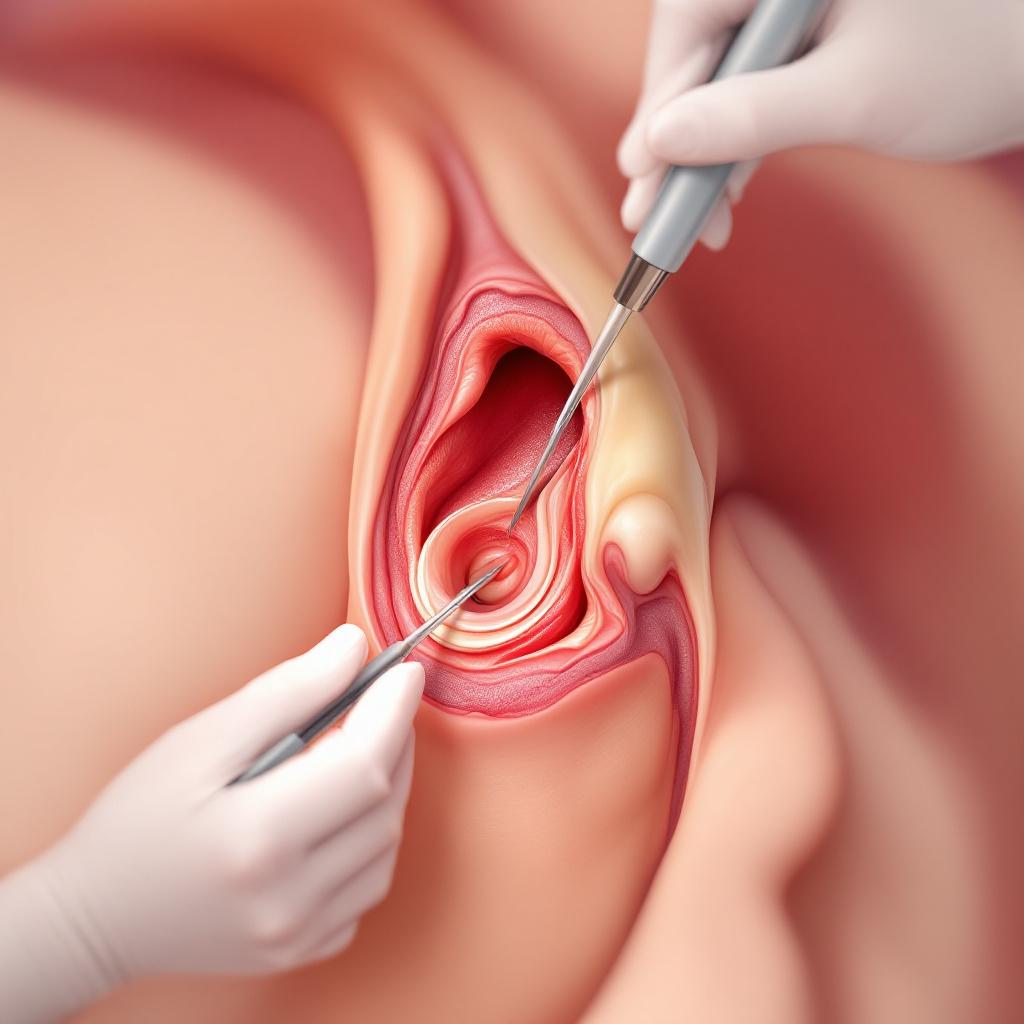
Surgery remains the standard for recurrent or infected pilonidal cysts. Several techniques exist, from simple drainage to wide excision. The goal: remove the infected tissue and promote healing without residual pockets.
Drainage and localized excision
This method is suitable for an acute abscess. The surgeon incises the area, drains the pus, then places a drain. Advantage: immediate pain relief. Disadvantage: high risk of recurrence if the fistulous tracts are not completely removed.
Excision in One Stage or Two Stages
For a chronic cyst, complete excision is often preferred. In one stage, the entire lesion is removed and the wound is closed. Healing is faster but there is a risk of tension and dehiscence. In two stages, the wound is left open, healing by granulation is monitored, then it is closed. This takes longer but is safer in terms of recurrence.
Advantages and Disadvantages
- Advantages: high long-term success rate, significant reduction in recurrence.
- Disadvantages: postoperative pain, regular wound care, several weeks off work.
Natural Remedies: Effectiveness and Limits
If the idea of scalpels terrifies you, know that there are natural approaches to relieve symptoms and sometimes reduce the size of the cyst. These methods aim to disinfect locally, promote gentle drainage, and soothe pain.
Warm Compresses and Strict Hygiene
Applying warm compresses several times a day helps liquefy the cyst’s contents, facilitating spontaneous drainage. Also consider a mild antiseptic soap and complete drying after each shower. It is the same principle as treating a spider bite: heat + cleanliness = reduction of swelling and cleaning.
Phytotherapy and Essential Oils
- Tea tree essential oil: recognized for its antibacterial properties.
- Green clay: mask to apply as a poultice to absorb excess fluid.
- Turmeric: powerful anti-inflammatory, to be combined with honey for a soothing paste.

Comparison and Selection Criteria
So, surgery or natural remedies? The choice essentially depends on:
- Severity: a purulent abscess will require surgical drainage.
- Chronicity: a recurrent cyst poorly tolerated by external treatments.
- Your tolerance to convalescence and postoperative care.
In practice, the two are sometimes combined: a minor procedure to evacuate the bulk of the infection, then courses of natural care to accelerate healing and limit the risk of recurrence. To relieve itching or irritation around the wound, one can draw inspiration from techniques taken from the guide on itchy scalp: gentle lotions, soothing compresses, and of course, no rubbing.
FAQ – Frequently Asked Questions
- What is the average healing time after surgery?
- Generally, it takes 4 to 6 weeks for complete healing, with daily wound care.
- Are natural remedies sufficient in case of acute infection?
- In case of acute abscess, surgery (drainage) is essential before complementing with natural remedies.
- Can a pilonidal cyst be prevented?
- Yes: rigorous hygiene, light hair removal, avoiding tight clothing, and staying active to limit prolonged pressure on the area.