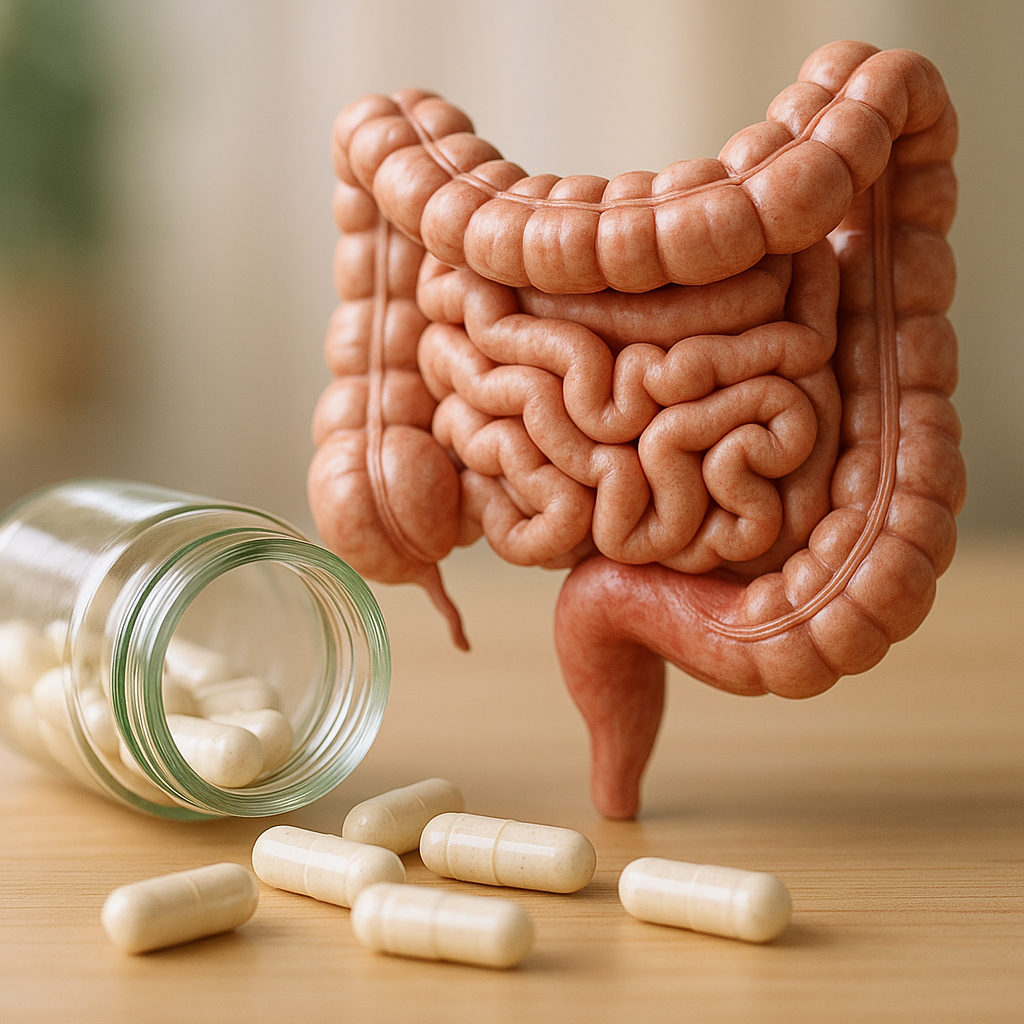
| Key Points | Details to Remember |
|---|---|
| 😀 Definition of Probiotics | Living microorganisms promoting intestinal health |
| 🦠 Mechanisms of Action | Competition and modulation of the microbiota to limit pathogens |
| 💊 Main Indications | Prevention of digestive disorders and immune support |
| 💥 Impact in Case of Diarrhea | Adaptation of the strain and dose according to symptoms |
| 🔄 Practical Recommendations | Stopping time or adjustment depending on individual tolerance |
The popularity of probiotics continues to grow, praised for their ability to support the balance of the microbiota and reduce various forms of digestive disorders. Yet, when diarrhea enters the picture, hesitation arises: should this beneficial supplementation be stopped or should one persevere at all costs? In reality, this question deserves more than a simple yes or no: it calls for examining the nature of the disorder, the strain used, as well as your tolerance profile.
Sommaire
Understanding Probiotics and Their Intestinal Role
What is a Probiotic?
A probiotic is defined by the WHO as a living microorganism which, when administered in adequate amounts, confers a health benefit to the host. Unlike an antibiotic that eliminates bacteria, the probiotic aims to strengthen the local microbial community. It mainly includes genera such as Lactobacillus, Bifidobacterium, or Saccharomyces boulardii, each specialized in a function: fiber degradation, lactic acid production, or immune stimulation. Although often referred to as “capsules,” some fermented foods (yogurts, kefir) offer a natural mini-course.
How They Interact with the Microflora
Rather than invading the intestine, these allies take on a role of mediators. On one hand, they create a less welcoming environment for pathogens – through acidification or competition for nutrients – and on the other, they encourage epithelial cells to strengthen their barriers. Some probiotics even secrete butyrate, a short-chain fatty acid that nourishes enterocytes, the cells lining the intestine. In other words, they ensure the cohesion of your intestinal wall.
Diarrhea and Probiotics: Nuances and Contradictions
When diarrhea occurs at the beginning of treatment
It is not uncommon to experience an acceleration of transit during the first days of intake. This phenomenon is explained by a sudden reorganization of the microbiota: these new strains establish themselves, sometimes causing hyperactivity of the colon. Generally, these discomforts are temporary and indicate a biological response. However, if liquid stools persist for more than 48 hours, it is necessary to consider adjusting the formula or dosage, or even taking a break.
Probiotics and chronic digestive disorders
When diarrhea is long-lasting, related to irritable bowel syndrome or colitis, the approach changes. Here, targeted strains will be chosen, such as Saccharomyces boulardii or Bifidobacterium infantis, whose effectiveness is documented in reducing symptoms. The protocol often includes a gradual increase in doses and close monitoring. Abruptly stopping a treatment that provides relief can cause a rebound of symptoms, hence the importance of medical supervision.
Should probiotics be stopped during diarrhea?
Signs that justify a pause
The decision depends on the intensity of symptoms and their progression. If you notice:
- A marked worsening of abdominal pain,
- Frequent stools exceeding five per day,
- Signs of dehydration (dry mouth, intense fatigue),
it is prudent to temporarily suspend and consult a professional. On the other hand, a slight acceleration of transit without significant pain can be perceived as a simple adjustment of your flora.
Alternatives and dose adjustments
Instead of a complete stop, the dose can be reduced: going from two capsules to one, or taking the dose in two divided intakes. Some will prefer to try another vehicle (powder to dilute in lukewarm water, fermented food) to facilitate integration. Like adjusting a thermostat, it is about fine-tuning until you find your comfort zone.
Practical advice for safe intake
- Favor products guaranteeing storage at low temperature to preserve the viability of the strains.
- Alternate several strains rather than limiting yourself to a single probiotic; multispecific formulas stimulate different mechanisms.
- Combine the treatment with prebiotics (soluble fibers, inulin) to nourish these bacteria and maximize their implantation.
- Hydrate abundantly: water helps the diffusion of probiotics throughout the digestive tract.
- Note your symptoms in a journal: this helps to finely assess tolerance and adjust the strategy.