
| Key Points | Details to Remember |
|---|---|
| 🍄 Definition | Shiitake broth infused and rich in polysaccharides |
| 🛡️ Benefits | Stimulation of natural defenses and antioxidant action |
| 🥕 Ingredients | Fresh shiitake, herbs, water, and salt |
| 👩🍳 Preparation | Gentle and long infusion to extract nutrients |
| 💡 Variations | Addition of ginger, miso, or other mushrooms |
| ❄️ Storage | Refrigeration for 3–4 days or freezing in portions |
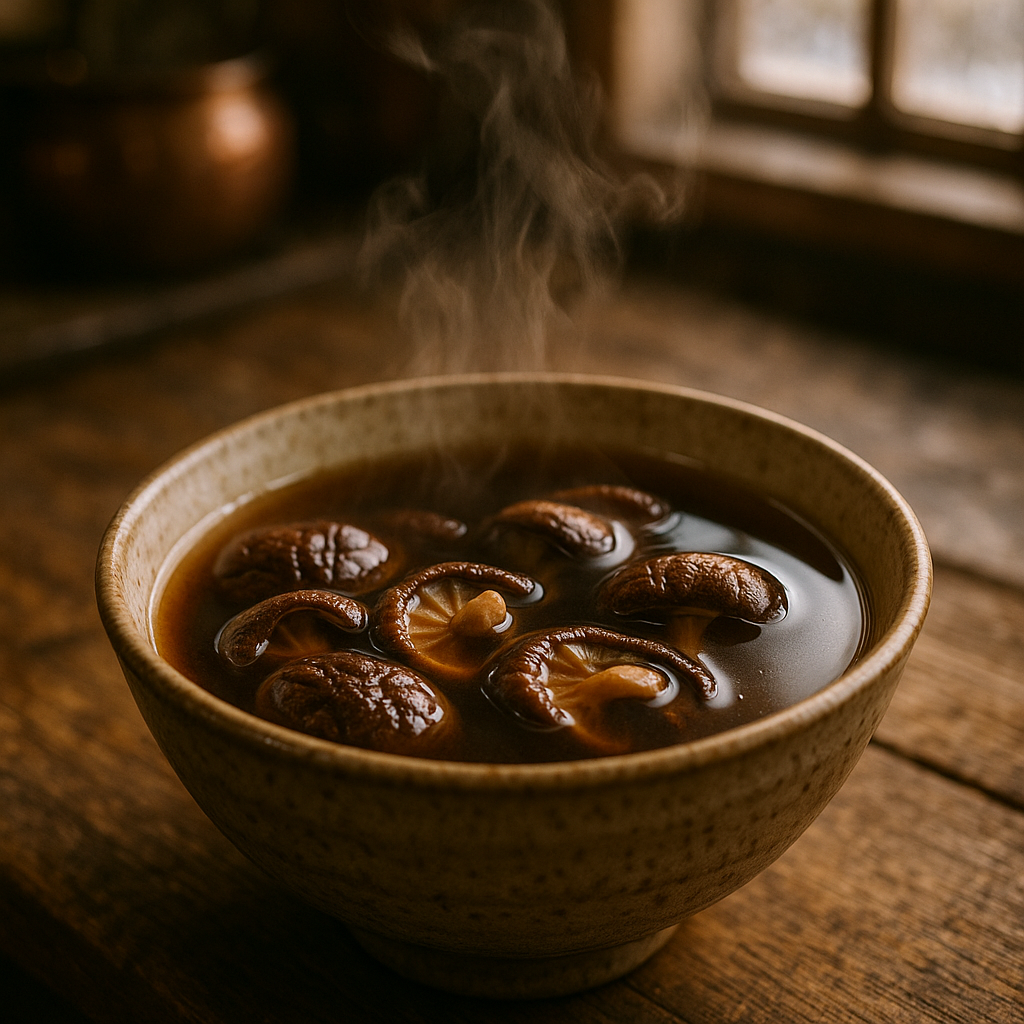
When the winter cold sets in, we all look for a drink that is both comforting and beneficial. Shiitake broth perfectly meets this desire: easy to make, it concentrates compounds known to support immunity. Dive into this recipe with Asian accents, combining mushrooms and herbs to create a warm elixir, ideal by the fireside or as a base for your daily soups.
Sommaire
Why choose shiitake broth in winter?
Shiitake is not just a tasty mushroom: its polysaccharide fractions, notably lentinan, have shown positive effects on immune system modulation. Like a plant infusion, a long-simmered broth will release these molecules into the water, allowing your body to absorb them easily. Designed as a soothing ritual, this broth advantageously replaces sugary drinks and warms without burdening the stomach.
Unlike concentrated supplements, this beverage offers a broad spectrum of micronutrients – B vitamins, trace elements, and soluble fibers – that work in synergy. If you have already tried recipes based on adaptogenic mushrooms, you will recognize this smoky and slightly umami taste that pleases the palate while providing a discreet but tangible immune boost.
Essential ingredients
The role of shiitake
Among medicinal mushrooms, shiitake holds a special place. Its meaty texture and subtly woody aroma make it the star of this broth. For maximum effectiveness, quality culinary dried shiitakes are preferred: their drying concentrates the active compounds, and rehydration in warm water slowly releases the polysaccharides. You can also mix fresh and dried mushrooms for a finely balanced aromatic and nutritional profile.
The Aromatic Allies
Beyond shiitake, a few aromatics transform a basic broth into a rich and fragrant elixir:
- Onion sliced to bring sweetness and depth.
- Ginger fresh or in slices, known for its anti-inflammatory and digestive properties.
- Garlic cut large so as not to dominate, but to enhance the antimicrobial effect.
- Seaweed kombu or wakame, optional, for mineral content and an iodine flavor.
- Black pepper freshly ground, to activate the bioavailability of active compounds.
Preparation Steps
The success of this broth depends on two parameters: the quality of the ingredients and the infusion time. Here is a step-by-step guide to ensure an aromatic result full of benefits.
| Step | Duration | Tip |
|---|---|---|
| Rehydration | 20 min | Use lukewarm water to preserve polysaccharides |
| First boil | 5 min | Discard the water and rinse the mushrooms to remove impurities |
| Slow cooking | 45–60 min | Lower the heat, maintain a gentle simmer |
| Straining | 5 min | Filter with a fine sieve or clean cloth |
| Seasoning | To taste | Add salt, pepper, miso at the end of cooking |
Long vs. Quick Infusion
One might think that a vigorous boil speeds up the release of compounds, but in reality, slow cooking at 85 °C releases more lentinan without degrading the structure. The broth then emits more delicate aromas and a golden hue. Keep the heat low: you will avoid bitter tastes and protect heat-sensitive vitamins.
Variations and Tips
If the basic version appeals to you, nothing prevents exploring a few variations:
- White miso: add 1 tablespoon at the end of cooking for a velvety texture.
- Spices: a cinnamon stick or a star anise for a slightly sweet touch.
- Fresh herbs: coriander, chives or flat-leaf parsley for freshness.
- Adaptogen combination: mix shiitake and other adaptogenic mushrooms for a more complete broth.
Experimentation tip: taste your broth plain then try it as a base for miso soup or liquid risotto.
To store this broth, let it cool then keep it 3–4 days in the refrigerator in an airtight container. For freezing, consider portioning into ice cube trays or small containers for quick use and no waste.
FAQ
What type of shiitake should be used for the broth?
Prefer dried culinary-grade shiitakes, whose polysaccharide content is more concentrated. Fresh mushrooms provide a more vegetal taste but often require a mix of both for a balanced result.
Can the broth be frozen?
Absolutely. Divide it into ice cube trays or small jars, label and freeze for up to 3 months. When needed, simply reheat gently without bringing to a strong boil.
How long does the broth stay fresh in the refrigerator?
Up to 4 days. Beyond that, slight fermentations can alter the taste and reduce nutritional quality.
Is the broth suitable for vegetarians/vegans?
Yes, if all the ingredients are plant-based (miso, shiitake, herbs). Just make sure to use a miso without added fish broth and to avoid animal salt.
What is the best way to enjoy this broth?
As a hot drink on an empty stomach, to best benefit from the active ingredients, or as a soup base in which you can dip vegetables, noodles, or tofu for a complete and comforting meal.