| 🔍 Rigorous Identification | Systematically verify each specimen with a specialized guide |
| ⚠️ Frequent Confusions | Edible mushrooms often have almost identical toxic look-alikes |
| 🌳 Risk Areas | Avoid roadsides, industrial sites, and treated fields |
| 🍳 Necessary Cooking | Never eat raw certain species even if edible |
| 🧪 Edibility Test | Traditional methods are dangerously ineffective |
| 🚑 Poisoning Emergency | Call 911 immediately if symptoms appear |
The damp smell of the undergrowth, the thrill of discovery… Wild mushroom picking captivates thousands of enthusiasts every autumn. Yet behind this seemingly peaceful activity lies a real danger: in France, poison control centers record about 1,000 mushroom-related poisonings annually, some fatal. This article untangles fact from fiction to turn your passion into a safe practice without sacrificing the joy of the harvest.
Sommaire
The pitfalls of identification: why the naked eye is not enough
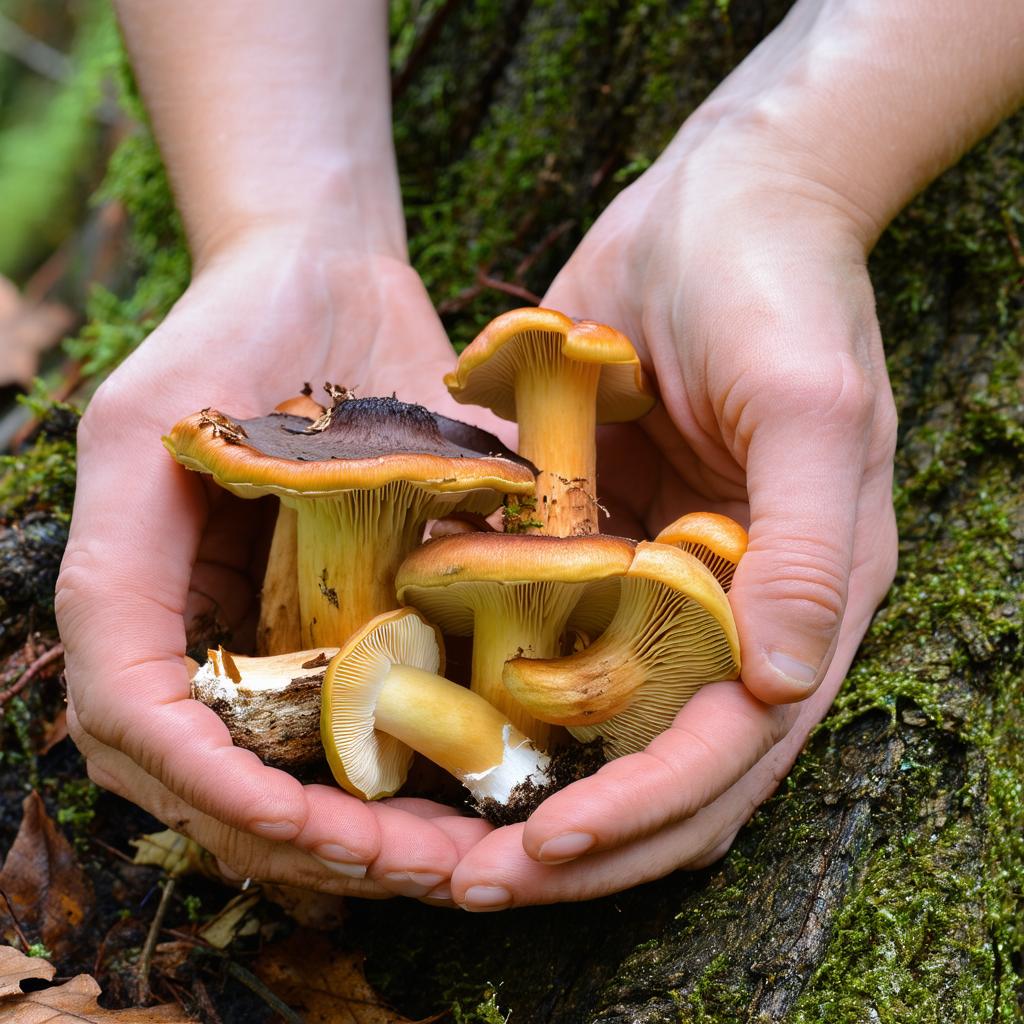
Believing you recognize a mushroom by its general appearance is the most common fatal mistake. Take the deceptive resemblance between the deadly Death Cap (Amanita phalloides) and the harmless Blusher (Volvaire gloiotrigine): same greenish hues, same fragile ring. Only a careful observation of the gills and volva allows distinguishing them. Simplified photo guides worsen the problem – a young or aged specimen can radically change appearance. A picker from Haute-Savoie had a bitter experience in 2022 after confusing the toxic Wrinkled Paxillus with a prized Boletus, requiring an emergency liver transplant.
Deadly confusions to absolutely know
Some toxic/edible pairs even defy the trained eye. The Honey Fungus (Armillaria mellea), delicious when cooked, shares its habitat with the deadly Funeral Bell (Galerina marginata). Their difference? The honey fungus has dark scales on its cap and a membranous ring, while its toxic twin shows uniform colors. Another formidable trap: edible white Clitocybes versus the Green Amanitas responsible for 90% of mushroom deaths in Europe. The solution? Never rely on a single characteristic.
Modern tools: apps and limits
Photo identification apps attract novices, but their reliability ranges from 60% to 85% according to a study by the French Mycological Society. Their main flaw? They struggle to recognize twin species and ignore the growth environment – a crucial parameter. For reliable identification, combine three approaches:
- A recent paper guide with dichotomous keys
- Consultation with a pharmacist mycologist (free service)
- Taking photos from all angles before picking
Responsible picking: golden rules in the field
Your basket overflows with beautiful finds? Beware: the very location of the harvest influences toxicity. Mushrooms are pollutant sponges – an ANSES study reveals that 70% of specimens collected near roads contain carcinogenic hydrocarbons. As for heavy metals, their concentration can exceed standards by 100 times in industrial zones.
Life-saving equipment
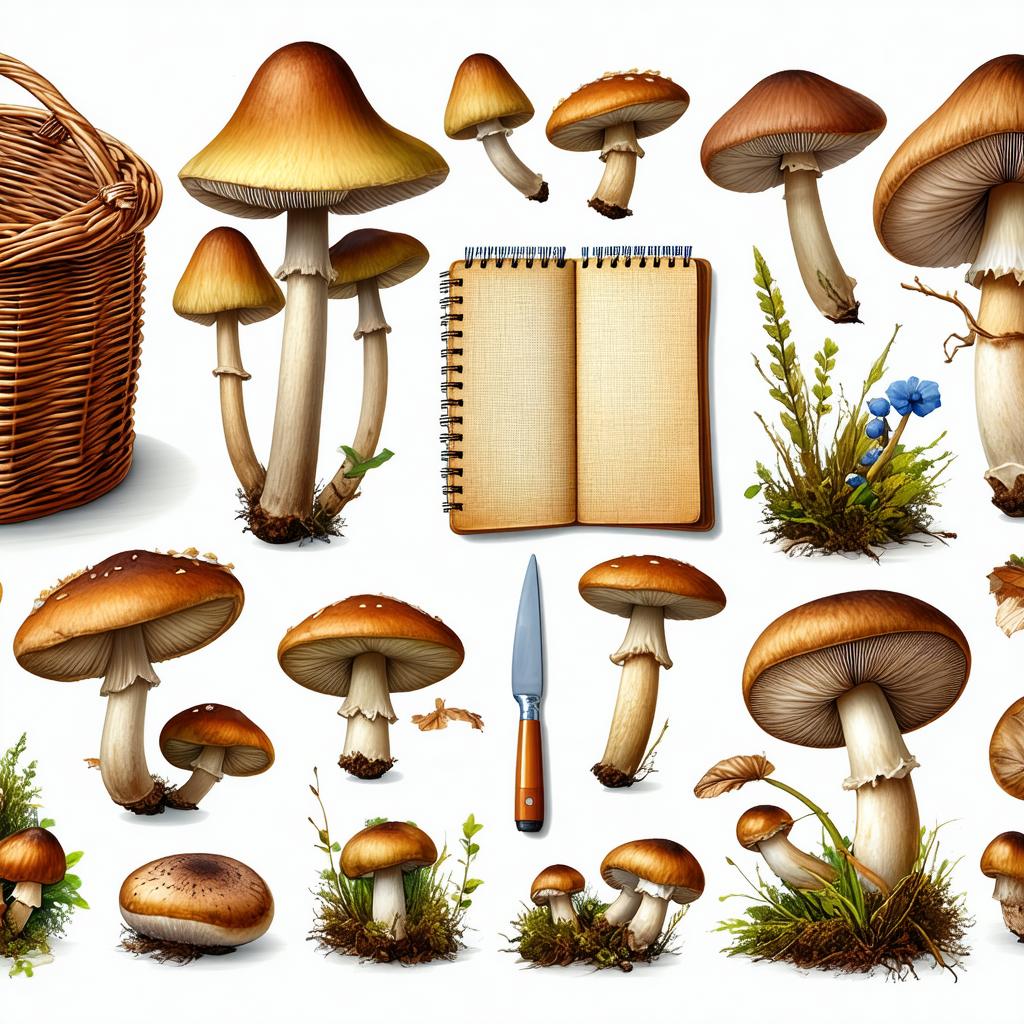
Forget plastic bags! Professional equipment costs less than €30 but significantly reduces risks:
- Wicker baskets: allow spore dispersal and prevent fermentation
- Curved knife: to dig out the entire base (the volva often betrays amanitas)
- Waterproof notebook: note the exact habitat (tree type, soil, altitude)
A crucial detail: always collect specimens at different maturity stages. Identification becomes impossible on mushrooms that are too young or degraded – like the picker from Vaucluse who discovered too late that his “chanterelles” were actually Olive Clitocybes after harvesting only young shoots.
From kitchen to plate: the last safeguards
Your mushrooms are identified and fresh? Danger persists. Raw morels contain hemolysin (destroyed at 70°C), while the Shaggy Ink Cap becomes toxic with alcohol. The golden rule: cook wild harvests for at least 20 minutes on high heat. Always keep a raw sample in the fridge for 48 hours – in case of poisoning, it will allow toxicologists to identify the culprit.
Quantities and sensitive groups
Even edible, wild mushrooms remain a complex food. Children under 10 and elderly people should abstain: their liver poorly metabolizes certain toxins. For adults, limit portions to 150g per meal. Some species like the Pale Bolete cause digestive disorders if overconsumed – a cumulative effect often underestimated. If exploring varieties with particular properties, verify their safety with specialized sources.
The myth of “edibility tests”
“Blackened silver or silver spoon tests are dangerous old wives’ tales” – Prof. Jacques Delabre, toxicologist
No traditional method detects fungal toxins. The Death Cap does not blacken garlic, contrary to legend. As for taste: deadly amatoxins are… tasteless. Only scientific identification offers a guarantee.
Poisoning: reflexes that change everything
Nausea around 4 a.m.? Do not minimize. Early symptoms (vomiting, diarrhea) resemble gastroenteritis, but some toxins silently attack the liver. The Paris Poison Control Center warns of the “deceptive phase”: after 24 hours of apparent remission, the condition suddenly worsens.
Immediate actions to take
If symptoms appear within 12 hours of consumption:
- Call 911 or a poison control center (numbers in appendix)
- Keep leftover food and raw samples
- Note the exact time of consumption and first symptoms
Contrary to popular belief, do not induce vomiting. Emergency services now have effective antidotes like silibinin against amatoxins – provided intervention occurs within 24 hours.
Towards enlightened picking
Caution does not forbid pleasure. Joining a local mycological society reduces risks by 80% according to the French Mycological Federation. Their guided outings teach the professional’s clinical eye: observing the spore print, analyzing touch reaction, recognizing host trees. This intimate knowledge transforms picking into a dialogue with the ecosystem – where each specimen tells a story far beyond its edibility.
FAQ: Answers to crucial questions
Can you die from touching a toxic mushroom?
No, the danger comes exclusively from ingestion. Handling simply requires washing hands.
Are the mushrooms sold commercially safe?
Yes, the species sold commercially undergo strict controls. Only be cautious when buying from private individuals.
Should all white mushrooms be avoided?
No, but this is the group where confusions are the most dangerous. Beginners, refrain!
Does freezing destroy toxins?
Absolutely not. It can even concentrate certain dangerous compounds.