| Key Points | Details to Remember |
|---|---|
| 🍄 Millenary Origin | Used in traditional medicine for 2000+ years |
| 🛡️ Immune Action | Stimulate natural defenses through beta-glucans |
| 🧠 Adaptogenic Effects | Reduce oxidative stress and improve resilience |
| 💊 Forms of Use | Concentrated extracts more effective than raw powder |
| ⚠️ Precautions | Medical consultation mandatory when under treatment |
For millennia, Asian traditional medicines have harnessed a mycological treasure with extraordinary properties. Far from mere culinary ingredients, these mushrooms are true therapeutic allies whose virtues are now validated by modern research. This article reveals the secrets of the 10 most promising species, their physiological mode of action, and how to wisely integrate them into your health routine.
Sommaire
The Therapeutic Powers of Asian Mushrooms
Asian mycological pharmacopoeia is based on complex biochemical mechanisms. Polysaccharides, notably beta-glucans, activate macrophages and NK cells – immune sentinels patrolling our body. A study in the Journal of Ethnopharmacology demonstrated that certain extracts increase cytotoxic activity against defective cells by 40%. Unlike synthetic drugs, this holistic approach works in synergy with our biological systems without overwhelming them.
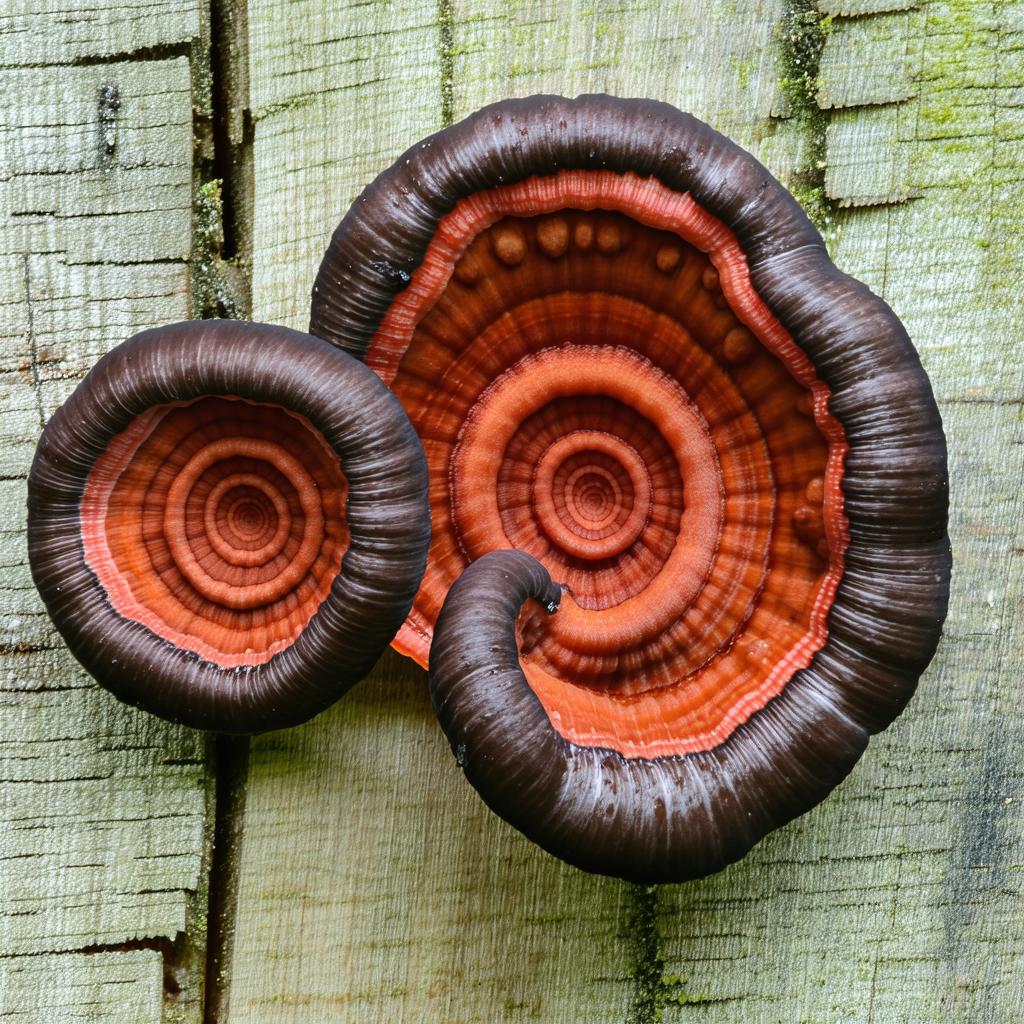
1. Reishi (Ganoderma lucidum): the Mushroom of Immortality
Called Lingzhi in China, this rare mushroom grows on plum tree trunks. Its bitter triterpenes (ganoderic acids) modulate inflammation by inhibiting the NF-kB pathway, as confirmed by a 2023 meta-analysis. Traditional medicine practitioners have used it for centuries against asthma and seasonal allergies. A peculiarity: its commercial black powder form results from a fermentation process that multiplies its active ingredient concentration by 8.
2. Shiitake (Lentinula edodes): the Cardiovascular Regulator
Behind its culinary ingredient status lies a powerful ally against cholesterol. The eritadenine it contains blocks lipid accumulation in arteries. Japanese researchers observed an average 12% decrease in LDL after 8 weeks of regular consumption. Its lentinan also stimulates interferon gamma production, strengthening our shield against environmental pathogens.
3. Maitake (Grifola frondosa): the Metabolic Balancer
Nicknamed “hen of the woods” for its texture, this clustered mushroom acts on two major fronts. First, it improves insulin sensitivity by activating AMPK receptors – a promising lead for type 2 diabetics. At the same time, its D-fraction polysaccharides are studied in integrative oncology for their ability to support immune functions during conventional treatments.
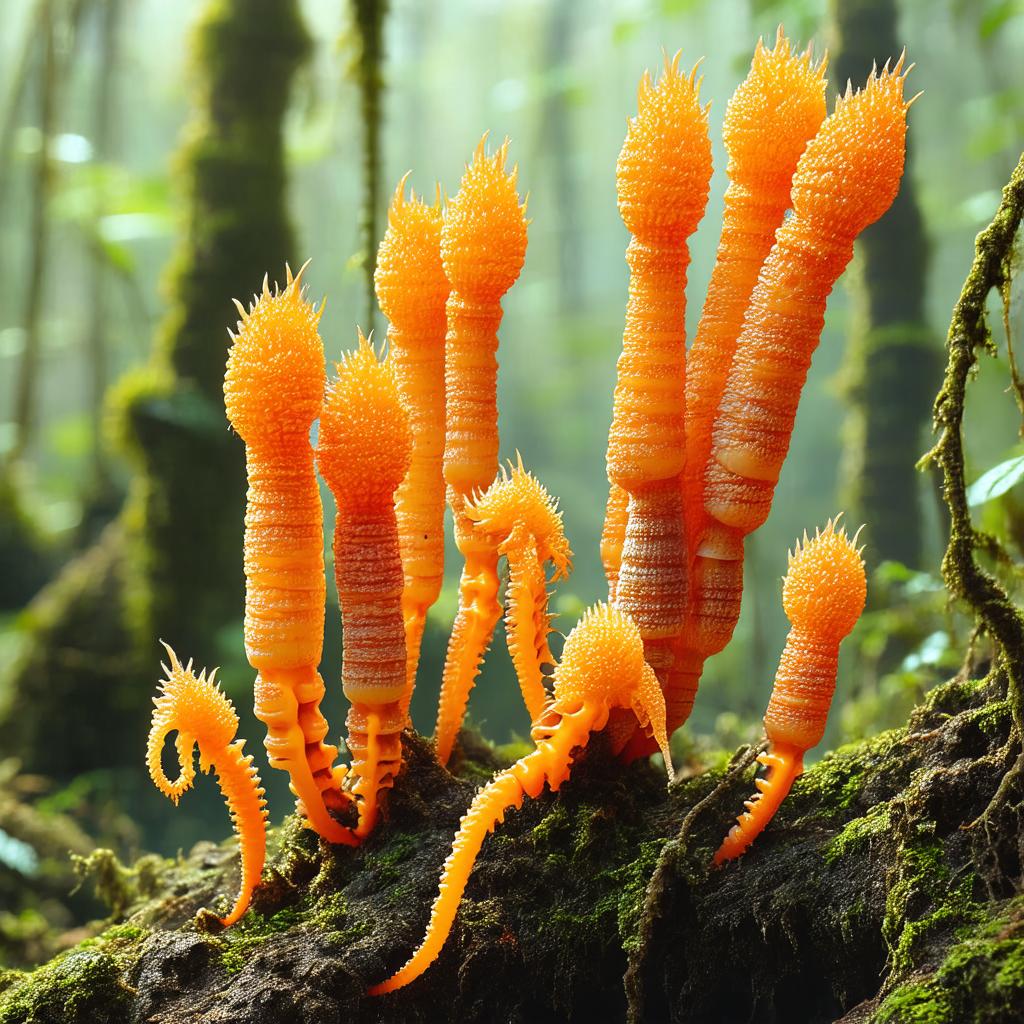
4. Cordyceps (Cordyceps sinensis): the Mitochondrial Booster
This caterpillar parasite from the Tibetan plateaus revolutionizes fatigue management. Its cordycepin increases cellular ATP production by 28% according to in vitro studies. Professional athletes have used it since the controversial records of Chinese athletes in 1993. Today, cultivated strains like CS-4 offer an ecological alternative to threatened wild specimens. Its effect on endurance places it among the most studied adaptogenic mushrooms.
5. Chaga (Inonotus obliquus): the Boreal Antioxidant
This black conk parasitizing birches contains record levels of superoxide dismutase (SOD). A single spoonful of its extract equals 30 kg of carrots in antioxidant capacity! Siberian peoples use it in decoction against gastric disorders. However, beware of its oxalate content, which is not recommended for people suffering from kidney stones.
6. Hericium (Hericium erinaceus): the Neuroprotector
With its white filaments resembling a lion’s mane, this mushroom produces erinacines that stimulate NGF (Nerve Growth Factor) synthesis. A 2020 randomized study showed significant cognitive function improvement in fifty-year-olds after 16 weeks of supplementation. Star chefs also use it for its seafood-like texture when fresh.
7. Polyporus (Polyporus umbellatus): the Targeted Diuretic
Little known in the West, this rosette-shaped mushroom is the secret of Asian therapists against water retention. Its ergosterol regulates the sodium/potassium balance without causing mineral loss. A natural alternative to synthetic diuretics, particularly useful for decongesting lower limbs during long-haul flights.
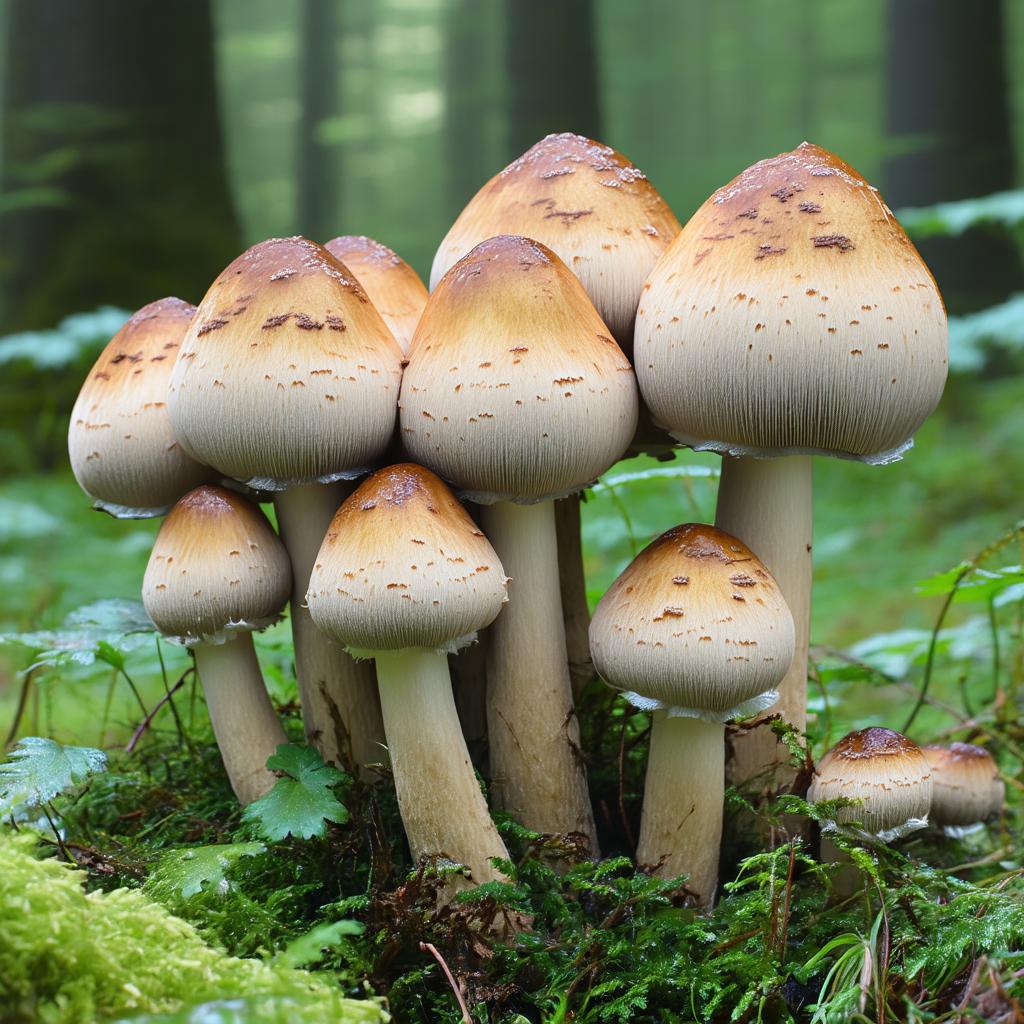
8. Agaricus blazei: the Immune Modulator
Discovered in Brazil but popularized by Japan, this mushroom contains complex-chain (1,6) beta-glucans. Its peculiarity? It modulates rather than abruptly stimulates the immune system, making it valuable in autoimmune diseases. Japanese oncologists frequently prescribe it alongside chemotherapy to mitigate side effects.
9. Phellinus linteus: the Liver Protector
Called Song Gen in Korea, this woody polypore produces hispidins with demonstrated hepatoprotective effects. Tests on liver cells exposed to tetrachloride showed a 67% reduction in inflammation markers. Herbalists often combine it with milk thistle to regenerate livers tired by excesses.
10. Tremella (Tremella fuciformis): the Skin Moisturizer
Nicknamed “youth mushroom,” this white jelly contains hygroscopic polysaccharides capable of holding 500 times their weight in water. Korean cosmetics incorporate it into anti-aging serums for its effect on hyaluronic acid synthesis. An in vivo study revealed a 22% improvement in skin elasticity after topical application for 8 weeks.
Instructions for Use and Essential Precautions
The effectiveness of these mushrooms depends on several crucial parameters:
- Hydro-alcoholic extraction necessary to release liposoluble triterpenes
- Double extraction (water + alcohol) to cover all active ingredients
- Prefer products standardized in polysaccharides (minimum 30%)
- 3-month cycles interrupted by breaks to avoid tolerance
“Mycotherapy works deeply but requires patience: the first effects generally appear after 6 weeks of regular intake,” emphasizes Dr. Kenji Watanabe, researcher at Kyoto University.
Beware of interactions with anticoagulants (Reishi), immunosuppressants (Maitake), or hypoglycemics. Always inform your doctor before starting a course, especially during pregnancy or under heavy treatment.
Frequently Asked Questions
Can these mushrooms be consumed in cooking?
Only shiitake and maitake release their beneficial compounds during cooking. Others require a specific extraction to be bioavailable. Raw reishi is even indigestible.
What is the difference between mycotherapy and phytotherapy?
Mushrooms contain beta-glucans absent from the plant kingdom, with a particular affinity for our immune receptors. Their chitinous structure also allows prolonged release of active ingredients.
Are there risks of contamination?
Wild mushrooms can accumulate heavy metals and pollutants. Always prefer products from controlled cultures with available toxicological analyses.
Which mushroom is the most versatile?
The Reishi-Shiitake-Maitake (RSM) complex is traditionally used to cover a broad spectrum: immunity, energy, and metabolic balance.
Can children consume them?
From age 6, at reduced doses (1/4 to 1/2 adult dose). Shiitake is the most suitable to support their immunity during the school period.