Amla oil and castor oil are among the most prized natural treatments to stimulate growth and strengthen hair. Depending on your hair texture and your goal – boosting growth or deep nourishment – one of these oils will prove more suitable. Dive into this comparison to find the ideal solution to integrate into your beauty routine.
Sommaire
In Brief
🟢 Ancient origins: amla oil, extracted from the Indian gooseberry, stands out for its astringent tannins, while castor oil, obtained by cold pressing the seeds, offers a concentrate of fatty acids.
💪 Growth vs nutrition: castor oil primarily acts as a growth stimulant, amla strengthens the fiber and provides a protective layer thanks to its antioxidants.
🌿 Texture and use: fluid and light, amla spreads easily; thicker, castor oil requires slight warming or mixing for even application.
✅ Key advice: fine hair? Favor amla oil. For very dry hair or significant hair loss, opt for castor oil or a mixed mask duo.
Presentation and Origin
These two plant elixirs come from millennia-old traditions and differ by their raw material and extraction method, which clearly influence their nutritional profile and hair care effectiveness.
Amla Oil
Derived from the fruit of the amalaki (Emblica officinalis), nicknamed Indian gooseberry, this oil is generally prepared by infusing dried pulp in an oily base (often coconut or sesame). Its subtle fruity scent and fluid consistency facilitate quick applications, perfect for regular use.
Castor Oil
Cold-pressed from the seeds of Ricinus communis, castor oil appears in a clear to very pale yellow shade, with a thick and viscous texture. Its richness in ricinoleic acid (up to 90%) gives it unique stimulating properties but sometimes requires slight warming or mixing with a more fluid oil to ease application.
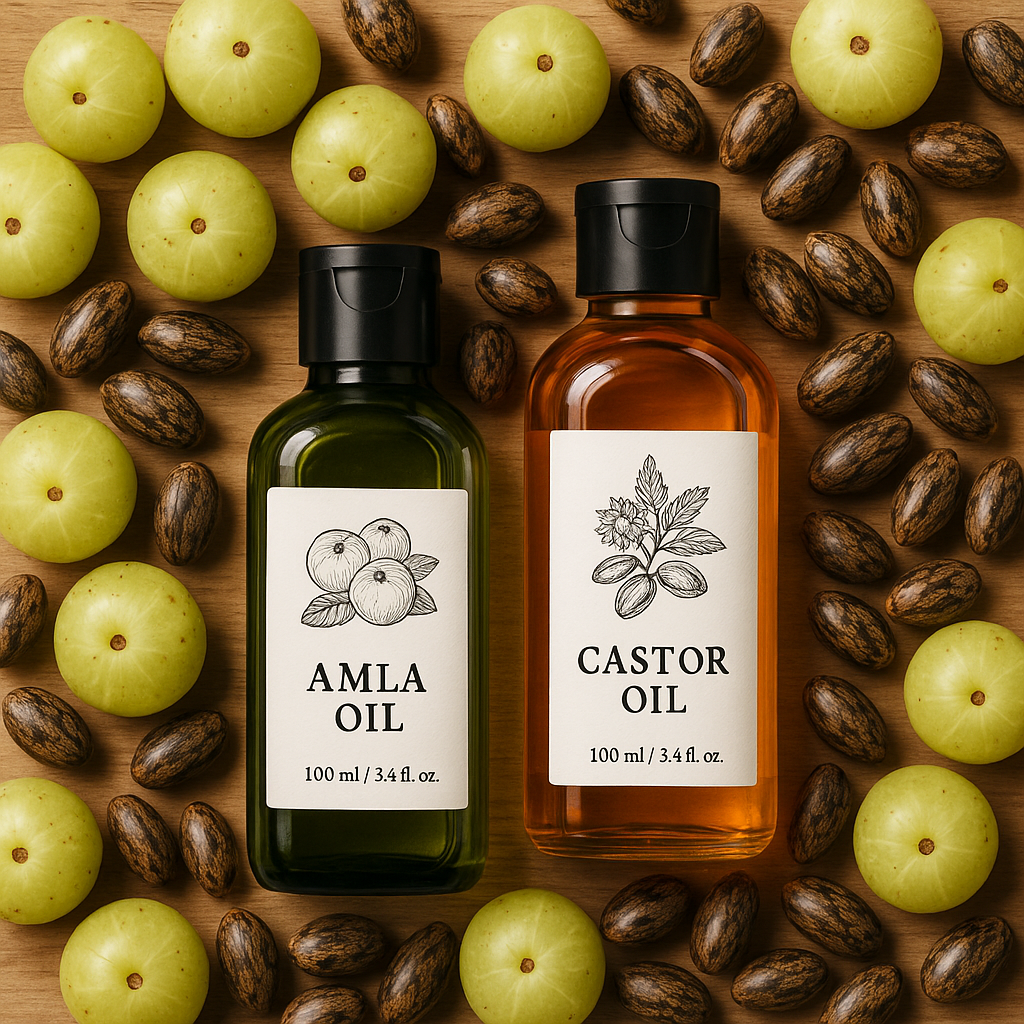
Main Benefits
Each of these oils provides an arsenal of beneficial compounds: tannins, vitamin C, and antioxidants for amla; mono- and polyunsaturated fatty acids for castor. Their actions sometimes complement each other, but they also have their own strengths.
Stimulating Growth
Ricinoleic acid from castor oil promotes scalp microcirculation, stimulating hair follicles and visibly accelerating the growth cycle. A study from Kottayam University (India) even observed a 15% faster growth after 12 weeks of twice-weekly application.
Nutrition and Hydration
Amla oil forms a light film around the hair fiber, trapping moisture and preventing dehydration. Its vitamin C and essential fatty acid content restores natural shine and reduces hair porosity, ideal for dry or curly manes.
Antioxidants and Protection
“Amla contains up to 600 mg of vitamin C per 100 g of fruit, offering an antioxidant effect comparable to many reputed organic foods.”
These molecules neutralize free radicals, thus limiting oxidative stress responsible for breakage and premature aging of the follicle. The UV protection provided by amla tannins is an additional advantage during sun exposure.
Comparative Table of Characteristics
To better visualize their specificities, here is a detailed comparison table.
| Criterion | Amla Oil | Castor Oil |
|---|---|---|
| Origin | Amla fruits (Indian gooseberry) | Castor seeds |
| Extraction | Infusion/pressing | Cold pressing |
| Main active ingredients | Tannins, vitamin C, flavonoids | Ricinoleic acid, fatty acids |
| Texture | Light, fluid | Thick, viscous |
| Scent | Subtle, fruity | Neutral to slight |
| Recommended use | Regular, no rinse | Masks, pre-shampoo |
| Drawbacks | Less nourishing for very dry hair | Can be sticky, difficult to spread |
How to Choose According to Your Hair Type
The right choice mainly depends on the density, porosity, and specific needs of your hair fiber.
Fine or thinning hair
Opt for amla oil, light and non-greasy, which avoids the “weighed down” effect while slightly stimulating growth and strengthening the root.
Dry or damaged hair
Prefer castor oil for its intense nourishing power: it penetrates deeply and repairs keratin, ideal after chemical treatments or repeated straightening.
Hair loss or alopecia
In case of significant hair loss, combine both: a first massage with castor oil to awaken microcirculation, followed by a light amla treatment to strengthen the fiber and prevent breakage.
Usage Tips and Homemade Recipes
To fully exploit their virtues, incorporate these oils into targeted treatments that are easy to prepare.
- Nourishing amla mask: mix 2 tbsp of amla oil and 1 tbsp of aloe vera gel, warm slightly, apply 30 minutes before shampooing.
- Mixed strengthening elixir: combine 1 tbsp of castor oil and 1 tbsp of amla oil, massage the scalp then leave on for 1 hour under a warm towel.
- Daily serum: mix 5 drops of rosemary essential oil with 20 ml of amla oil for a quick anti-hair loss effect morning and evening.
Precautions and Contraindications
Before any application, perform an allergy test on the forearm 24 hours in advance. Follow these few guidelines:
- Do not use castor oil pure on sensitive skin without dilution.
- Limit frequency to 2 to 3 times per week to avoid the “too rich” effect.
- Be careful with eyes: rinse immediately in case of contact.
- In case of dermatological problems (eczema, psoriasis), consult a specialist before use.
FAQ
What is the main difference between amla oil and castor oil?
Amla oil is lighter, rich in antioxidants and vitamin C, while castor oil, thick and viscous, mainly contains ricinoleic acid which stimulates growth.
Can the two oils be mixed to maximize results?
Yes: the duo combines stimulation and nutrition. Apply castor oil first to activate microcirculation, then amla oil to strengthen and protect the fiber.
How often should amla or castor oil be applied?
2 to 3 times per week is sufficient, alternating pre-shampoo masks and light leave-in treatments.
Is castor oil suitable for sensitive scalps?
Only diluted: its strong occlusive power can irritate. Mix it with a gentler oil (jojoba, sweet almond) before use.
Can amla oil naturally lighten hair?
It can slightly lighten highlights thanks to tannins, but without pronounced bleaching power.
Can these oils be used on the beard?
Absolutely: the castor oil massage ritual accelerates growth, and finishing with amla provides softness and shine.