| Key Points | Details to Remember |
|---|---|
| 🌾 Definition | Dietary fibers from various origins, soluble and viscous |
| 📍 Origin | Psyllium from Plantago ovata, konjac extracted from Amorphophallus konjac |
| 💪 Benefits | Regulated transit, controlled cholesterol, lasting satiety |
| ⚙️ Mode of action | Gelation upon contact with water, slowing absorption |
| 📝 Dosage | 5–10 g of psyllium, 2–4 g of konjac per day |
| ⚠️ Effects | Possible bloating, risk of choking without hydration |
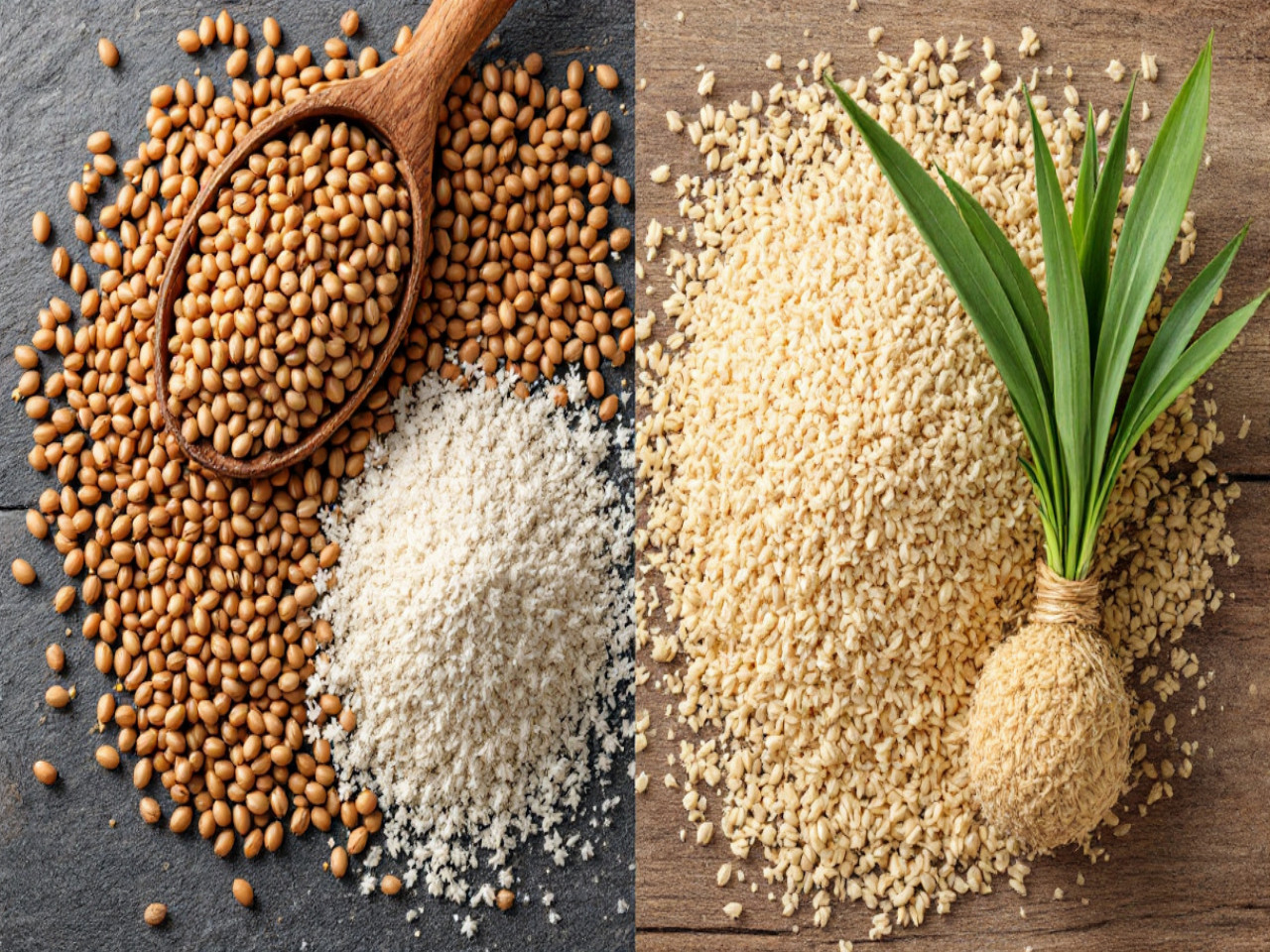
Between psyllium and konjac, the dilemma keeps coming up whenever one looks for a fiber capable of supporting digestion, cholesterol, or even weight loss. These two plant gums share high solubility and a gelled texture, but their origins, mechanisms, and uses differ, influencing the choice. Rather than making a snap decision, let’s explore their particularities point by point to guide you according to your lifestyle, expectations, and tolerance.
Sommaire
Understanding fibers: role and importance
Fibers are the part of plants not digested by our enzymes. Beyond shedding light on this aspect, it is essential to understand how they interact with the microbiota and the passage of the food bolus. The goal is not just to “fill up” on fibers but to select those whose viscosity, fermentability, and transit speed produce the desired effect.
In practice, all reputable nutritional programs distinguish soluble fibers, known for their ability to form a gel, and insoluble fibers that create bulk. Depending on the objectives — regulating transit, modulating cholesterol, sensation of satiety — the ratio between these two major families differs.
Soluble vs insoluble fibers
Soluble fibers partially dissolve in water, giving a viscous texture that slows intestinal transit. By forming a flexible barrier, they slow nutrient absorption, reducing glycemic spikes and facilitating cholesterol elimination. Insoluble fibers swell by retaining water, mechanically stimulating the progression of the food bolus. Most experts recommend a balance of about 1/3 soluble to 2/3 insoluble, without excluding a higher concentration of soluble fibers depending on needs.
Why prioritize certain sources?
Beyond mere quantity, fiber quality is judged by their chemical composition, structure, and fermentability. Excess insoluble fibers can trigger cramps in sensitive individuals, while a too concentrated intake of soluble fibers without adequate hydration can cause discomfort. Psyllium and konjac meet a specific demand: soluble fibers with high viscosity, for a marked impact on satiety and transit.
Psyllium: characteristics, benefits, and limits
Composition and mechanism of action
Blond psyllium comes from the seed husks of Plantago ovata. Its mucilage, rich in heteropolysaccharides, transforms into a thick gel as soon as it comes into contact with water. This gel increases stool volume and partially traps bile, fatty acids, and sugars, thus modulating their absorption.
In comparison, konjac relies on a single polymer, glucomannan. The structure of the latter is less fermentable but produces a particularly stable gel. In both cases, the gelling effect predominates to slow exchanges at the intestinal level.
Specific benefits
Psyllium stands out for its proven action in reducing LDL cholesterol. Several studies, including those reported by the European Food Safety Authority (EFSA), highlight a 5 to 10% decrease in LDL after a few weeks of regular use. Subjects also report a reduction in post-meal glycemic spikes and regulation of bowel movements, whether slow or irregular.
To fully benefit from these virtues, an intake of about 10 g per day, divided into two doses, proves optimal. If you wish to deepen your knowledge of these uses and precautions, a complete guide on blond psyllium offers detailed protocols.
Precautions for use and possible discomforts
Like any highly viscous fiber, psyllium must be accompanied by a large amount of water: without this, it can form esophageal or gastric blockages. People prone to swallowing disorders or young children must be monitored.
Regarding discomfort, bloating or colorectal cramps may occur during the initial increase in dosage. Ideally, start with 3 g, then gradually increase to reach 8–10 g. In case of severe functional colopathy, medical advice is necessary.
Konjac: all about this fiber from Asia
Origin and composition
Konjac, a tuber native to Asia, is processed into glucomannan pure at over 90%. This fiber is distinguished by its very low caloric content and its ability to absorb up to 200 times its weight in water. Thanks to its linear structure, it forms a firm gel, ready to be incorporated into culinary preparations (shirataki noodles, food gums, powdered supplements).
Beneficial effects
Beyond simple gastric filling causing an almost immediate feeling of satiety, konjac acts on transit by regulating stool volume. It is not excessively fermentable, which limits gas production and bloating in sensitive individuals.
Moreover, some researchers mention a mild prebiotic effect — a moderate stimulation of bacteria such as Bifidobacterium — without radically transforming the microbiota. On a daily basis, 2 to 4 g of glucomannan per day covers most of the goal, while facilitating a substantial water intake.
Contraindications and recommendations
Konjac, highly gelling, can pose the same risk of obstruction if not accompanied by enough water. Capsules are particularly concerned, hence the legal obligation for a warning on packaging.
Furthermore, people at risk of choking (deaths reported in children) must exercise strict caution. It is preferable to favor shirataki noodles or powder, to mix with a drink or compote, rather than tablets.
Psyllium or konjac: how to choose according to your needs?
Health goals and personal preferences
To correct a lipid profile or moderate the glycemic impact of meals, psyllium is essential. It acts like a net that captures cholesterol and sugars. Conversely, if your priority is weight management and quick satiety, konjac, with its powerful and light gel, will be preferred.
Finally, depending on individual tolerance to fermentations, choose konjac if you fear bloating, and psyllium if modulation of the microbiota and cholesterol guides you.
Special cases: ketogenic diet, intestinal rebalancing, weight management
In a ketogenic diet, both fibers are compatible, but the low fermentability of konjac reduces the risk of microbiota imbalance. For an intestinal rebalancing program, psyllium is often combined in the morning and konjac as a snack to play on two profiles of viscosity and fermentability.
As for weight loss, konjac is gaining popularity thanks to its immediate full-belly effect without calories, while psyllium supports overall intake management by slowing gastric emptying.
| Fibers | Daily dosage | Main benefit |
|---|---|---|
| Psyllium | 8–10 g | Cholesterol reduction |
| Konjac | 2–4 g | Quick satiety |
Incorporating these fibers daily: tips and simple recipes
- Add 1 spoonful of psyllium powder into yogurt or a smoothie to thicken the preparation.
- Prepare a konjac and lemon drink on an empty stomach: dissolve 2 g in 200 ml of warm water, add a slice of lemon.
- Make gluten-free muffins by replacing 30% of the flour with konjac powder for a denser crumb.
- Incorporate 5 g of psyllium into homemade bread dough for a softer crumb and better structure.
“Soluble fibers like psyllium and konjac offer a range of often underestimated beneficial effects: satiety, metabolic balance, digestive comfort…”
FAQ
What are the benefits of psyllium?
Psyllium helps regulate transit, reduce LDL cholesterol, and moderate glycemic variations. Its gel creates a favorable environment for microbiota balance.
How to use konjac daily?
Konjac dissolves in water or is incorporated into recipes (shirataki noodles, gums, powder). Be sure to drink at least 250 ml per intake to avoid any risk of obstruction.
Psyllium or konjac: which to choose for weight loss?
Konjac generates instant satiety without calories, ideal as a snack, while psyllium sustainably supports weight management through its more fermentable gel.
Summary
Psyllium and konjac share valuable viscous properties but differ in their composition and targeted effects. The choice depends on your priorities: cholesterol, transit, prevention of bloating, or quick satiety. With gradual dosing and consistent hydration, each of these allies can become a pillar of your health routine.