Introduction
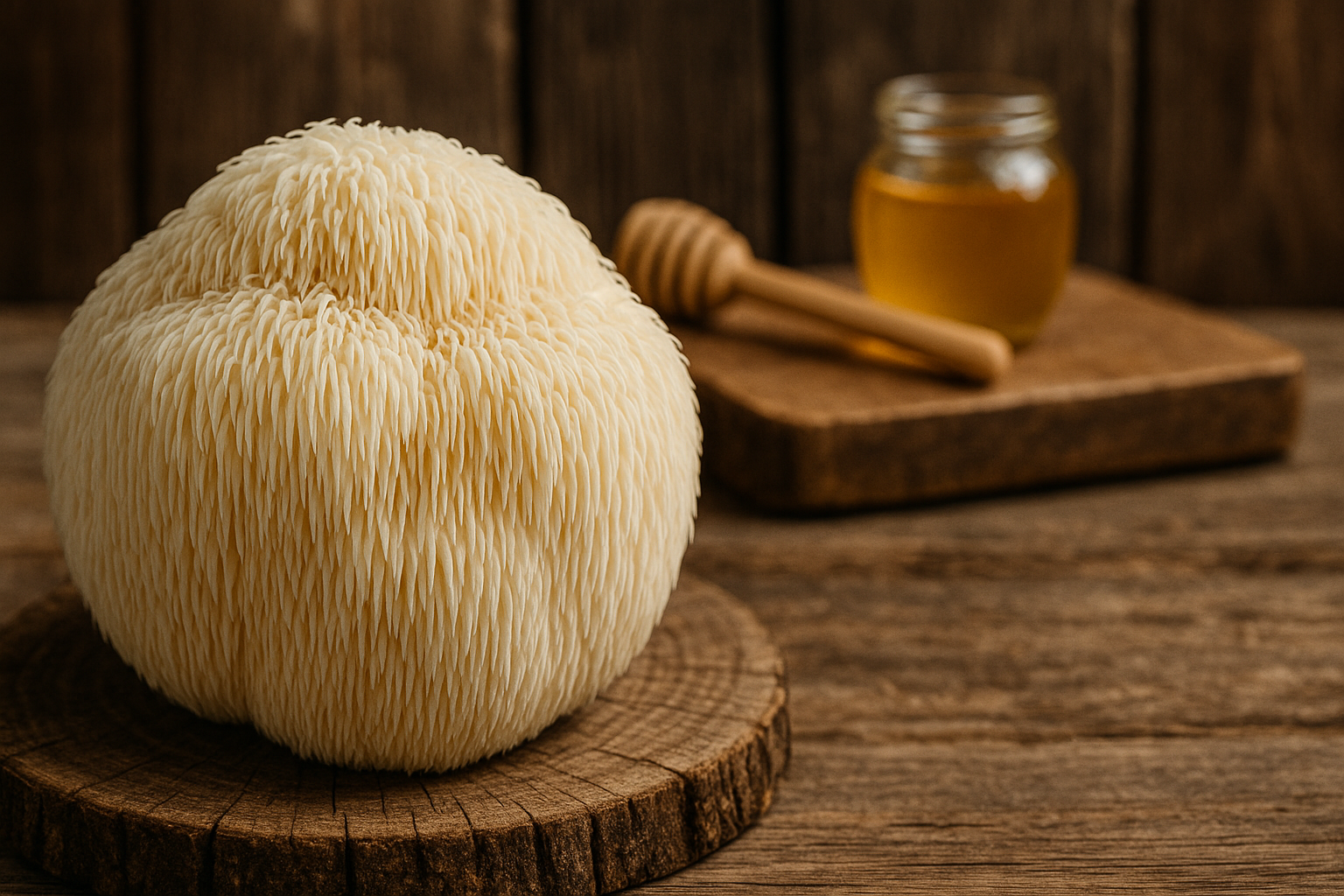
If you’re looking for a brain boost without resorting to synthetic nootropics, let us introduce you to Lion’s Mane, also known as Hericium erinaceus. This white, fluffy mushroom, which looks a bit like a lion’s mane (hence the name!), has long been used in traditional Asian medicine. Today, modern science is starting to roll out the red carpet for its effects on memory, concentration, and even neural regeneration. Want to know more? We’ll explain everything in a simple, fun, and effective style. 🦁
1. What is Lion’s Mane? 🍄
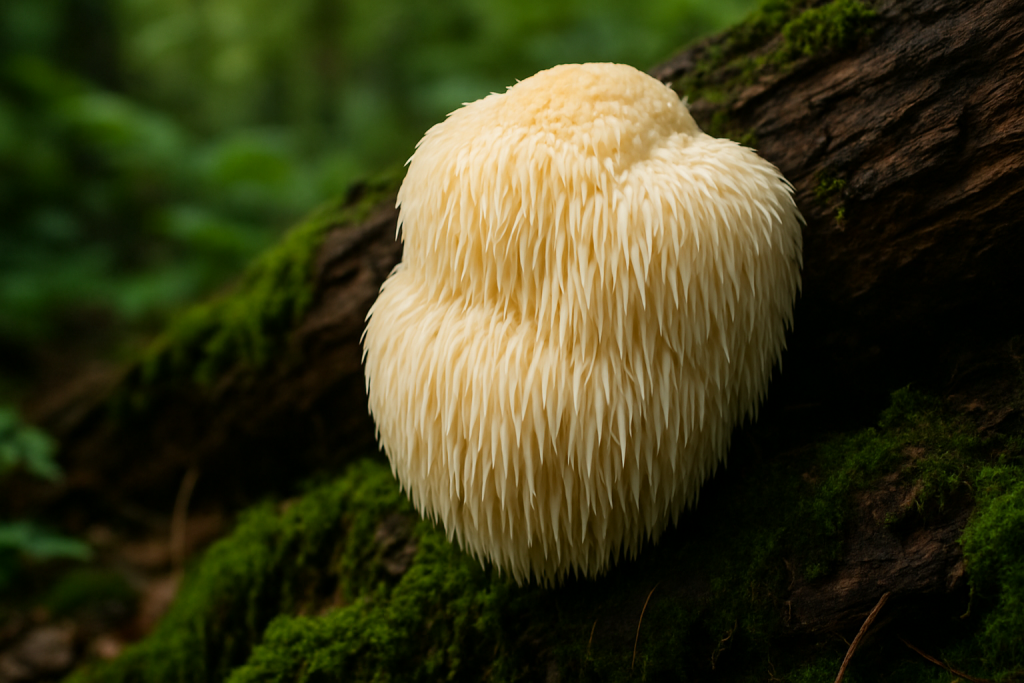
Imagine a white cloud hanging on a tree: that’s Lion’s Mane. It naturally grows on decaying hardwoods, and today it is cultivated organically worldwide. Long used in Chinese medicine to strengthen the mind and calm the nerves, it is making a strong comeback in natural health routines.
2. Why Lion’s Mane is a real game-changer 🧠⚡
- Cognitive boost: It promotes the production of NGF (Nerve Growth Factor), a key molecule for neuron growth.
- Memory + concentration: Studies suggest improvements in people suffering from mild memory disorders.
- Anxiety reduction: By acting on the nervous system, it helps restore a calmer and more focused state.
- Neuralgia and nerve recovery: It may play a role in nerve regeneration after trauma.
- Digestion and immunity: It also supports the digestive system and microbiota balance. Versatile, we tell you!
In short: a natural ally for your brain and much more.
3. For whom? 🧍♂️🧍♀️
- Students during exam periods
- Professionals under pressure
- Seniors wishing to preserve their memory
- People suffering from chronic stress or mental fatigue
👉 If your head is overheating a bit too much, Lion’s Mane is here to help you keep a clear mind.
4. How to consume it? 💊
- In powder form: to add to a hot drink (like adaptogenic coffee or golden latte).
- In capsules: precise dosage, convenient to include in a daily routine.
- In liquid extract: often more concentrated, taken sublingually for a quick effect.
💡 Dosage: 500 to 1000 mg per day, in a 4 to 8-week course.
5. What Science Says 🔬
More and more studies are focusing on Lion’s Mane, especially for its neuroprotective effects. Results? Quite encouraging! Improvement in cognitive functions, reduction of brain inflammation, support for neuronal plasticity…
📌 But be careful, these are mostly preliminary studies. It’s promising, but it’s not a magic pill.
6. How to Choose It Well? 🧐
- Extract standardized in hericenones and erinacines: these are the star molecules.
- Organic cultivation + traceability: a must to avoid dubious products.
- Double extraction format (water + alcohol): more active ingredients extracted.
👉 Avoid low-quality powders without dosage information!
7. User Feedback 🗣️
“I’m more focused at work, it’s clear.” “Less mental fog, more mental energy.” “I use it in cycles before big projects or when I feel like I’m losing clarity.”
8. Are There Side Effects? ⚠️
Very few reported, but it can happen:
- Mild digestive issues
- Temporary headaches
- Rare allergies (especially if you are sensitive to mushrooms)
💬 As always: start with a small dose and adjust.
Special Lion’s Mane FAQ 🙋♂️🙋♀️
How long does it take to work? Generally, effects are felt after one to two weeks of regular intake.
Can you take it all year round? Yes, but it’s better to take breaks every 2-3 months.
Is it a stimulant? No. It’s a natural support, not a stimulant. No crash afterwards.
Does it taste good? The powder has a mild, slightly earthy taste. Mixed into a hot drink, it goes down smoothly!
Conclusion: The Mane That Takes Care of Your Head 🦁
Lion’s Mane is like a natural brain coach. It stimulates, soothes, and protects. With no major side effects, easy to integrate, and increasingly studied, it’s a valuable wildcard in your mental wellness routine.
👉 If you’re looking for more focus, less stress, and a little boost for your neurons, you know what to try.
👉 To learn more:
5 adaptogenic mushrooms and their incredible benefits