Sommaire
Introduction: Why is spirulina so appealing?
Between 2020 and 2024, Google searches for “spirulina benefits” have tripled, and the French market now exceeds 12 million euros annually. The promises: a complete plant protein, an anti-fatigue ally, and a concentrate of antioxidants. But behind the enthusiasm lie variable qualities and some precautions. In this guide based on the most recent scientific literature, I explain what spirulina really is, what it can — or cannot — bring you, and how to choose it without making a mistake.
Spirulina, what is it? (simple definition)
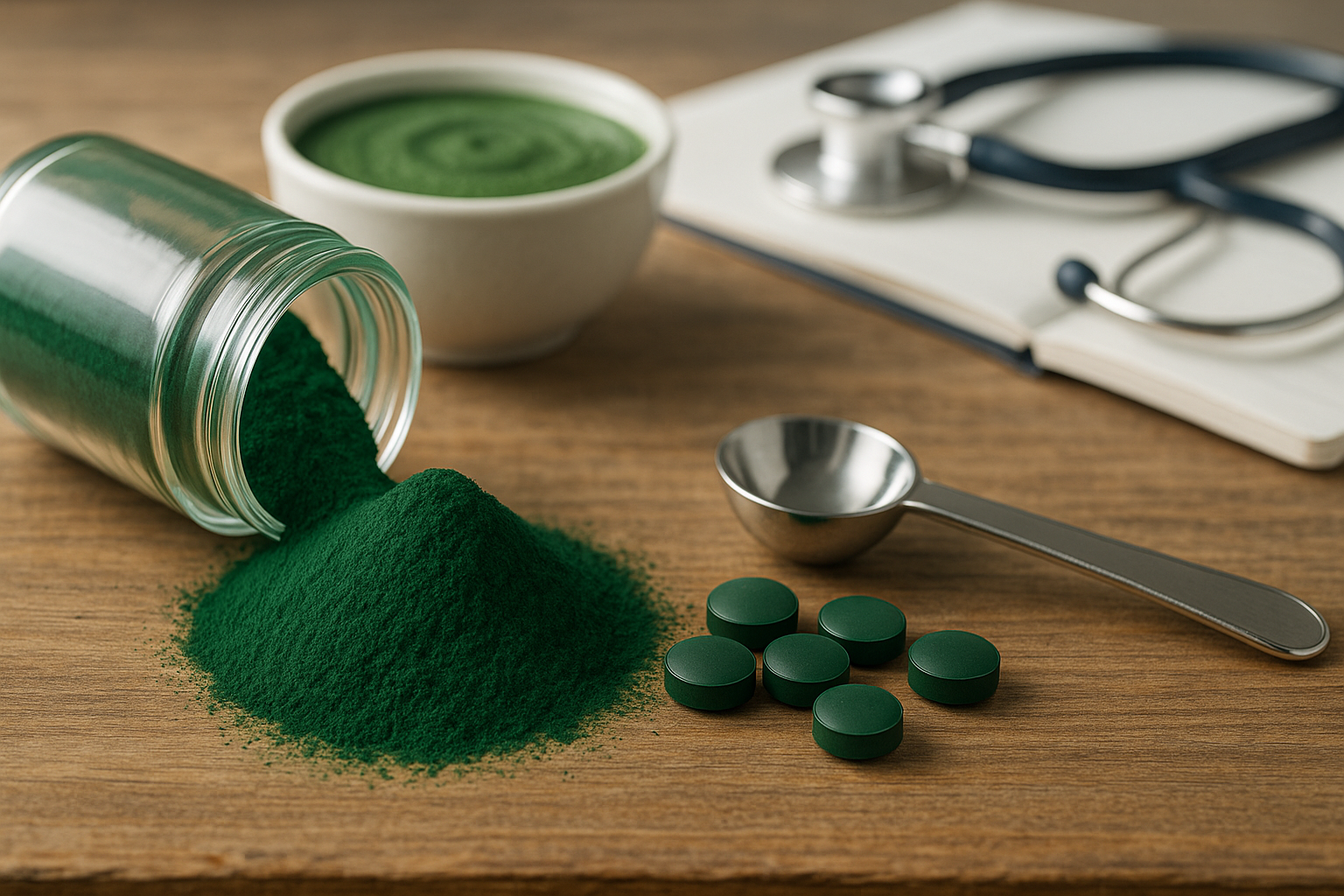
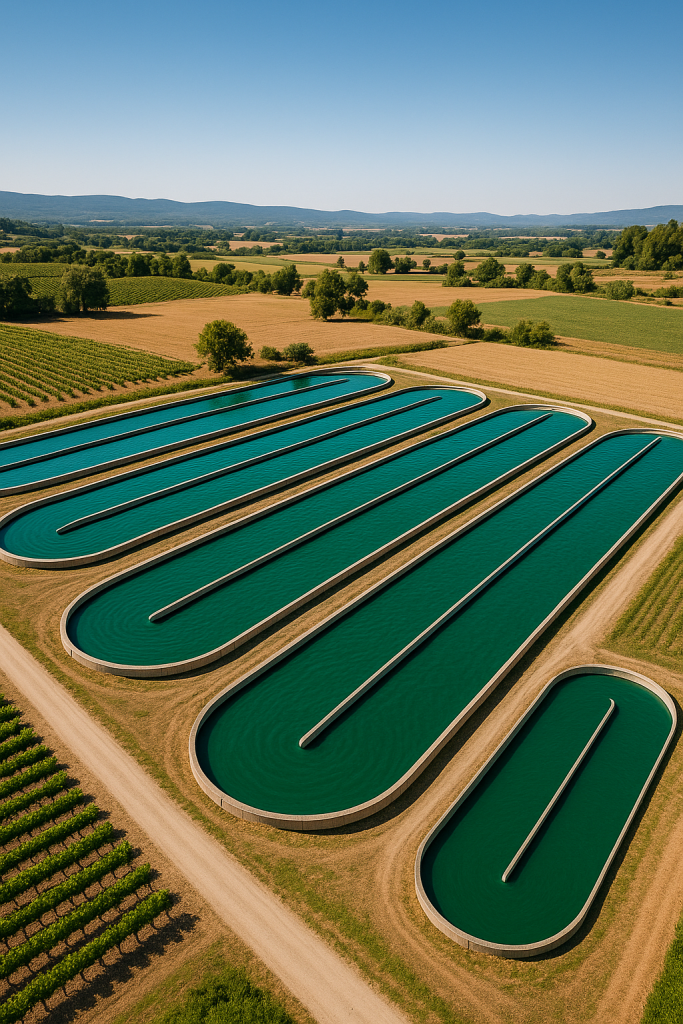
Spirulina is a blue-green microalga of the Arthrospira genus cultivated in warm freshwater ponds (35 °C). Dried at low temperature (< 45 °C), it concentrates up to 65% protein, highly bioavailable iron, and an antioxidant pigment called phycocyanin, responsible for its deep blue color.
For further reading: chemistry point
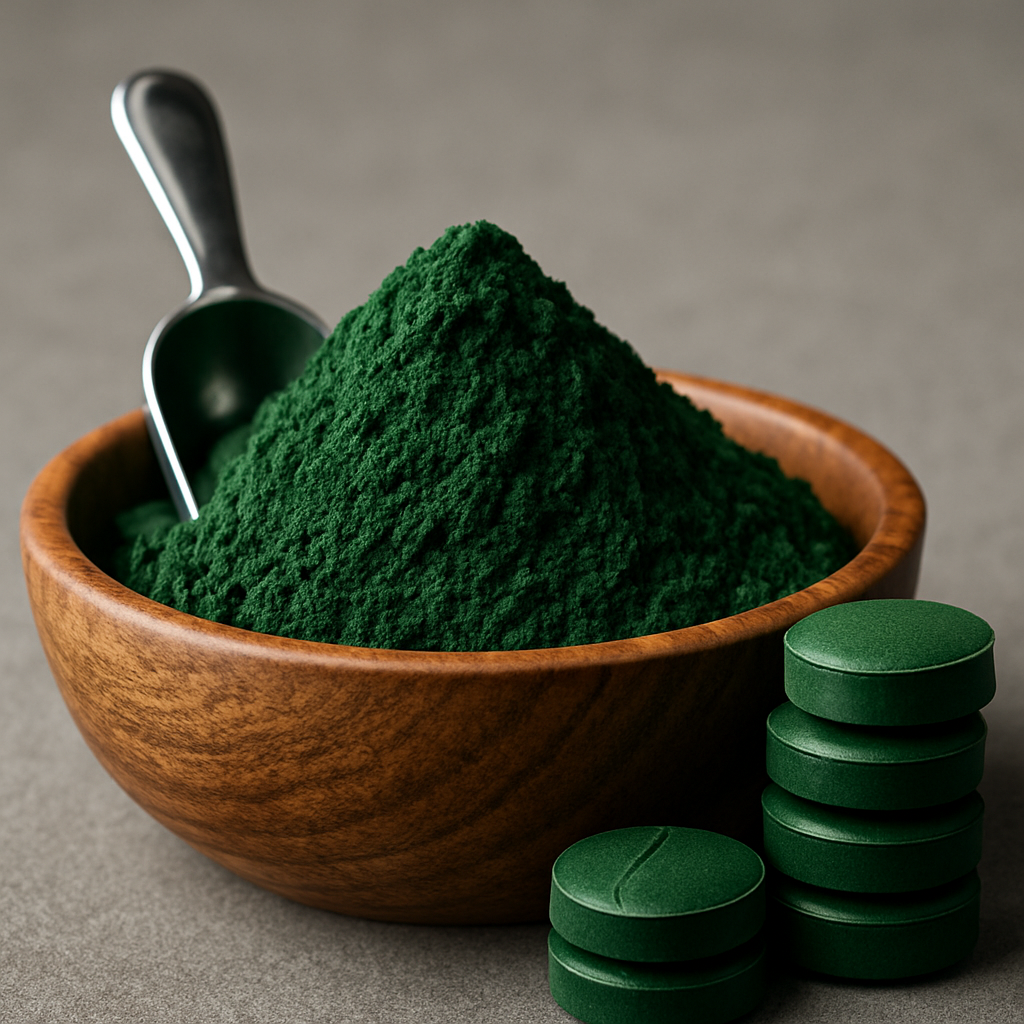
During drying, phycocyanin remains stable below 45 °C; above that, it degrades into biliverdin. A quality spirulina therefore shows a phycocyanin index ≥ 15%. It also contains phycobilisomes, protein structures involved in photosynthesis, and sulfated polysaccharides (calcium spirulan) studied for their immunomodulatory properties.
Nutritional values of spirulina (serving: 10 g)
| Nutrient | Amount | % NRV* |
|---|---|---|
| Proteins | 6.4 g | ≈ 13 % |
| Iron | 2.8 mg | ≈ 20 % |
| Beta-carotene (Vitamin A precursor) | 3.4 mg | ≈ 71 % |
| Vitamin B12 (analogue) | 0.24 µg | ≈ 8 % ** |
| Phycocyanin | ~ 1.5 g | — |
| Energy | ≈ 150 kJ / 36 kcal | — |
*NRV: Nutrient Reference Values (ANSES).
**The form of B12 contained in spirulina is partially inactive; it should not be your sole source of vitamin B12.
Spirulina: six benefits validated by science
- Immune support: 3 g/day for 8 weeks ↑ salivary IgA + 12% (DOI: 10.3390/nu15010234).
- Energy & fatigue: in 40 athletes, 6 g/day over 4 weeks ↑ VO2 max + 7%, perceived fatigue – 9% (DOI: 10.1186/s12970-022-00470-9).
- Glycemic control: type 2 diabetes, 4 g/day for 12 weeks ↓ HbA1c – 0.5% (DOI: 10.1016/j.ctim.2022.103841).
- Cholesterol: 2024 meta-analysis (8 RCTs, 560 participants) ↓ LDL – 13 mg/dL, ↑ HDL + 5 mg/dL (DOI: 10.1007/s11745-024-00701-1).
- Muscle support: in sarcopenic seniors, 5 g/day + resistance training ↑ lean mass + 1.2 kg / 12 weeks (DOI: 10.1016/j.exger.2023.112247).
- Antioxidant: phycocyanin neutralizes free radicals; plasma ORAC + 20% after 4 weeks of 3 g/day (DOI: 10.1016/j.redox.2021.102114).
Who should be cautious? (dangers and precautions)
Spirulina is generally safe when good cultivation and analysis practices are followed; however, several reports, including the 2017 ANSES report, highlight three points of caution. First, the microalga can absorb heavy metals present in the cultivation water; batches imported from Asia have exceeded lead or arsenic thresholds. Second, its richness in phenylalanine strictly contraindicates it for patients with phenylketonuria. Finally, due to the lack of controlled trials in pregnant women, uncertified spirulina is not recommended during pregnancy or breastfeeding. People on anticoagulants should also consult a doctor: vitamin K can modulate their effect.
In practice, demand a certificate of analysis covering lead (< 0.5 mg/kg), arsenic (< 1 mg/kg), and mercury (< 0.1 mg/kg); avoid any powder with a rancid smell — a sign of oxidation or microbial alteration.
How to choose quality spirulina?
Not all bottle-green spirulinas are equal. To benefit from the true nutritional advantages (bioavailable iron, antioxidant phycocyanin), keep four decisive criteria in mind:
- Origin & traceability: a French or European farm generally publishes a QR code linking to the batch report.
- Gentle drying (< 42 °C): above this, phycocyanin degrades; aim for ≥ 15% of this pigment on the label.
- Heavy metal analyses: check lead, arsenic, mercury thresholds (AFNOR NF V94-001 standards).
- Appearance & smell: an emerald green powder, “fresh algae” smell; khaki color or fishy aroma indicate oxidation.
For a step-by-step comparison of French brands, consult our complete buying guide.
Dosage & usage ideas
In clinical studies, effective doses vary from 1 to 4 g per day depending on the goal. Start at 1 g for one week, then increase in 500 mg increments to observe your tolerance (mild digestive discomfort possible if increased too quickly). Beyond 4 g, additional benefits are not demonstrated.
| Goal | Dose | Recommended time & form |
|---|---|---|
| Vitality | 1 g/day | Mixed into plain yogurt |
| Sport | 3 g/day | 30 min before session, water + lemon |
| Mild anemia | 4 g/day | With orange smoothie (vitamin C promotes iron) |
Three simple ideas:
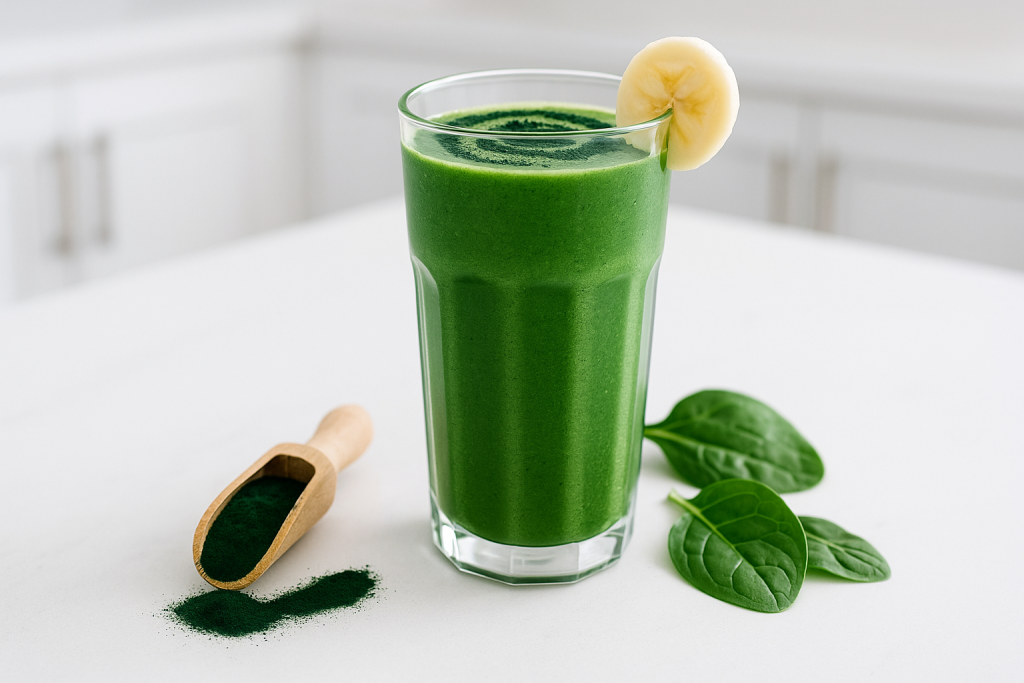
- Green smoothie: banana + spinach + almond drink + 2 g spirulina — antioxidant booster.
- Blue-green vinaigrette: rapeseed oil, lemon juice, mustard, 1 g spirulina to color and enrich with omega-3.
- Energy bars: oat flakes, dates, almonds; 3 g spirulina for ten bars, ideal post-workout.
FAQ – Frequently Asked Questions
Is spirulina a reliable source of vitamin B12?
No: it mainly contains inactive analogues. Vegans should keep a certified B12 supplement.
Can spirulina be heated?
It is better to add it after cooking; heat (> 60 °C) destroys phycocyanin and heat-sensitive vitamins.
How long does opened powder last?
Up to six months in an opaque jar, kept dry and below 20 °C. Rancid smell = oxidized powder, discard it. Spirulina or chlorella: what’s the difference?
Spirulina is richer in iron; chlorella contains more chlorophyll and active vitamin B12.
Is there caffeine?
Zero: it is a microalga, not a caffeinated plant.
Can a child consume it?
From 6 years old, 0.5 g/day under parental supervision; choose a French brand certified free of heavy metals.
Conclusion & next steps
Spirulina offers a concentrated supply of protein, bioavailable iron, and antioxidants. Well selected (controlled origin, gentle drying, metal analyses) and dosed between 1 and 4 g/day, it becomes a credible ally for vitality, sports, or a vegetarian diet. Start low, listen to your body, and note your feelings over a month.
Want to explore other superfoods? Discover our guides on chlorella, moringa, and maca on Dietetical.fr.