Noorhan – Nutritionist (MSc Clinical Nutrition, University of Strasbourg) and member of the French Society of Mycotherapy. Specialist in the gut microbiota and artisanal fermentation, he has been supporting individuals and restaurants for ten years in the implementation of safe and beneficial fermented beverages.
Sommaire
Introduction: why this craze?
Do you see bottles of kombucha everywhere? Trendy cafes, organic aisles, social networks: this sparkling fermented tea drink appeals as much to wellness enthusiasts as to those curious about new flavors. In five years, Google searches related to kombucha have exploded, while sales in French supermarkets have jumped by 250%. Yet, beneath the trend lie recurring questions: is it really good for health? How much can you safely drink? Can it be made at home? This comprehensive guide – written from the perspective of a nutritionist and supported by the most recent scientific studies – answers these questions point by point, in simple yet rigorous language.

1. Kombucha: simple definition
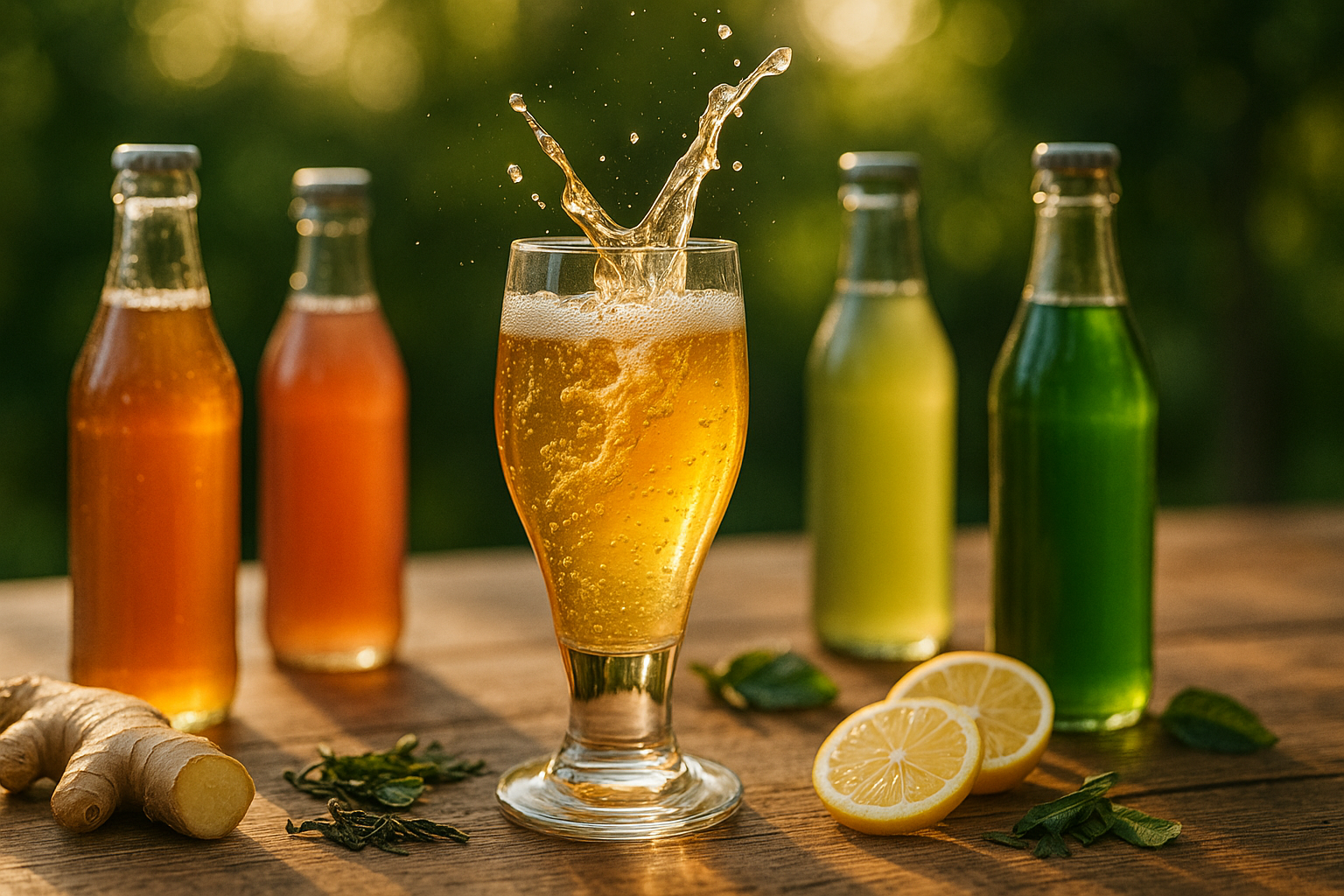
Kombucha is the result of fermenting a sweetened tea by a SCOBY – an English acronym for Symbiotic Culture Of Bacteria and Yeast. In other words, a gelatinous disk where acetic bacteria (Gluconacetobacter, Komagataeibacter) and yeasts (Zygosaccharomyces, Brettanomyces) coexist. These microorganisms partially transform sucrose into alcohol, then into organic acids (acetic, gluconic, glucaric), CO₂, and B-group vitamins. After seven to fourteen days, you get a sparkling, acidic drink (pH 2.8 – 3.6), lightly sweetened and generally containing less than 1% alcohol if the fermentation is well controlled. The taste variations – from floral to vinegary – depend on the type of tea, fermentation duration, and added flavors.
2. How is it made?
- Initial infusion: steep 5 g of black or green tea per liter of water for 10 minutes. Remove the leaves.
- Sweetening: dissolve 70 g of sugar per liter; let the sweetened tea cool to 25 °C so as not to burn the SCOBY.
- Inoculation: pour the sweetened tea into a glass jar, add 10% mature kombucha (starter), and gently place the SCOBY on the surface.
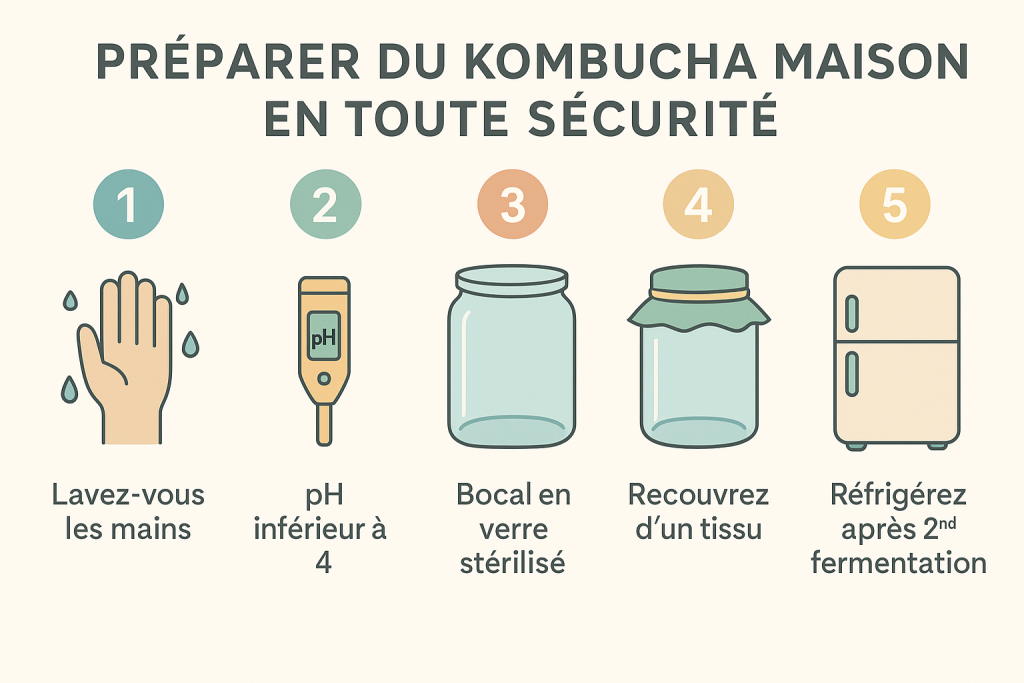
- Primary fermentation: cover the jar with a breathable cloth; leave for 7–14 days at 24 °C. Measure the pH (target < 4).
- Tasting or flavoring: remove the SCOBY, take 10% of the liquid as future starter, then flavor (ginger, red fruits). Bottle in thick glass.
- Secondary fermentation: 24–48 hours at room temperature to boost fizziness. Then store in the refrigerator.
3. Proven benefits: what science says
- Potential probiotics: A 2024 systematic review lists 17 strains isolated from French artisanal kombuchas; among them, Lactobacillus plantarum and Bifidobacterium animalis, known to strengthen the intestinal barrier.
- Enhanced antioxidant power: During fermentation, the catechins in tea transform into theaflavins and thearubigins; a study (Lee 2023) shows an 18% increase in the ORAC score after 10 days.
- Liver support: In rats, the glucaric acid in kombucha increases the activity of phase II detoxification enzymes (GST) and reduces markers of hepatic oxidative stress.
- Stable energy and satiety: Acetic acid slows gastric emptying and moderates the glycemic response to an identical meal (Zhou 2021). The CO₂ adds a filling effect that limits the consumption of sugary drinks.
- Balanced microbiota: French pilot study 2024 (28 healthy adults): 300 ml/day for 30 days → +18% of Bifidobacterium longum and a significant decrease in Desulfovibrio, an H₂S-producing bacterium.
- Perceived well-being: In an online questionnaire (1,400 respondents), 62% reported improved digestion and 48% increased vitality after four weeks.
4. Potential dangers & precautions
- Fungal contamination: Green or black molds indicate the presence of penicillium or aspergillus; discard the batch immediately.
- Bottle overpressure: Excess sugar in the second fermentation can cause the glass to explode; use soda bottles or degas daily.
- Residual alcohol: If fermentation exceeds 15 days or occurs above 26 °C, alcohol can reach 1.5%; not recommended for sensitive individuals or pregnant women.
- High acidity: pH ~3; can worsen gastroesophageal reflux or erode tooth enamel; drink with a straw, rinse your mouth.
5. How to choose or prepare a safe kombucha?
- pH: 2.8 – 3.8; a higher pH indicates microbial risk.
- Residual sugar: < 6 g/100 ml to limit glycemic impact.
- Traceability: Date, batch, manufacturer contact, absence of preservatives.
- Organic label: Guarantees pesticide-free tea and non-GMO sugar.
6. Dosage & special cases
| Audience | Quantity/day | Advice |
|---|---|---|
| Healthy adult | 150 – 250 ml | Between meals |
| Athlete | 200 ml pre-workout | Ginger kombucha for tonic effect |
| Pregnancy | Avoid | Prefer pasteurized alcohol-free drink |
| Child 6–12 years | Max 100 ml | Dilute half with still water |
7. FAQ – Frequently Asked Questions
Is kombucha gluten-free? Yes, because tea and the SCOBY are gluten-free. Can I use coconut sugar? Yes, but fermentation will be slower and the taste more acidic. How long does it keep? Up to one month refrigerated in a sealed bottle. Does it contain caffeine? 8 – 14 mg/100 ml, less than a quarter of an espresso coffee. Why is my kombucha gelatinous? Formation of new SCOBY layers; strain before drinking.
Conclusion
Kombucha establishes itself as a refreshing alternative to sodas, providing organic acids, antioxidants, and a potential probiotic effect. To get the best out of it, favor hygienic production, monitor the pH, and stick to moderate quantities. Keep a journal of your feelings over four weeks: digestion, energy, sleep. You will then have your own personalized proof. Also explore our other fermentation files on Dietetical.fr.
Last updated: 04/23/2025