| Key Points | Details to Remember |
|---|---|
| 🌿 Origin | Extracted from the leaves of Melaleuca alternifolia |
| 🦠 Properties | Antimicrobial, antifungal, and antiviral |
| ⚖️ Uses | Topical, olfactory, diluted in bath or lotion |
| ❗ Precautions | Do not ingest pure, test on a small skin area |
| 📝 Comparisons | Differs from ravintsara or wintergreen by its chemical profile |
| 💡 Benefits | Air purification, skin and respiratory support |
Tea tree essential oil is generating growing interest in the field of natural wellness, especially for its antimicrobial strength. Derived from an Australian tree, it concentrates molecules effective against many microorganisms and can be freely incorporated into your routine. We inhale it, rub it on, sometimes dilute it in a bath, always with caution. In the following lines, you will find a comprehensive overview of its use, practical advice to avoid pitfalls, and insight into its often overlooked virtues.
Sommaire
What is tea tree essential oil?
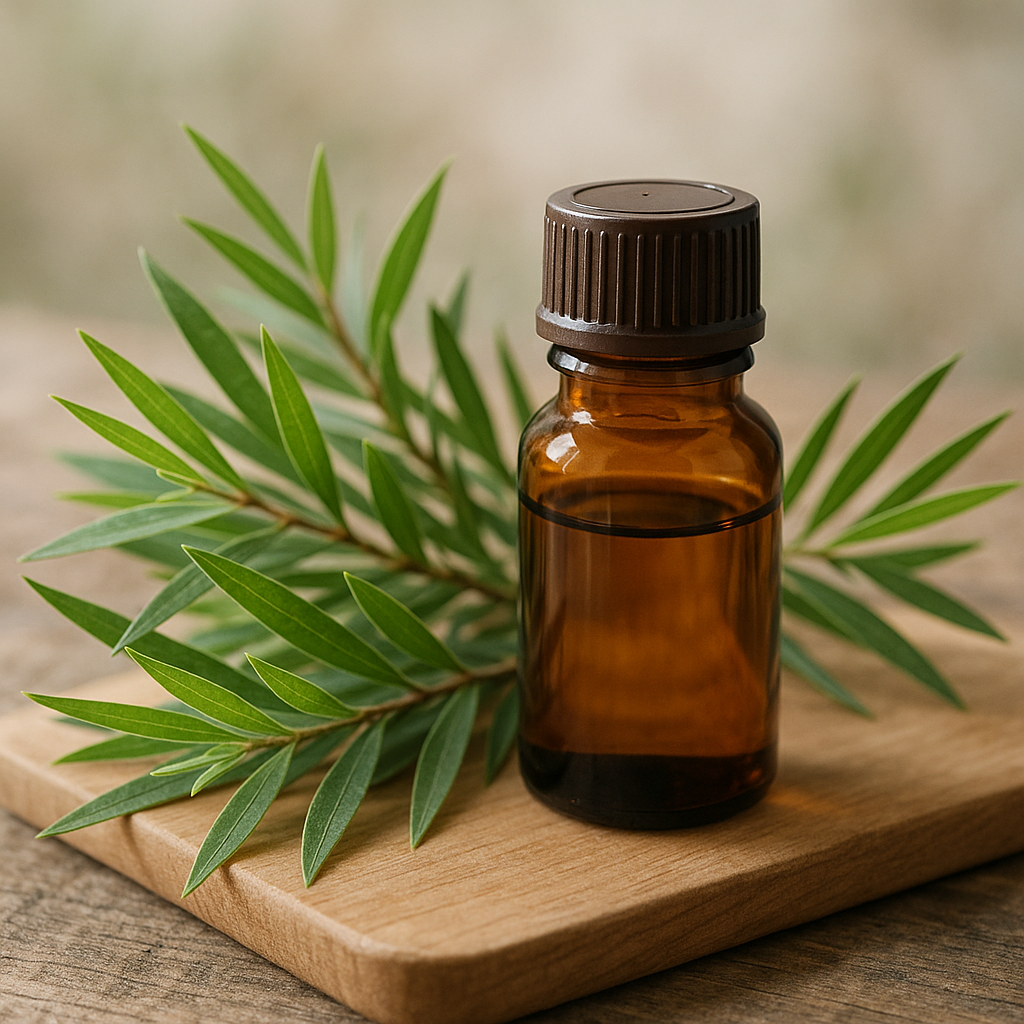
Obtained by steam distillation of the leaves of Melaleuca alternifolia, tea tree essential oil contains more than 100 compounds: terpenes, sesquiterpene alcohols, esters. The main active ingredient, terpinen-4-ol, explains its recognized effectiveness against bacteria, fungi, and viruses. Historically, Australian Aborigines used it to disinfect wounds and bites. Today, it has established itself in alternative medicine cabinets, sometimes on par with conventional antiseptics.
Main benefits
Antimicrobial and antifungal action
On the skin, a few drops diluted in vegetable oil are enough to inhibit the proliferation of staphylococci or Candida. Studies report results showing a reduction in infected skin lesions within a few days. When inhaled, the vapor diffuses its molecules, helps purify the ambient air, and can reduce the microbial load in a room.
Support for healing
Applied locally, tea tree oil accelerates the closure of micro-cracks and limits the formation of thick scabs. Its moderate anti-inflammatory properties help reduce redness and tightness sensations. In an after-sun lotion, it can relieve mild UV burns, provided it is properly diluted.
Respiratory Booster
When diffused or applied as a chest rub, it acts as a stimulator of the respiratory tract. The nasal passages clear more quickly, and a sensation of freshness persists. For a prolonged effect, three sessions per day of a few minutes each in diffusion are often recommended. To reinforce this point, a comparison of essential oils conducted elsewhere highlights the interest of ravintsara for the respiratory tract, but tea tree remains an interesting option when looking for a more antiseptic profile.
Common Methods of Use
- Topical use: 1 to 2% in a vegetable oil for sensitive skin.
- Inhalation: 2 – 3 drops on a handkerchief or diffusion for 5 to 10 minutes.
- Purifying bath: 5 – 6 drops mixed with a dispersant (milk or salt) in warm water.
- Household cleaner: 10 drops in 500 mL of white vinegar or soapy water.
If you want to explore more unexpected uses, refer to a list of surprising uses which even includes dental or anti-dandruff applications. Each alternative requires an adapted dosage and a prior test on a small area.
Precautions for Use
Do not ingest without professional advice
Potential liver toxicity requires reserving ingestion for trained practitioners. Cases of poisoning often occur after absorption of large quantities. In diffusion or local application, this risk disappears: limit to a few drops.
Skin tolerance test
Before any extensive application, apply a drop diluted to 1% in the crook of the elbow. If, after 24 hours, no reaction (redness, itching) appears, use may continue. Atopic or very dry skin deserves special care, as tea tree can exacerbate existing sensitivity.
Pregnant women and children
During the first trimester of pregnancy, it is advised to refrain from any prolonged diffusion and to avoid topical application without professional advice. For children under 6 years old, prefer very diluted preparations (maximum 0.5%) and short diffusions.
Comparisons and Synergies
Compared to other oils, tea tree stands out for a very broad antimicrobial spectrum. In an essential oils comparison, ravintsara is preferred for viral infections, while tea tree takes the advantage on the bacterial and fungal components. Similarly, for an anti-inflammatory solution, wintergreen offers more marked muscle relief, but the antiseptic action of tea tree remains an asset in infectious skin conditions. Finally, some combine tea tree and ravintsara to clear your respiratory tract while disinfecting the air.
FAQ
- What dilution for a bath? About 5 drops in 200 mL of dispersant, then poured into the water.
- Can tea tree be used on acne? Yes, applied locally diluted to 2% to limit inflammation and reduce bacteria.
- Is it compatible with other essential oils? It pairs well with lavandin, lemon, and eucalyptus to enhance the purifying action.
- What allergic reactions should be watched for? Redness, burns, marked tingling: these signs call for immediate discontinuation of use.