| Key points | Details to remember |
|---|---|
| 🌻 Definition | Identify cineole rosemary and its botanical characteristics. |
| 💪 Benefits | Stimulate energy, prevent daily exhaustion. |
| 😒 Composition | Rich in cineole, alpha-pinene, and camphor. |
| 📝 Uses | Apply by diffusion, massage, or infusion. |
| ⚠️ Precautions | Respect recommended doses and avoid certain contraindications. |
Cineole rosemary, sometimes called Rosmarinus officinalis CT cineole, stands out due to a high concentration of stimulating molecules. Far from being just a simple culinary herb, it concentrates a range of virtues that appeal both to phytotherapy enthusiasts and those seeking natural remedies against fatigue. In this guide, you will discover its origin, benefits, various ways to use it, as well as precautions for use to fully enjoy its potential.
Sommaire
Origin and composition of cineole rosemary
A Mediterranean heritage
Since Antiquity, rosemary has populated the scrublands and intensified its fragrance under the Mediterranean basin sun. The Greeks already called it “ros maris,” the dew of the sea, so much did they appreciate its tonifying and purifying properties. Today, chemotype selection leads to isolating the one with a high cineole content, at the heart of its effects on the body.
The key molecules
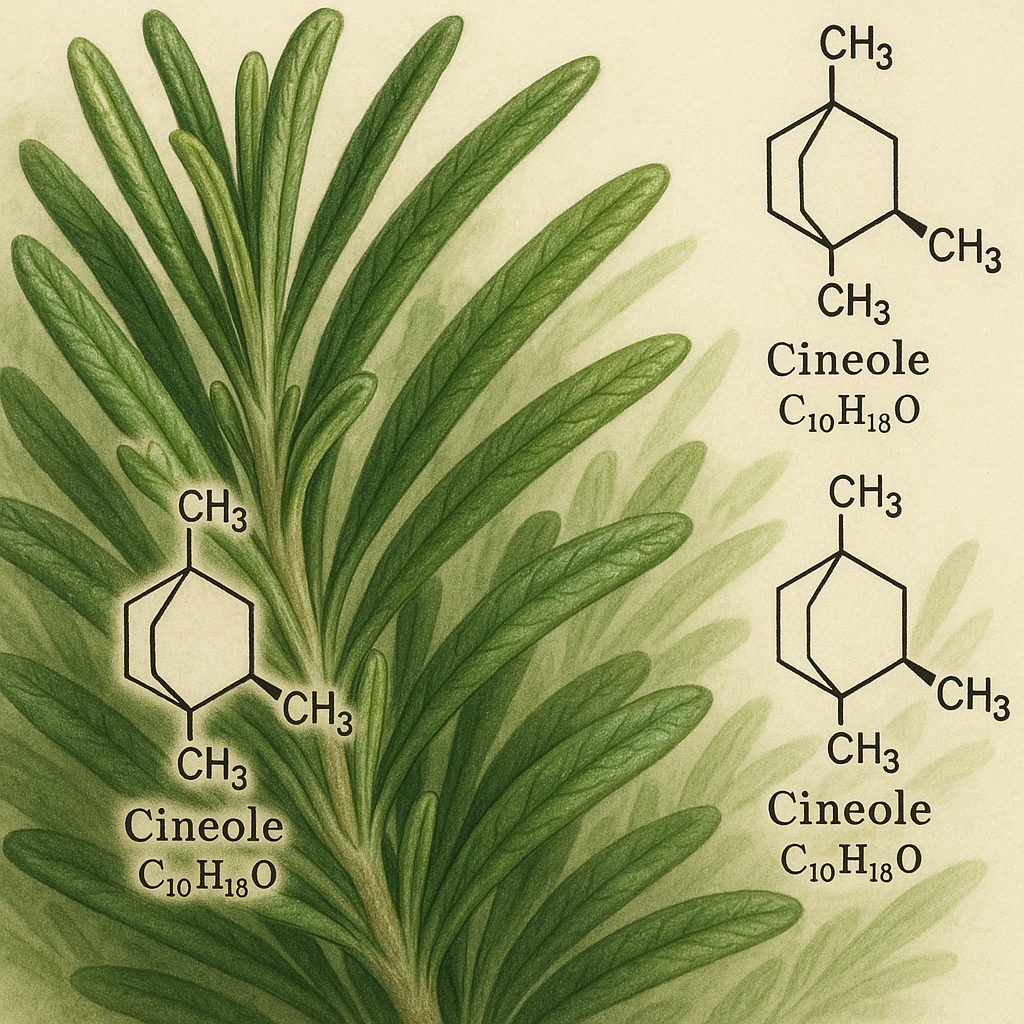
Beyond cineole, the major component responsible for the penetrating aromas, there is also alpha-pinene, known for its anti-inflammatory effect, and camphor, crucial in local blood circulation. This molecular synergy explains why cineole rosemary essential oil often surpasses its botanical relatives in terms of energy and recovery.
Health benefits
Fight fatigue with the energizing effect
One might think that coffee remains the best ally against drowsiness: however, inhaling or diffusing cineole rosemary essential oil provides a rapid energy boost, without the tachycardic spike often associated with caffeine. A study shows that simple exposure to the aroma of cineole promotes cerebral awakening and sharpens concentration. The stimulating action is explained by activation of olfactory receptors linked to attention.
Antioxidant and Immune Properties
Enriched with antioxidants, this rosemary limits the formation of free radicals, those unstable molecules responsible for cellular aging. Researchers have demonstrated an ability to reduce oxidative stress in nerve cells, resulting in better resistance to physical and emotional stress. Moreover, certain compounds help support the immune system, particularly useful during winter or convalescence.
Circulation Stimulation and Muscle Toning
Thanks to the camphor present, cineole rosemary is used in massage to relax sore muscles after exertion. Applied by rubbing on heavy legs, it promotes better venous return. Circulatory-wise, its mild vasodilating effect tones the blood supply to organs, complementing its overall action on vitality.
Methods of Use
Diffusion and Inhalation
- A few drops in a diffuser to purify the air and awaken the mind.
- Direct inhalation: place 1 to 2 drops on a handkerchief for a concentrated effect.
Topical Application and Massages
Dilute 2 to 3 drops in a vegetable oil (sweet almond, jojoba) before massaging the shoulders or calves. The warming sensation that follows helps release tension and stiffness. This is a reflex adopted by athletes concerned with rapid recovery.
Infusion and Supplements
Although rosemary is less suited to infusion than classic herbal tea, you can steep a teaspoon of dried leaves in 200 ml of boiling water for 10 minutes. This decoction, consumed in small quantities, contributes to digestive balance and the prevention of temporary fatigue. For precise dosing, standardized capsules are available at pharmacies.
Precautions and Contraindications
Like any concentrated active ingredient, cineole rosemary requires caution. Pregnant women, young children, and people suffering from epilepsy should avoid internal or targeted use. For topical application, a tolerance test on the forearm is recommended. Never exceed 6% dilution in a carrier oil and limit continuous use to 3 weeks, followed by a break.
FAQ
Is cineole rosemary suitable for the whole family?
For external use, yes, provided it is properly dosed and an allergy test is performed. However, children under 6 and pregnant women should not use it without medical advice.
Can cineole rosemary be combined with other essential oils?
Absolutely. It blends effectively with fine lavender for a balancing action or with lemon to boost tone and clarify the mind.
What signs indicate a possible overdose?
Skin irritation, headaches, dizziness, or nausea may signal too high a concentration. In this case, stop application immediately and ventilate the room.