| Key Points | Details to Remember |
|---|---|
| 🌿 Definitions | Identify the two essential oils and their origin |
| 🌡️ Antiviral Properties | Compare their active molecules and spectrum of action |
| 💧 Application Methods | Choose the most suitable route: diffusion, inhalation, massage |
| ⏱️ Speed of Action | Evaluate the speed of symptom relief |
| 🔒 Safety and Precautions | Apply essential dosages and contraindications |
| 📊 Comparative Effectiveness | Determine which one suits your case best |
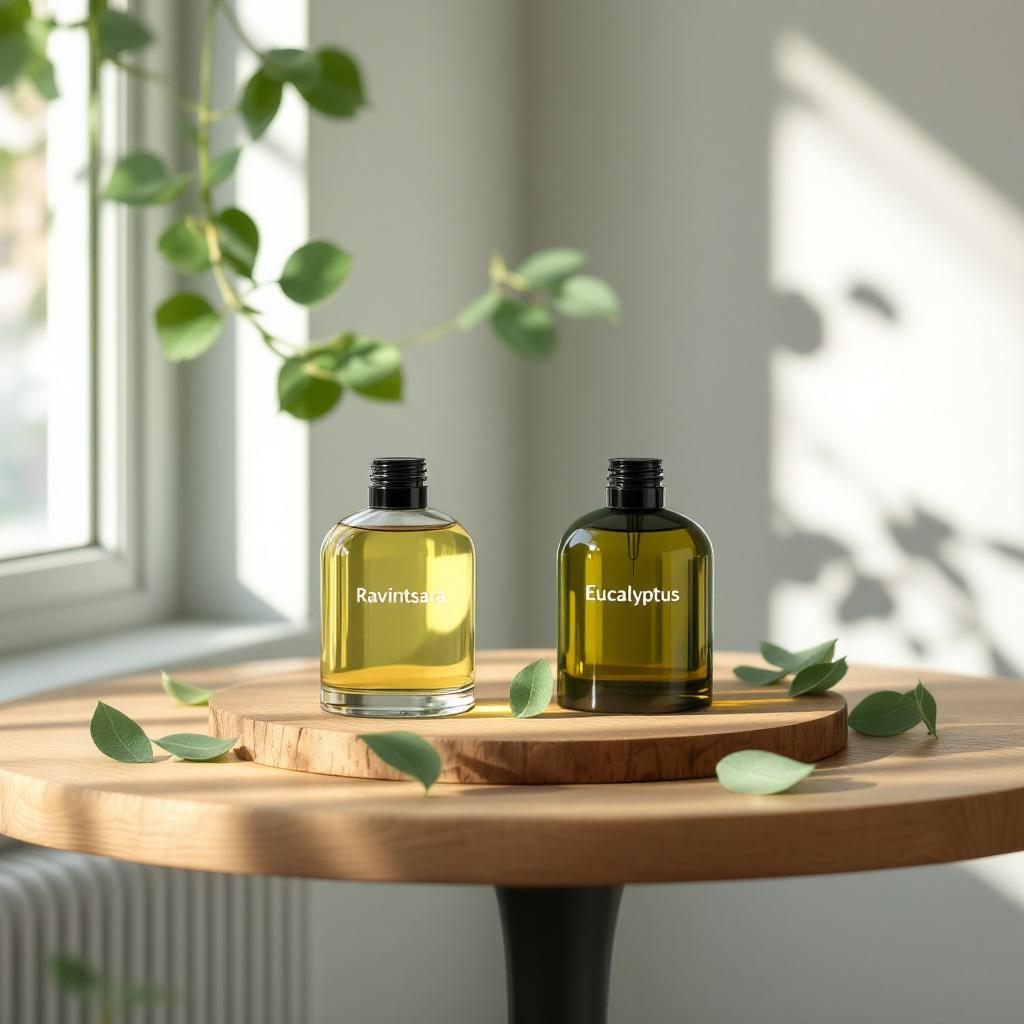
When the air fills with colds and coughs, aromatherapy offers two champions: ravintsara essential oil and eucalyptus essential oil. One often hears one or the other praised as “essential,” but what exactly is this status based on? Let’s dive into the heart of these essences to untangle their strengths and make the choice best suited to your situation.
Sommaire
Origin and Chemical Composition
Ravintsara: A Treasure from Madagascar
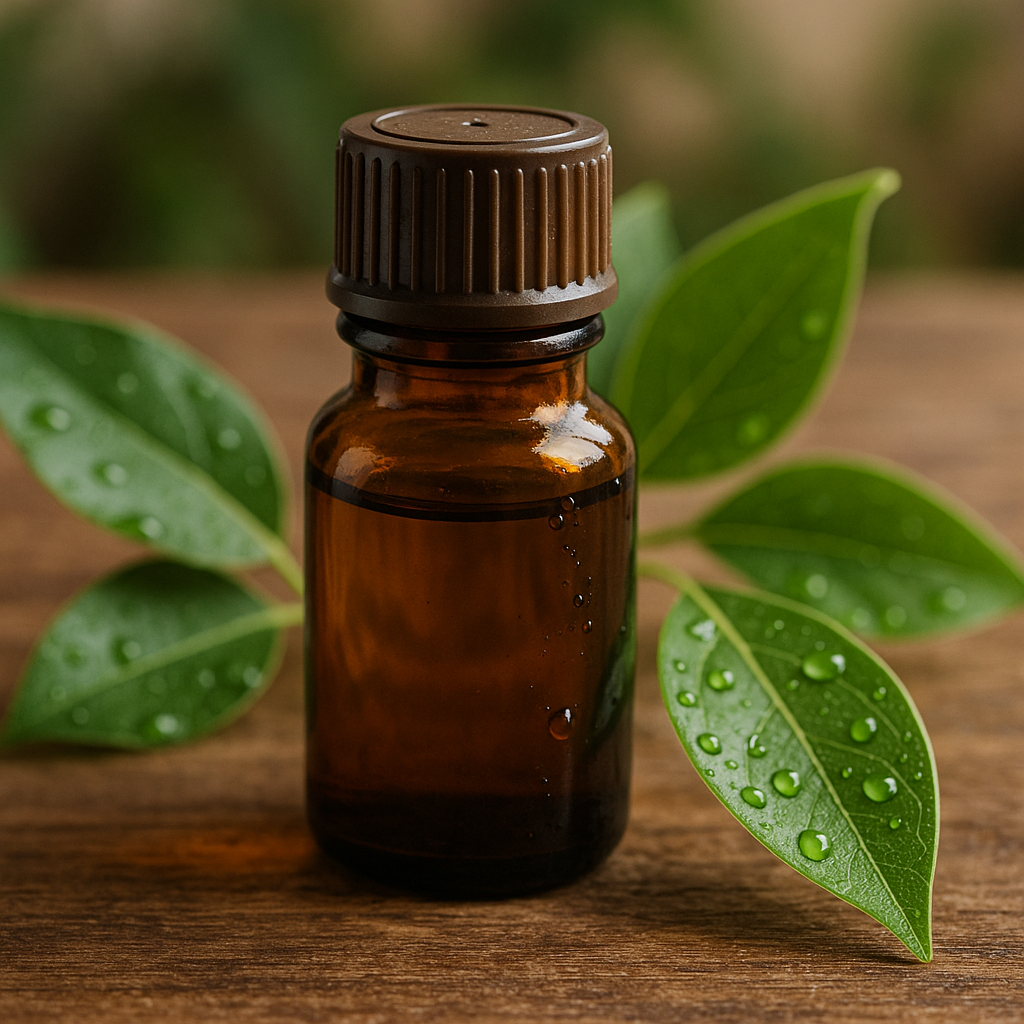
Ravintsara, originating from the forests of Madagascar, comes from the tree Cinnamomum camphora ct. cineoliferum. Its distillate mainly concentrates 1,8-cineole (up to 60%), reinforced by alpha-terpineol and limonene. This composition gives it an antiviral activity recognized for decades by local herbalists.
In the humid undergrowth, this tree develops a round and spicy scent, less sharp than that of eucalyptus. To the eye, the clear oil resembles water, reflecting its purity and richness in hydrophilic molecules, favorable for diffusion and inhalation.
Eucalyptus: A Respiratory Classic
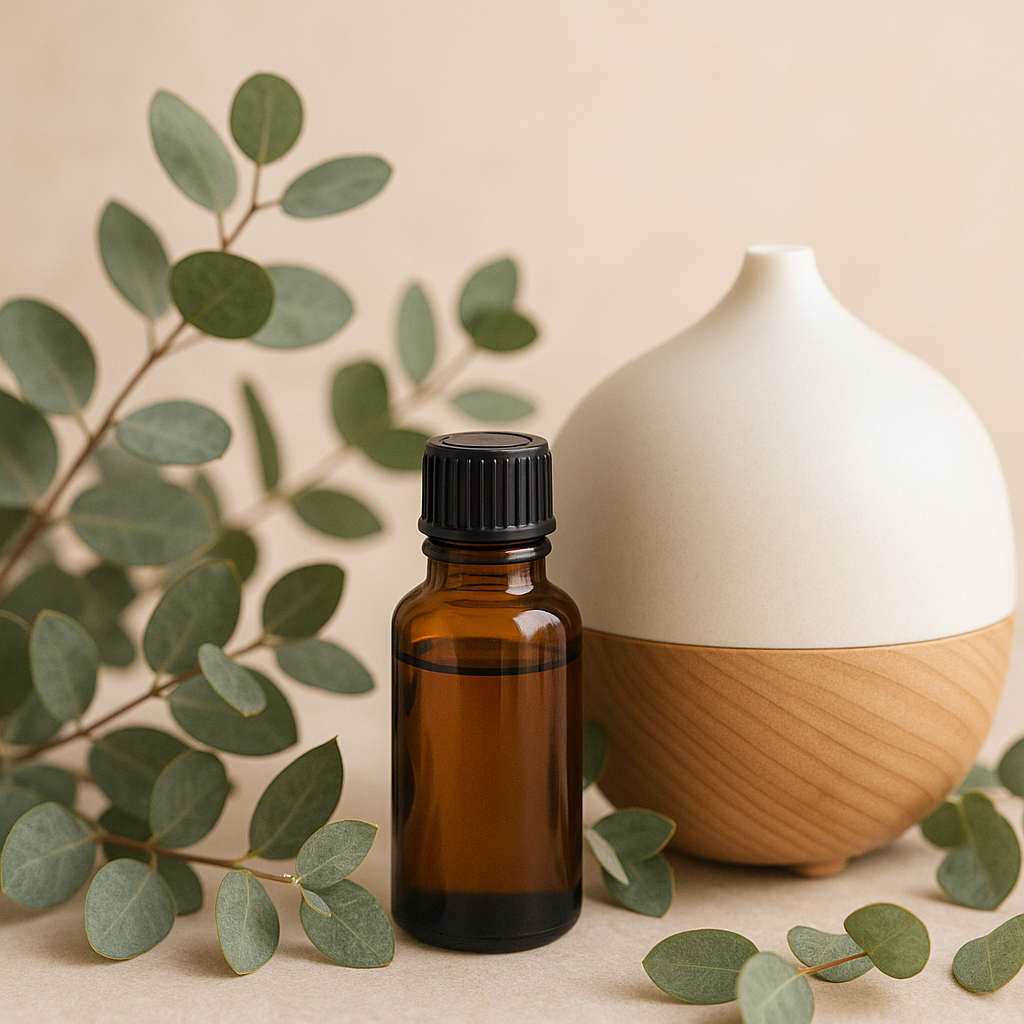
Among the many species, Eucalyptus globulus dominates the essential oil market for colds. Its chemical profile is based on an even more concentrated 1,8-cineole (up to 80%), combined with small amounts of alpha-pinene and limonene. This cocktail promotes a refreshing mist effect, particularly suited to nasal congestion.
At high altitudes, these trees withstand the cold and synthesize a powerful cineole, carrier of a mentholated breath that immediately evokes the clearing of the respiratory tract. It is undoubtedly this sensation of cold on the mucous membrane that earned eucalyptus its status as a reliable remedy.
Comparative Table of Major Constituents
| Molecule | Ravintsara (%) | Eucalyptus (%) |
|---|---|---|
| 1,8-cineole | 50–60 | 70–80 |
| Alpha-terpineol | 10–15 | Trace |
| Alpha-pinene | 1–3 | 5–10 |
| Limonene | 5–8 | 2–5 |
Therapeutic Properties and Spectrum of Action
Antiviral Action
1,8-cineole quickly penetrates the mucous membranes, disrupting viral replication. Laboratory studies confirm that ravintsara neutralizes several viral strains, while eucalyptus shows a slightly superior efficacy against the flu virus. However, in practice, both prove valuable in reducing the duration of symptoms.
Decongestant Effects
While eucalyptus instantly releases a fresh cloud in the sinuses, ravintsara relies as much on its gentle scent as on its ability to thin mucus. For sensitive groups (children, elderly), this gentler alternative can limit irritation and ensure better skin tolerance during massages.
Methods of Use
- Atmospheric diffusion: one drop is enough to purify the air, favor 5 to 10 minutes per hour.
- Steam inhalation: 3 drops in a bowl of hot water, breathe at 20 cm for 5 minutes.
- Chest massage: up to 2% dilution in a vegetable oil (25 drops for 10 ml).
- Capsules or gel capsules: only for ravintsara, prescribed by a healthcare professional.
To avoid any risk, medical supervision is recommended in case of internal or prolonged use.
Precautions and Contraindications
The potency of 1,8-cineole requires caution:
- Do not exceed 7 consecutive days without medical advice.
- Avoid pure use on the skin: always dilute to 1–2%.
- Contraindicated for infants (under 3 months) and pregnant women (1st trimester).
- Prohibited for prolonged diffusion in children’s rooms (maximum duration: 15 minutes).
Which Choice for Your Situation?
Rather than opposing these two oils, they can be considered as a duo or according to tolerance. If you aim for quick and clear relief, eucalyptus wins in vivacity. For gentler support, especially for children or sensitive individuals, prefer ravintsara. In case of doubt, alternating the two oils in 3-day cycles can maximize effectiveness while minimizing overstimulation of the mucous membranes.
FAQ
- Can ravintsara and eucalyptus be mixed?
- Yes, but limit each oil to 1% dilution, for a total of 2% maximum in your carrier.
- Which oil to favor for a child over 6 years old?
- Ravintsara, gentler, with short diffusion (10 minutes) and 0.5% dilution in massage.
- Diffusion or inhalation: which to choose?
- Diffusion covers an entire room, inhalation offers a targeted and faster action on the nose and throat.
- How long can these oils be used?
- No more than 7 consecutive days without medical or aromatherapist advice.