Psyllium is a natural fiber known for regulating bowel movements, stabilizing blood sugar, and promoting intestinal health. Easy to incorporate, it can be dosed according to your goals—digestion, weight loss, or metabolic balance—while remaining compatible with most diets.
📝 Origin and form: powder or capsules derived from the husks of Plantago ovata seeds, rich in soluble fiber (70%).
💧 Essential hydration: consume 200–300 ml of water per teaspoon to avoid any digestive discomfort.
⚖️ Key dosages: 5 g morning and evening for regularity, up to 15 g for appetite suppression or blood sugar regulation.
📦 Storage: keep away from humidity, in an airtight container, to preserve active mucilages.
Sommaire
Why and how to use psyllium?
Psyllium targets bowel disorders, weight control, and modulation of the gut flora. Its gelling in water forms a gel that facilitates evacuation or satiety, while slowing carbohydrate absorption.
Main benefits
- Regulation of bowel movements: relief from constipation (The American Journal of Clinical Nutrition study, 2014) and support in cases of diarrhea.
- Weight management: proven appetite suppressant effect at low doses without caloric excess.
- Glycemic control: slows sugar absorption, useful for prediabetics or diabetics.
- Flora support: mild prebiotic, it nourishes good bacteria and may improve digestion in irritable bowel syndrome .
Recommended dosage
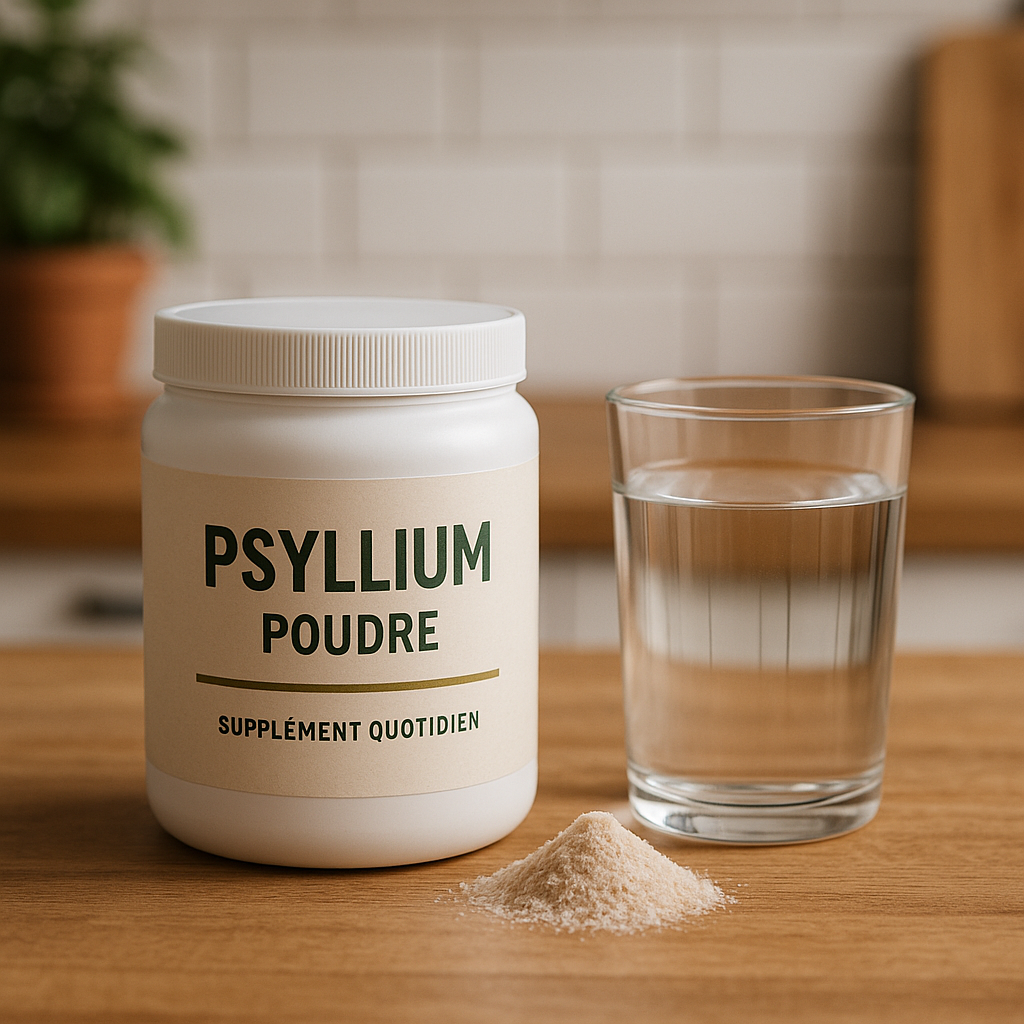
The dosage varies according to the desired effect: bowel movement, satiety, or metabolic rebalancing. Adjust gradually to assess your tolerance.
| Goal | Dosage | Frequency |
|---|---|---|
| Regularity of bowel movements | 5–10 g | 1-2 times/day |
| Appetite suppressant | 10–15 g | 15 min before meals |
| Glycemic control | 5 g | before breakfast |
Psyllium Technical Sheet
| Characteristic | Detail |
|---|---|
| Botanical name | Plantago ovata |
| Constitution | Seed husk (mucilage) |
| Available forms | Powder, capsules, caps |
| Hydrophilicity | 20× its weight in water |
| Competing fibers | Chia, flax, inulin, konjac |
Storage and Practical Advice
Once the packet is opened, close it tightly and store it away from moisture and light. Avoid a kitchen that is too hot to preserve the mucilages.
- Transfer the powder into an opaque jar with a seal.
- Note the opening date for optimal use within 6 months.
- Always test FODMAP tolerance in case of IBS ().
Interactions and Contraindications
The richness in soluble fibers can alter the absorption of certain medications. Separate the intake of psyllium by 1 to 2 hours from any treatment.
« Psyllium can decrease the bioavailability of certain molecules », report modern pharmacopoeias.
- Avoid with hypolipidemic treatments without medical advice.
- Not recommended in case of known gastrointestinal obstruction.
- Enhanced monitoring for cardiovascular patients.
Key Points to Remember
Appropriate dose, sufficient hydration, and optimal storage are the pillars of worry-free use.
Psyllium is not just a laxative: it acts as an intestinal purifier and a blood sugar moderator.
Before any combination with a treatment, consult your pharmacist or doctor.
FAQ
- 1. How to prepare psyllium daily?
- Pour 5 g of psyllium into 200 ml of water, stir and drink immediately to avoid thickening.
- 2. When are the first effects felt?
- Generally within 24 to 48 hours for transit and from the first intake for satiety.
- 3. Can psyllium be mixed into smoothies?
- Yes, provided you add an extra liquid and consume immediately.
- 4. Is there a risk of bloating?
- Start with small doses and increase gradually to limit discomfort.
- 5. Is psyllium suitable for irritable bowel syndrome?
- Often well tolerated, but test according to your FODMAP sensitivity and adjust the dosage.
- 6. What are the differences with konjac?
- Konjac gels more and has a stronger appetite suppressant effect, while psyllium mainly regulates transit.
- 7. Can it be used in gluten-free baking?
- Yes, as a binder and substitute (1 g of psyllium for 30 g of flour), perfect in recipes .
- 8. What is the optimal shelf life?
- 6 months after opening, in an airtight jar, away from moisture.
- 9. Are there precautions for pregnant women?
- Psyllium is generally safe, but monitor your hydration and consult your midwife.
- 10. Can you exceed 15 g per day?
- Beyond that, there is an increased risk of bloating and digestive disorders; respect the recommended doses.