
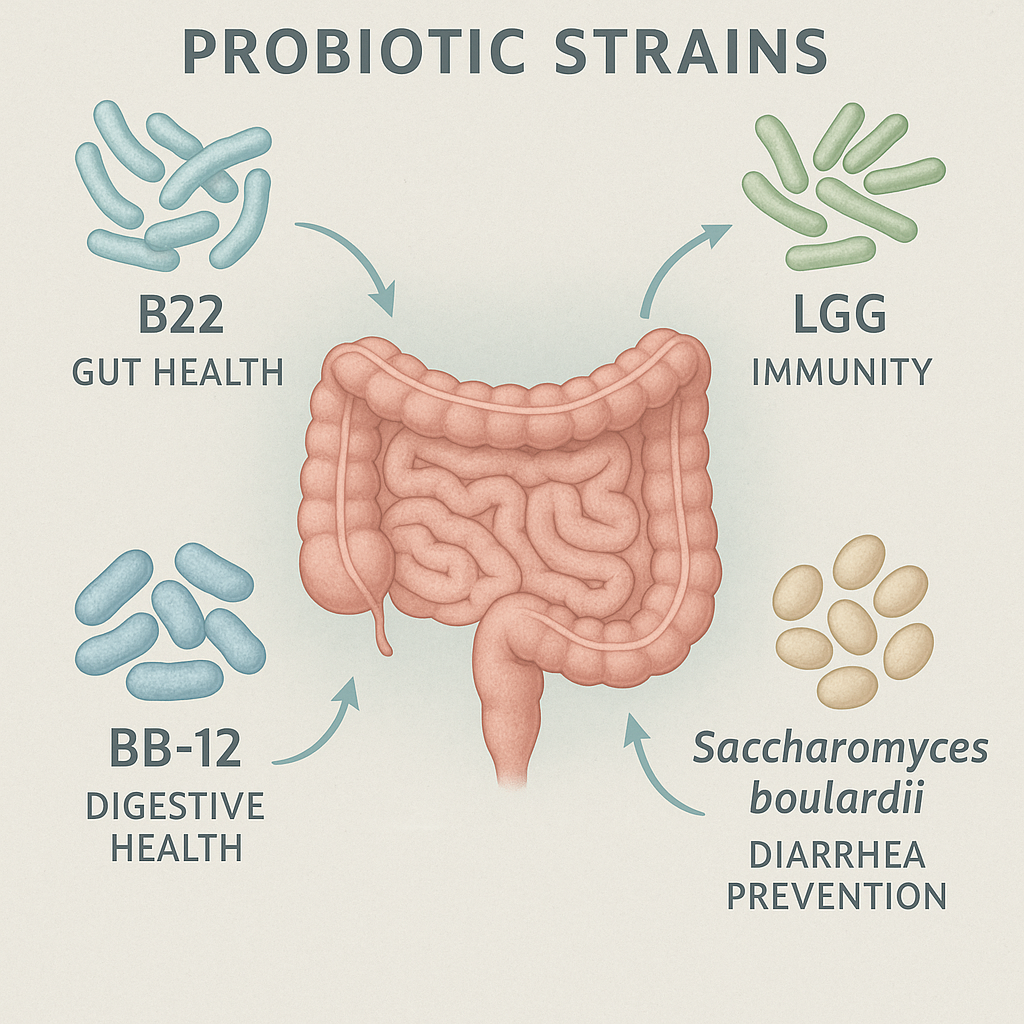
The B22 strain stands out for its ability to strengthen the intestinal barrier and modulate immunity, while other probiotics focus more on balancing the flora or digestion. In this comparison, we analyze the strengths and limitations of B22 against classic strains such as Lactobacillus rhamnosus GG, Bifidobacterium lactis BB-12, or Saccharomyces boulardii, to help you choose according to your needs.
Sommaire
Context and specificities of the B22 strain
Recently identified in fecal samples from healthy subjects, B22 belongs to the genus Bifidobacterium. It secretes antimicrobial peptides and promotes mucin production, thereby protecting the intestinal mucosa. Its spectrum of action includes reducing local inflammation and limiting bacterial translocation.
Origin and discovery
Detected in a clinical study by Inserm (2021), B22 attracted interest due to its marked “anti-inflammatory” profile. Researchers showed that, compared to older strains, it acts upstream of immune responses, where other probiotics intervene rather downstream.
Mechanisms of action
- Barrier reinforcement: increased expression of junctional proteins (occludin, claudin).
- Immune modulation: gentle stimulation of dendritic cells, promoting tolerance.
- Competition: production of bacteriocins that limit the proliferation of opportunistic pathogens.
Strain comparison: summary table
| Strain | Main strength | Usual dosage | Key applications |
|---|---|---|---|
| Bifidobacterium B22 | Intestinal barrier & immunity | 1–3 billion CFU/day | Leaky gut, chronic inflammation |
| L. rhamnosus GG | Fight against diarrhea | 5–10 billion CFU/day | Acute diarrhea, infection prevention |
| B. lactis BB-12 | General flora strengthening | 1–5 billion CFU/day | Transit, winter immunity |
| S. boulardii | Yeast probiotic, anti-toxin | 250–500 mg, twice daily | Antibiotic diarrhea, Clostridium infections |
Advantages and Disadvantages of the B22 Strain
B22 is not positioned as a universal strain: it is specifically recommended for disorders related to permeability and inflammation. Let’s examine its strengths and limitations.
Advantages
- Targeted efficacy on the intestinal mucosa, validated by about ten preclinical studies.
- Good tolerance even at high doses, absence of notable gastrointestinal side effects.
- Possible synergy with prebiotics (FOS, inulin) to better colonize the digestive tract.
- Pharmaceutical quality: often packaged in gastro-resistant capsules to preserve viability.
Limitations
- Limited availability: few brands offer it on the French market.
- Restricted targeting: less suitable for transit disorders without inflammatory components.
- Cost generally higher than classic strains.
Other Strains: Points of Comparison
To make an informed decision, it is necessary to understand how B22 compares to the most famous probiotics.
Lactobacillus rhamnosus GG
Excellent for preventing infectious diarrhea and antibiotic-associated complications, this strain is a safe choice. However, it does not have the “barrier” effect of B22 and proves less effective on chronic inflammation.
Bifidobacterium lactis BB-12
Very versatile, it improves transit and supports general immunity. Its performance in the context of hyperpermeability remains inferior to that of B22, according to comparative results from a 2022 study.
Saccharomyces boulardii
A probiotic yeast ideal for neutralizing toxins, especially in cases of antibiotic-associated diarrhea or Clostridium difficile. It is not recommended for strengthening the mucosa.
Best Uses and Synergies
B22 finds its place in specific protocols, often combined with other strains or prebiotics for a reinforced effect.
Leaky gut and irritable bowel syndrome
- Combine B22 (2 billion CFU morning and evening) with 5 g of inulin to restore the barrier.
- Add a low dose of L. rhamnosus GG to stabilize transit.
Post-antibiotic therapy
- Start B22 as soon as the treatment ends to limit inflammation.
- Continue with B. lactis BB-12 to gradually repopulate the flora.
Regulations and Precautions
Probiotics are classified as dietary supplements, subject to the same framework as functional foods. To learn more about functional food regulations, consult the dedicated article. Always ensure quality, traceability, and appropriate packaging (gastro-resistant capsule or lyophilized form).
Practical Advice for Consumers
Before selecting a strain, clearly identify your goal (barrier, transit, immunity). Check:
- The number of CFU at the expiration date.
- The presence of quality guarantees (ISO certifications, absence of allergens).
- Storage (refrigeration or long shelf life).
Follow-up by a healthcare professional is always recommended, especially in cases of chronic diseases or immunosuppression.