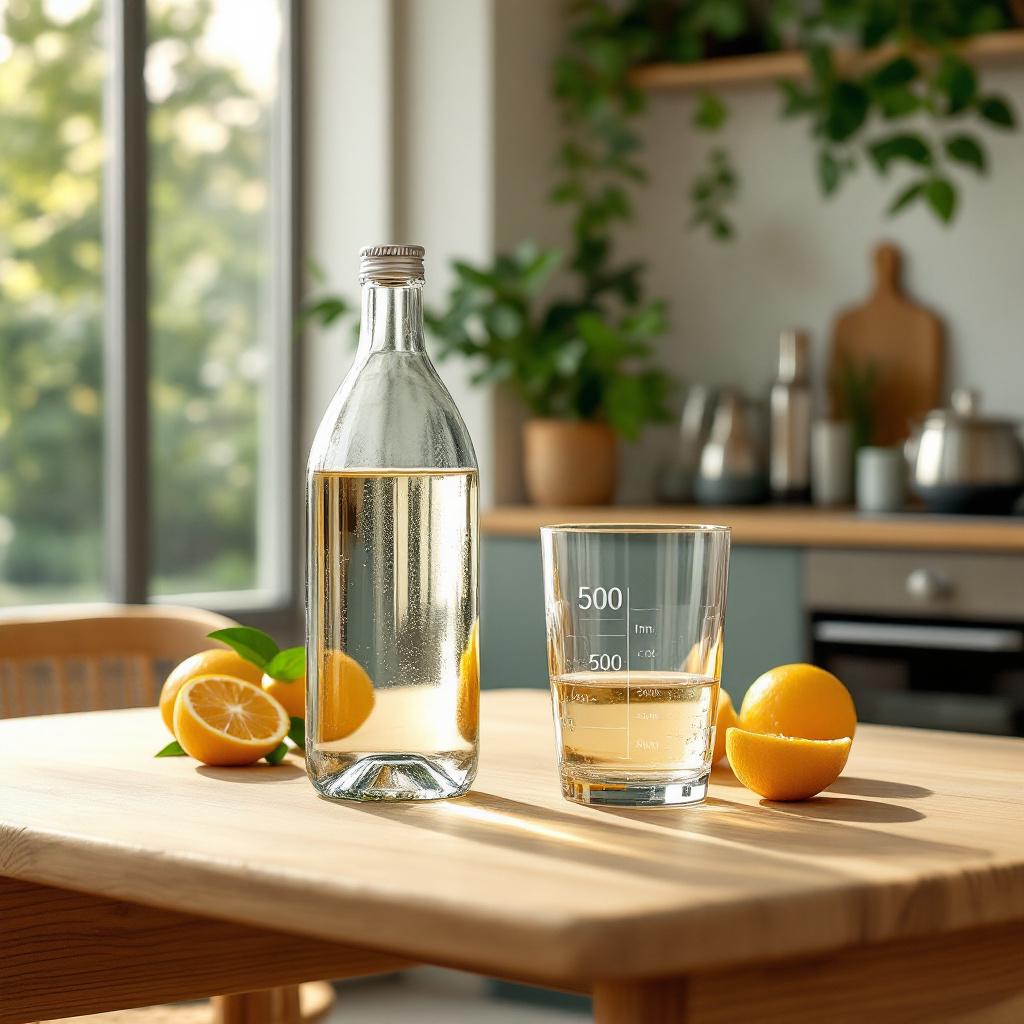
You are holding a bottle labeled “50 cl” in your hands and you wonder: what does that represent in milliliters? Is it just a simple mathematical detail or a marketing trick to make you believe in a better quality-price ratio? In this article, we will dive into the heart of this question, decode the conversion 50 cl ↔ 500 ml, examine the manufacturers’ motivations, and give you all the keys to see more clearly before heading to the checkout.
Sommaire
1. The 50 cl size: origins and uses
1.1 A historical benchmark turned standard
The centiliter (cl) did not fall from the sky: it is part of the metric system adopted in France at the beginning of the 19th century. At the time, the liter was divided into 100 centiliters to facilitate measurements in pharmacy and chemistry. Very quickly, the use spread to beverages. Today, you encounter this size in water bottles, soda cans, or juice bottles. Why 50 cl and not 47 cl or 52 cl? Simply because dividing into two equal volumes (1 L → 50 cl + 50 cl) is more meaningful for the consumer and for the industry.
1.2 The marketing behind volumes
On store shelves, every centiliter counts. Manufacturers often try to find the psychological threshold where the volume seems more generous without increasing their material costs. 50 cl is both close enough to a liter to give the impression of an abundant product and small enough to encourage impulse purchases: a refreshing break within reach.
2. Conversion of 50 cl to ml: a simple calculation
2.1 The basics of conversion
Nothing complicated: 1 liter = 1,000 milliliters. And since 1 liter = 100 centiliters, then 1 cl = 10 ml. So you just have to multiply:
- 50 cl × 10 = 500 ml
This equivalence is universal, whether you are in France, Belgium, or French-speaking Switzerland. Note that in some Anglo-Saxon countries, the fluid ounce (fl oz) is still used, but that’s another debate!
2.2 Summary table of volumes
| Volume (cl) | Volume (ml) | Approximate equivalent (fl oz) |
|---|---|---|
| 10 cl | 100 ml | 3.4 fl oz |
| 25 cl | 250 ml | 8.5 fl oz |
| 33 cl | 330 ml | 11.2 fl oz |
| 50 cl | 500 ml | 16.9 fl oz |
| 75 cl | 750 ml | 25.4 fl oz |
3. Marketing scam or simple necessity?
3.1 Arguments in favor of a “scam”
Several customers feel cheated: why pay almost the same price for 50 cl as for 1 L? Here are the most common criticisms:
- Inflated price per liter: some brands display a price per liter significantly higher when comparing 50 cl vs 1 L.
- Volume sensations: the packaging sometimes evokes a feeling of lightness or exclusivity, without the consumer realizing the actual volume difference.
- Deliberate segmentation: by multiplying formats (20, 33, 50, 60, 75 cl), manufacturers create confusion that encourages impulse buying rather than fair comparison.
“It’s as if they sold you half a liter at the price of a liter, but with a nice design to distract your attention!”
When analyzing the quantity/price ratio, there is often an increase of 10 to 20% on the price per liter for the small 50 cl format compared to the large format. For a controlled budget, this can weigh heavily, especially if you buy several bottles per week.
3.2 Why we can also talk about necessity
However, this 50 cl format is not just a low marketing trick: it also meets concrete needs.
- Portability: half a liter fits more easily in a water bottle, a backpack, or a bike bottle holder. Ideal for athletes & urban dwellers.
- Freshness & freshness: certain drinks (craft beers, smoothies) are consumed quickly to avoid losing their bubbles or aromas. A small format guarantees optimal tasting.
- Waste reduction: the less volume you buy, the more you limit the leftover bottle at the bottom of the fridge. Better for the wallet and for the planet.
In reality, the choice of a format often depends on lifestyle and occasions. For an impromptu picnic, you don’t want to carry a whole liter. At aperitif time, sharing is preferred rather than a large container that would need to be kept in the fridge.
4. Tips for choosing and comparing well
4.1 Always check the price per liter
To avoid being fooled, carefully note the price per liter displayed below the product. It is the most direct reference for comparing two different volumes. A small difference of 5 cents may seem trivial, but multiplied by 10 bottles over a month, it represents a significant extra cost.
4.2 Take your consumption habits into account
- Do you drink quickly? Choose 50 cl to enjoy freshness.
- Do you share with family or friends? Prefer 1 L or 75 cl to avoid trips back to the fridge.
- Are you going for a walk? Lightness and compactness can justify the small format.
4.3 Take advantage of offers and promotions
Multi-format packaging is often subject to promotions. Watch out for “packs of 3 × 50 cl” or “2 + 1 free”. Sometimes, you will find a more interesting price per liter than for the standard large format.
5. Facts and figures to remember
- A quarter of non-alcoholic beverage sales are in formats less than or equal to 50 cl.
- The majority of cyclists during leisure rides use 500 ml water bottles.
- Between 2015 and 2020, the average price per liter for 50 cl formats increased by 12% in France.
Conclusion
The conversion 50 cl = 500 ml is a simple equation, but the choice of this format goes far beyond an arithmetic calculation. Between marketing strategies, practical needs, and consumption habits, the half-liter proves to be both an opportunity and a point of caution. Before adding a bottle to your cart, make it a habit to calculate the price per liter, identify your actual usage, and explore alternative formats. This way, you will always enjoy a fresh product, well-sized, and with the best quality/price ratio.