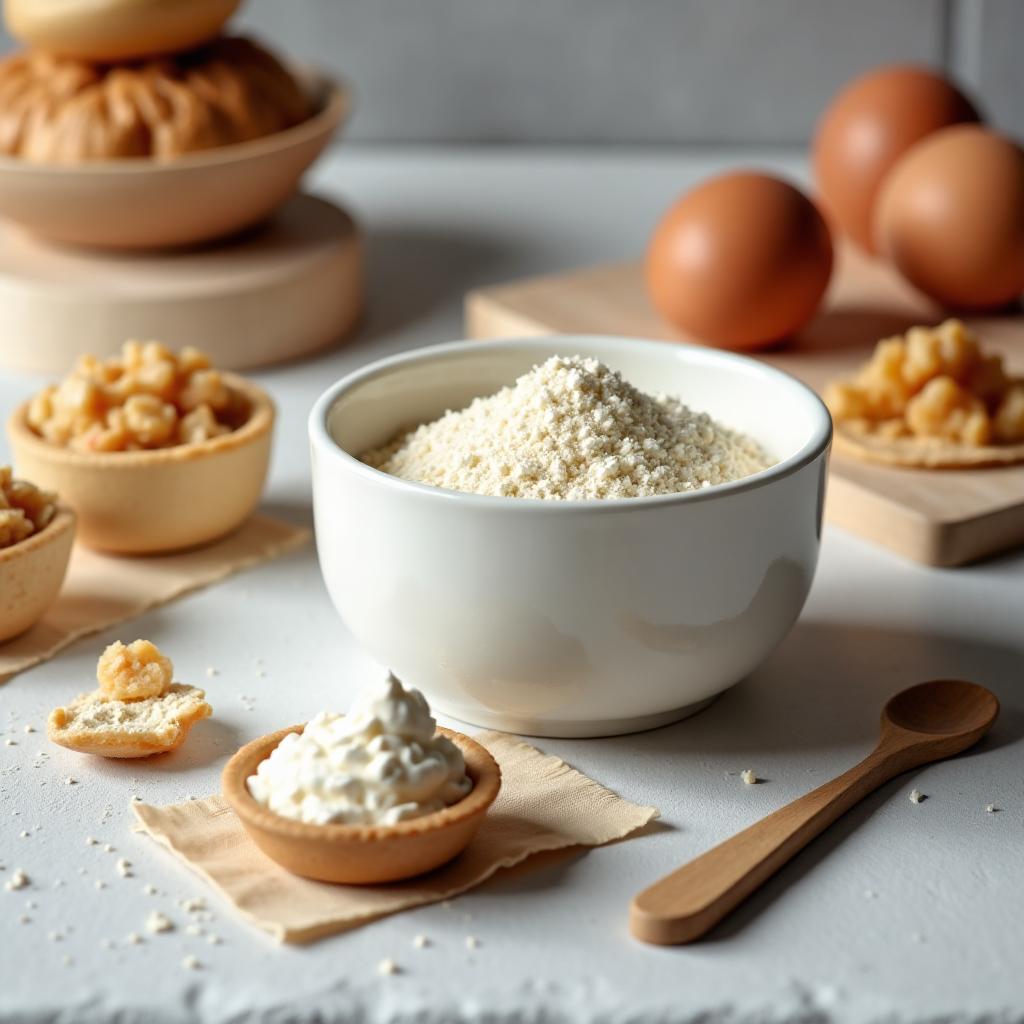
| Key Points | Details to Remember |
|---|---|
| 🍞 Substitution | Adapt the correct psyllium/flour ratio |
| 💧 Hydration | Adjust moisture to compensate |
| ⚖️ Dosage | 1 spoon per 100 g of gluten-free flour |
| 🥣 Structure | Thicken and bind the dough |
| 🌾 Alternatives | Combine with other fibers |
| 🍽️ Applications | Ideal for breads, cakes, muffins |
| 🔍 Precautions | Too high dosage can alter the taste |
Incorporating psyllium into a gluten-free preparation may seem like a magic trick, as alternative flours lack gluten to provide elasticity and softness. Yet, this natural gelling agent, extracted from the stem of Plantago ovata, transforms the texture of your breads, muffins, and cakes. Through precise dosing guidelines, I will guide you to replace part of the gluten-free flour with psyllium without risking crumbly or overly dense dough.
Sommaire
The Role of Psyllium in Gluten-Free Doughs
In traditional baking, gluten acts as an elastic network, trapping gas bubbles to ensure volume and lightness. In the gluten-free world, psyllium substitutes this function. Upon contact with water, its fibers form a viscous gel that acts as “glue”: it retains moisture, improves elasticity, and facilitates shaping.
This mechanism gives it two major advantages: the ability to emulate gluten’s behavior and to limit drying out after baking. Unlike some industrial food gums, psyllium additionally provides soluble fiber known for its digestive benefits.
Determining the Right Substitution Ratios
There is no universal formula: each recipe, with its flour composition (rice, buckwheat, millet, corn…), requires adjustment. However, some guidelines will help you:
- For 100 g of gluten-free flour, count 5 to 8 g of psyllium (i.e., 1 to 1.5 tablespoons).
- When reducing flour by 10%, always compensate with the same weight of psyllium.
- Be sure to slightly increase the liquid: 10 to 20 ml of extra water per spoon of psyllium.
Breads and Baguettes
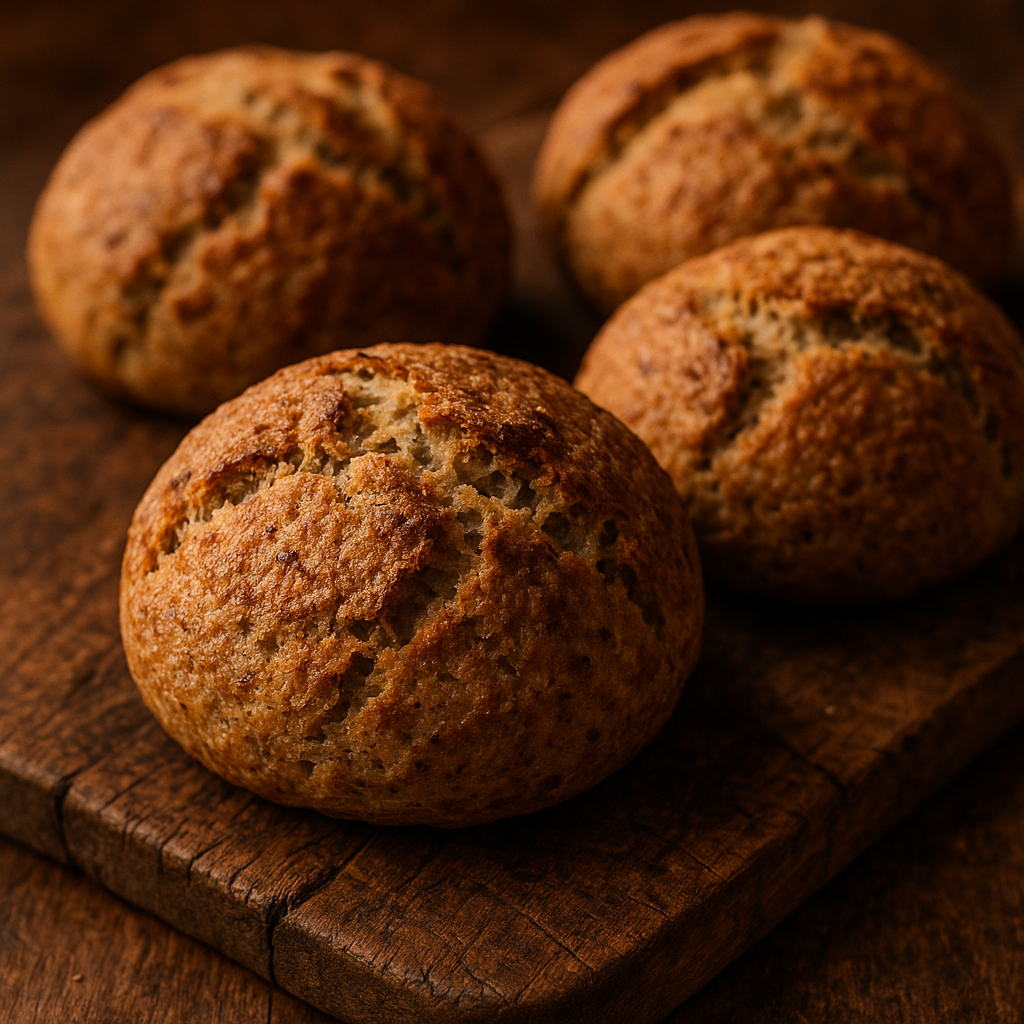
For a 500 g mixed flour bread, remove about 50 g of flour and add 7 g of psyllium. In this case, hydration increases from 300 ml to about 315 ml. You will notice that the crumb becomes less crumbly and maintains a regular openness.
Cakes and Brioche
Sweet pastries often require less structure than bread, so 5 g of psyllium per 100 g of flour is sufficient. Excess can weigh down the preparation. In a brioche, substituting 20% of the flour and adding a splash of milk ensures a light, almost stringy layering.
Muffins and Cookies
Muffins appreciate a softer texture than a dry cookie. A ratio of 1 tablespoon of psyllium per 120 g of flour creates prolonged softness, without the gummy mouthfeel.
Tips to Optimize the Use of Psyllium
The balance between hydration, resting time, and temperature plays a key role:
- Precise hydration: a gel that is too thick will make the dough difficult to work with. Taste the dough’s elasticity after 5 minutes of resting and adjust by 5 ml if necessary.
- Resting time: let rest for 15 to 30 minutes so that the psyllium develops its gelling power before baking.
- Facilitated storage: to prevent your preparations from hardening, wrap them tightly. You will find advice on psyllium storage to prolong the freshness of your doughs.
Comparing Psyllium to Other Fibers
If you hesitate between psyllium and other natural gums, keep in mind:
- Chia seed: its gel is softer and its flavor slightly noticeable.
- Inulin fibers: provide sweetness but fade less at high temperatures.
- Konjac: very thick, it is more suitable for puddings.
For a broader view of plant fibers, you will note that psyllium offers a balance between neutral taste and gelling efficiency.
Choosing Your Psyllium Well
The quality of psyllium influences the final result. Favor a certified origin, from organic crops, to avoid pesticides. A buying guide can help you identify the ideal granularity (between 100 and 200 μm) for better solubility.
FAQ
-
How much water should be planned with psyllium?
As a general rule, count 10 ml of additional water per gram of psyllium to obtain a fluid gel. -
Can psyllium be overdosed?
Yes. Beyond 10 g per 100 g of flour, the taste can become earthy and the dough too dense. -
Does psyllium change the flavor?
No, its taste remains neutral, but it can enhance the aromas of your main ingredients. -
Is it possible to freeze doughs enriched with psyllium?
Absolutely, the gelled structure prevents the formation of water crystals, ensuring a softer thaw.