| 🍽️ Definition of the diet | Understand the basics of a low histamine plan |
| 🥗 Main foods | Identify the ingredients to prioritize |
| 🛠️ Preparation methods | Master cooking and storage |
| 📅 Sample menu | Follow a 7-day schedule |
| ⚖️ Expected benefits | Observe improved digestive and skin well-being |
| 🚫 Avoiding pitfalls | Anticipate risky foods |
If you suspect a sensitivity to histamine or if your doctor recommends trying a low histamine diet, this comprehensive guide offers a sample 7-day menu. Here you will find clear explanations, storage tips, and a concrete example for each meal. The idea is not to impose a rigid diet but to offer you a simple and flexible framework to limit histamine while preserving pleasure and balance.
Sommaire
What is histamine and why limit it?
Histamine is a molecule naturally present in our body, but also in many foods. In some individuals, an imbalance between the production and breakdown of histamine can trigger various symptoms:
- headaches, chronic migraines;
- digestive disorders (bloating, reflux);
- skin reactions (redness, hives);
- fatigue, palpitations.
To reduce the histamine load, fresh foods, minimally fermented and low in amines are favored. In practice, this means reinventing your shopping list and adopting some good kitchen habits.
Principles of a low histamine diet
One might think it is enough to eliminate aged cheeses or cold cuts, but it is a bit more complex. The diet relies on three pillars:
- Selection of ingredients low in histamine or histamine liberators;
- Quick preparation of dishes to limit amine accumulation;
- Controlled storage: intense cold and consumption within 24 hours.
By adopting these principles, you reduce the risk of reactions while continuing to vary textures and flavors, without falling into a discouraging list of prohibitions.
Practical tips for succeeding with your weekly menu
Choice of Ingredients
Here are some guidelines to help you compose your recipes:
- Fresh non-fermented vegetables: zucchini, broccoli, sweet peppers.
- Ripe fruits just at their peak: apples, pears, blueberries.
- Lean meats and fresh fish: chicken, turkey, cod to be consumed within the day.
- Gluten-free or minimally processed cereals: white rice, quinoa, oat flakes.
- Mild vegetable oils: rapeseed, sunflower, olive in small quantities.
On the other hand, it is preferable to limit fermented dairy products, chocolate, wine, vinegar, and to avoid industrial canned foods which are often rich in histamine.
Storage Tips
Storage plays a crucial role in the increase of histamine. Two concrete tips:
- Refrigerate your preparations as soon as they have cooled (do not leave more than two hours at room temperature).
- Add a splash of lemon juice at serving time to inhibit bacterial growth (adjust according to your tolerance).
This approach allows you to extend freshness without sacrificing taste. Also consider light batch cooking by dividing your portions so you only prepare what you will need.
Typical 7-Day Menu
| Day | Breakfast | Lunch | Dinner |
|---|---|---|---|
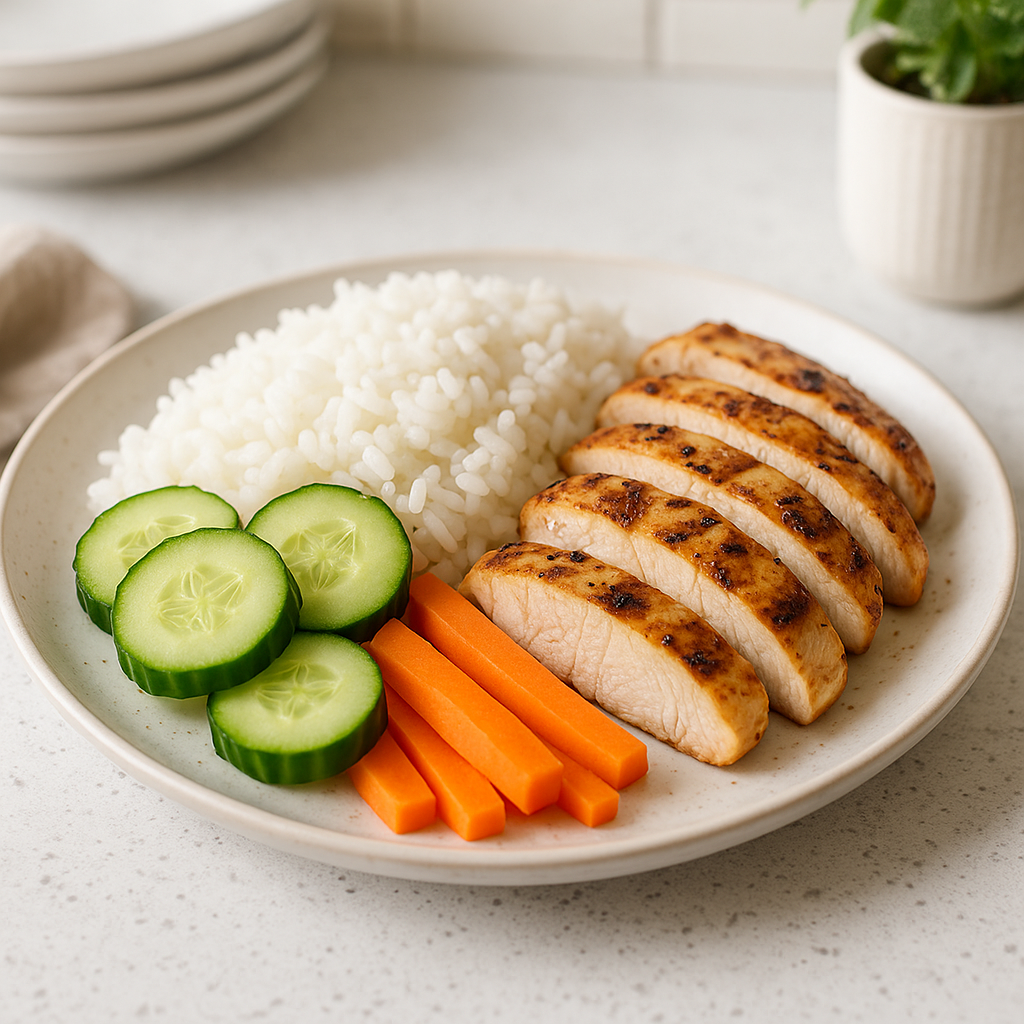
| 1 | Oat flakes cooked in oat milk, diced pears | Quinoa salad, cucumber, pan-fried chicken breast, olive oil | Steamed cod fillet, wok broccoli, white rice |
| 2 | Rice flour crepes, homemade apple compote | Zucchini soup, small rice roll, slice of turkey | Mixed vegetable sauté (carrots, zucchini), brown rice |
| 3 | Coconut milk yogurt, fresh blueberries | Quinoa pancake, sautéed spinach, grilled chicken breast | Herb omelette, cherry tomatoes, lamb’s lettuce salad |
| 4 | Puffed rice porridge, banana slices | Turkey fillet, sweet potato purée, peas | Miso soup (gluten-free noodles), bok choy, fresh tofu |
| 5 | Toasted rice bread, mashed avocado, poached egg | Wild rice salad, grilled zucchini, fresh salmon | Seasonal vegetable stir-fry, marinated tofu, white rice |
| 6 | Green smoothie (cucumber, apple, mint) | Basmati rice, steamed broccoli, turkey escalope | White fish en papillote, spinach, quinoa |
| 7 | Buckwheat pancakes, pear compote | Vegetable broth, small chicken meatballs, rice | Zucchini gratin, brown rice, Herbes de Provence |
Frequently Asked Questions
Which foods should be favored in a low-histamine diet?
Focus your choices on fresh, non-fermented products such as green vegetables, ripe fruits, white meats, and simple cereals (rice, quinoa). Mild oils and unsweetened plant milks are good alternatives.
How long should this diet be followed before seeing results?
Generally, a strict protocol of 2 to 4 weeks allows improvement to be observed. Afterwards, some foods are gradually reintroduced to test individual tolerance.
Can meals be prepared in advance?
Yes, but make sure to refrigerate dishes within two hours and not keep them for more than 24 hours. Batch cooking remains possible provided ingredients are stored separately.
What are the signs of histamine intolerance?
They vary according to individuals, but headaches, digestive disorders (bloating, reflux), skin rashes, or palpitations are often noted.