| Key Points | Details to Remember |
|---|---|
| 🍄 Nature | **Edible** mushroom with characteristic white filaments, nicknamed “lion’s mane” or “bearded hedgehog” |
| ⚡ Main virtues | **Stimulates** neurogenesis, **protects** the gastric mucosa, **strengthens** immunity via beta-glucans |
| ⚠️ Precautions | **Interactions** with anticoagulants and immunosuppressants; **avoid** if allergic to mushrooms |
| 🔬 Scientific status | **Benefits** documented in vitro/animal studies; **human trials** still limited but promising |
| 🍽️ Consumption | **Standardized extracts** recommended (20-40% polysaccharides); **cooking essential** for fresh versions |
Hericium erinaceus intrigues as much as it fascinates. This mushroom with the appearance of a white beard arises in discussions about superfoods, promising to regenerate neurons as much as to repair intestines. But behind the enthusiasm of mycotherapy enthusiasts, voices are raised to question its real safety. Between recent scientific studies and millennia-old Asian traditions, let’s untangle fact from fiction about this extraordinary organism. Can it be consumed with eyes closed? What are the concrete risks for your health? A dive into the complex world of lion’s mane.
Sommaire
Hericium erinaceus: portrait of a mushroom unlike any other
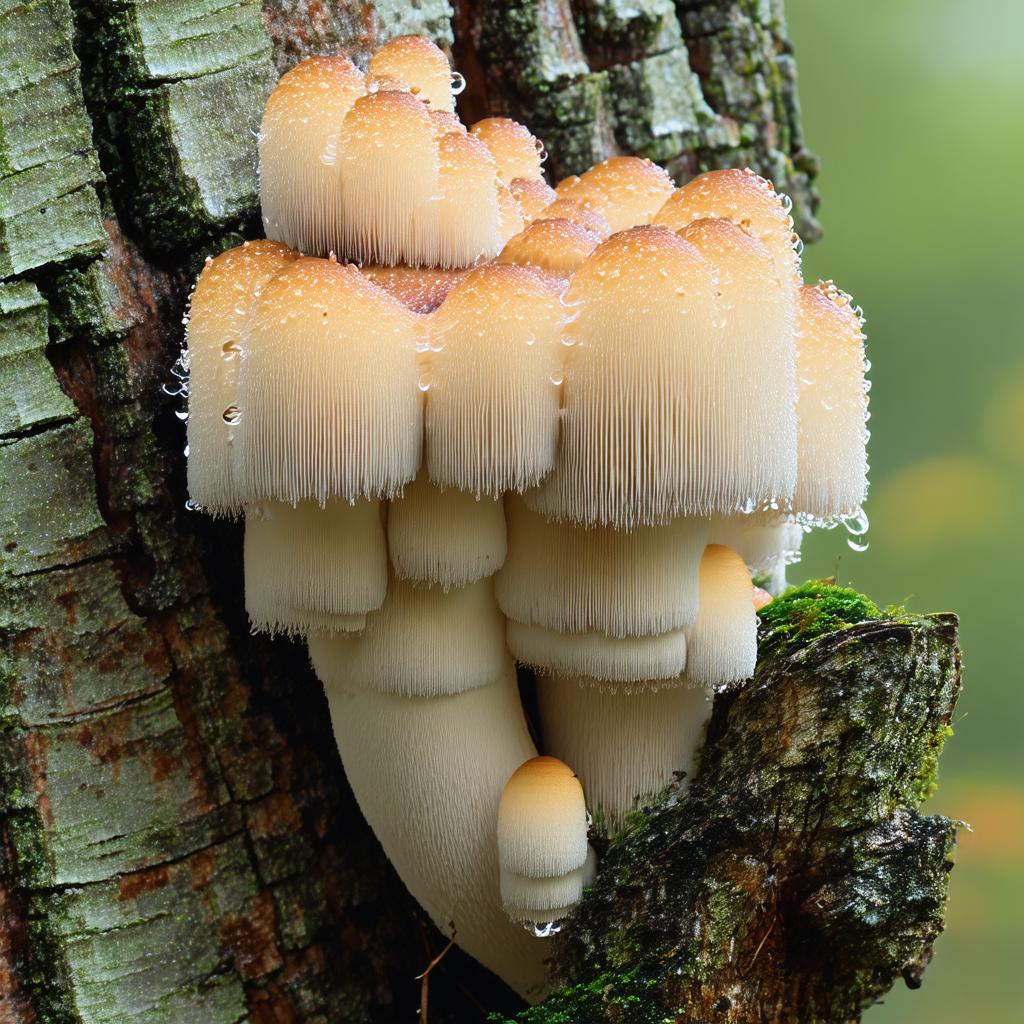
Imagine a cottony ball bristling with immaculate stalactites: the appearance of hericium erinaceus explains its evocative nicknames “lion’s mane” or “hedgehog pompom.” Unlike classic forest mushrooms, it has neither cap nor gills. Its growth mainly occurs on beech, oak, or walnut trunks, preferring the temperate climates of North America, Europe, and Asia. In China and Japan, where it is respectively called hóutóu gū and yamabushitake, its medicinal use dates back to the Song dynasty (960-1279). Buddhist monks consumed it to promote mental clarity during long meditations. Even today, in the mountains of Nagano, growers perpetuate ancestral cultivation techniques on wood logs – a method that better preserves its active principles than industrial substrates.
Biochemical composition: the secret of its effects
What makes this mushroom so special lies in its richness in rare molecules. The erinacines and hericenones – cyathane derivatives – can cross the blood-brain barrier to stimulate the production of nerve growth factor (NGF). NGF plays a crucial role in neuron survival. Another treasure: specific polysaccharides like HEP-3 which modulate immune activity. A study published in International Journal of Medicinal Mushrooms identified no less than 32 phenolic compounds with antioxidant properties in its extracts – twice as many as in shiitake. This synergy of substances explains its therapeutic versatility.
Claimed health benefits: myth or reality?
The superfood reputation of hericium is based on three areas where evidence is accumulating: cognitive health, digestive comfort, and immune modulation. But not all claims are equal.

An ally of the brain and nervous system
Taiwanese researchers demonstrated in 2018 that daily intake of hericium extract for 4 months significantly improved cognitive functions in elderly people suffering from mild decline. The placebo control group showed no improvement. How to explain this? The erinacines activate the synthesis of the PC12 protein, essential for axonal regeneration. Tests on animal models with spinal cord injuries show a 40% accelerated motor recovery. For students during exam periods or professionals exposed to chronic stress, supplementation could counteract cortisol’s effects on the hippocampus. However, caution: no study currently proves its effectiveness on established neurodegenerative diseases like Alzheimer’s.
Action on the intestine and digestion
Where hericium surprises is its impact on the microbiota and gastric mucosa. Its polysaccharides serve as selective prebiotics for Lactobacillus and Bifidobacterium strains. In a Japanese clinical trial, 70% of patients suffering from irritable bowel syndrome saw their bloating decrease after 6 weeks of treatment. Even more impressive: its ability to inhibit Helicobacter pylori. In vitro tests reveal that its diterpenes reduce this bacterium’s adhesion to stomach walls by 85% – a serious lead to complement classic antibiotic treatments, often poorly tolerated. For those suffering from chronic gastritis, it is a tangible hope.
Dangers and precautions for use: do not underestimate the risks
While enthusiasm around lion’s mane is understandable, some warnings are necessary. Its potential interactions with common medications are too often overlooked.
Documented drug interactions
The main danger lies in its indirect anticoagulant action. As confirmed by a University of Minnesota study, its compounds inhibit platelet aggregation. Combined with blood thinners (warfarin, aspirin), it multiplies the risk of hemorrhages. Another critical interaction: with immunosuppressants taken after organ transplant. By stimulating macrophage activity, it can compromise the effectiveness of anti-rejection treatments. Cases of kidney transplant rejection have been reported in Japan in patients regularly consuming hericium-based supplements. Caution is therefore particularly advised for:
- People undergoing chemotherapy
- Diabetics (risk of hypoglycemia with insulin)
- Pregnant women (lack of studies on fetal development)
Side effects and contraindications
In 3 to 5% of consumers, skin allergic reactions (hives, itching) appear, especially with products based on unpurified mycelium. Mild digestive disorders (nausea, diarrhea) may occur during initial intakes – a phenomenon often linked to the detoxifying effect on the liver. More rare but concerning: some cheap extracts cultivated in China revealed alarming levels of cadmium and lead during health checks. ANSES recommends favoring certified organic European products, with heavy metal analysis available. In case of autoimmune disease (lupus, rheumatoid arthritis), it is better to abstain: immune stimulation could exacerbate symptoms.

Practical guide: how to properly consume lion’s mane
To enjoy the benefits without risks, the form and quality of the product make all the difference. Here’s what you need to know before supplementing.
Available forms and their effectiveness
Fresh, this species is cooked in stew or sautéed like a soybean sprout – but its pronounced bitterness puts off some palates. Dehydration better preserves its active principles than freezing. For therapeutic use, standardized extracts in capsules offer the best bioavailability. Look for products standardized to at least 30% polysaccharides and 0.5% erinacines. Whole powders (fruiting body + mycelium) have the advantage of fiber but less precise dosages. A recent meta-analysis highlights that double polarity extracts (water + alcohol) capture 40% more active molecules compared to simple decoctions. If you opt for whole dried mushrooms, cooking at a minimum of 75°C is essential to neutralize possible natural toxins.
Validated protocols and dosages
Most studies use dosages between 500 and 1500 mg/day of concentrated extract, divided into two doses. For cognitive problems, neurologists recommend courses of at least 3 months, followed by a monthly break. For digestive disorders, effects often appear in 2 to 4 weeks. Important: always start with low doses (250 mg/day) to test your tolerance. Combining lion’s mane with vitamin D would enhance its neuroprotective effects according to a 2022 Taiwanese study. Conversely, avoid taking it in the evening – its stimulating properties could disturb sleep in sensitive individuals.
Hericium vs other medicinal mushrooms: strengths and specificities
Unlike reishi (immunomodulator) or cordyceps (energizer), hericium stands out by its preferred target: the nervous system and microbiota. But some combinations create interesting synergies.
Comparison of active profiles
Unlike many medicinal mushrooms studied for their immune properties, Hericium erinaceus stands out for its unique neurotrophic compounds. This uniqueness positions it as a valuable ally for cognitive and nervous health. To optimize benefits, some practitioners advise combining it with reishi to strengthen immunity, or with cordyceps during periods of intellectual overwork. The choice of a suitable supplement will therefore depend on your specific goals:
- Reishi: best for immune balance and oxidative stress
- Cordyceps: superior for physical endurance and libido
- Maitake: more effective on glycemic regulation
“Hericium fills a therapeutic gap in managing age-related cognitive decline. No other mushroom offers this level of neuronal specificity” – Dr. Hiroshi Matsuoka, Kyoto University
Winning synergies and associations
For students preparing for exams, combining lion’s mane and bacopa monnieri multiplies effects on memorization. Against gastric ulcers, its association with licorice (DGL) accelerates mucosal healing. Therapists specializing in mycotherapy often recommend formulas integrating several adaptogenic mushrooms to cover a broader spectrum of action. These combinations exploit the complementarity of active principles while minimizing individual dosages, thus reducing the risk of side effects.
FAQ: your questions about Hericium erinaceus
Is Hericium erinaceus dangerous for the kidneys?
No study reports nephrotoxicity at the recommended dosages. However, people with kidney failure should avoid supplements rich in potassium such as whole powders.
Can you grow lion’s mane yourself?
Yes, with growing kits on coffee grounds or hardwood sawdust. But the content of active ingredients will be lower than wild strains or standardized extracts.
How long does it take to feel the effects?
Digestive benefits appear in 2-3 weeks. For cognitive effects, count on 6 to 8 weeks of regular supplementation.