| Key Points | Details to Remember |
|---|---|
| 🔬 Active Composition | Contains two key polysaccharides: PSK and PSP studied since the 1980s |
| 🛡️ Immune Effect | Stimulates macrophages and NK lymphocytes according to 73 clinical studies reviewed |
| ⚕️ Oncological Applications | Used as a adjuvant in conventional treatments in Japan since 1977 |
| 🦠 Antiviral Activity | Inhibits viral replication (HPV, hepatitis) by modulating IFN-γ |
| ⚠️ Usage Precautions | Possible interactions with immunosuppressants – medical advice required |
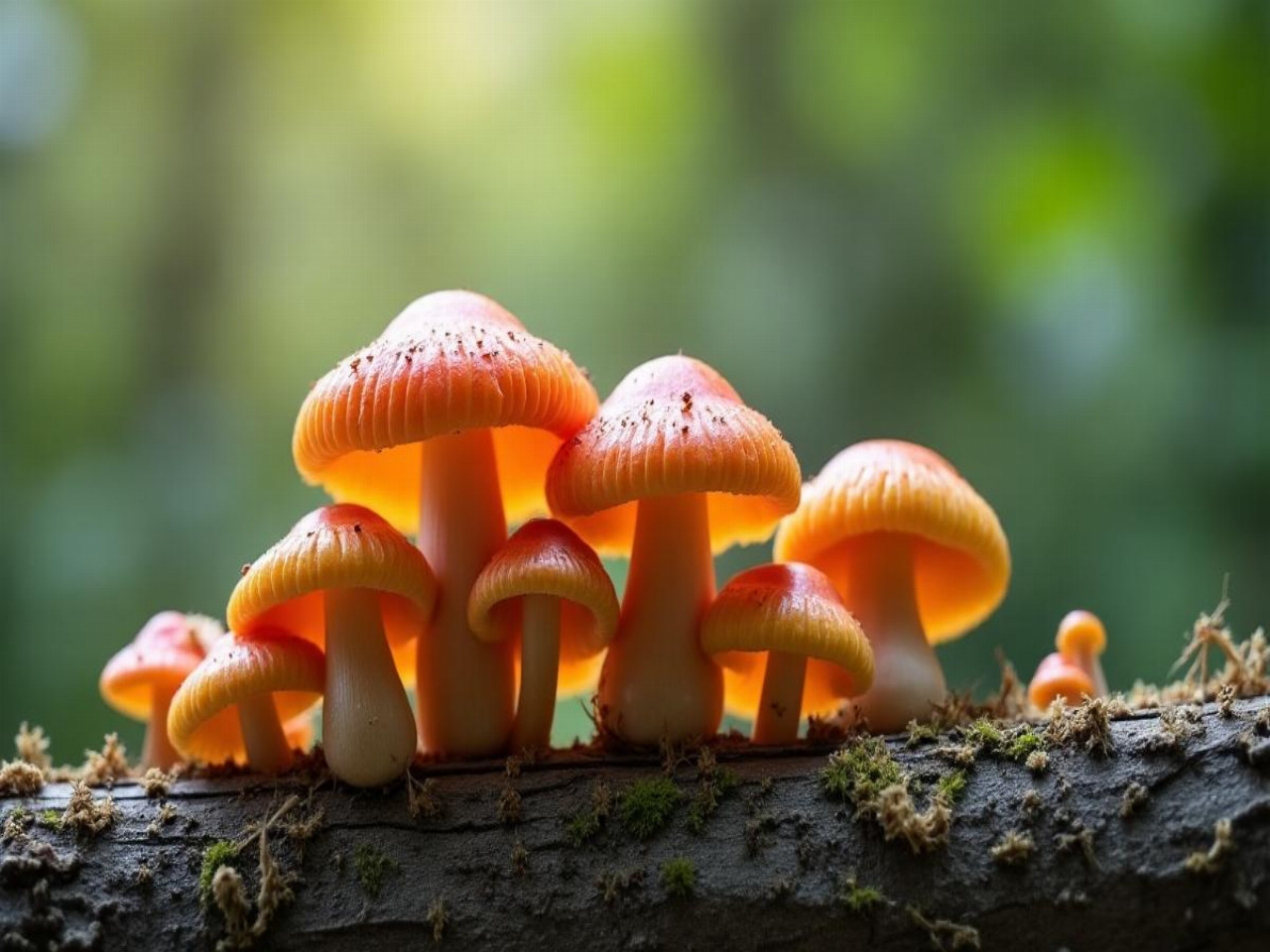
When medicinal mushrooms are mentioned, Coriolus versicolor stands out as an underrated outsider to the general public. Yet, this polypore with colorful concentric rings – nicknamed “turkey tail” or “cloud mushroom” – hides beneath its brown and bluish stripes a therapeutic treasure studied for decades. Researchers are particularly interested in its unique polysaccharides that interact with our immune system in ways science is only beginning to decode. Behind its appearance as a simple forest decoration, there may be a revolution in supporting modern pathologies.
Sommaire
The multicolored turkey tail under the scientists’ microscope
Unlike its cousins like reishi or chaga, Coriolus versicolor literally grows everywhere: decaying hardwood stumps, urban parks, temperate forests. This ubiquity explains why research has so easily adopted it as a study model. But its true uniqueness lies in its cell membrane where macromolecules with complex names concentrate: the proteoglycans PSP (Polysaccharide Peptide) and PSK (Krestin). These compounds represent 30 to 60% of the dry weight of standardized extracts used in research.
A traditional mushroom put under modern scrutiny
While Chinese medicine has used it for centuries under the name Yun Zhi, its scientific validation really began in 1965 when Japanese researchers isolated PSK. The Japanese Ministry of Health approved its clinical use twelve years later, making this mushroom the first officially recognized anticancer supplement. Today, more than 400 publications indexed on PubMed explore its mechanisms of action, with a notable peak in the last ten years thanks to advances in immunopharmacology.
Immunomodulation: the heart of current research
The major feat of the multicolored turkey tail? Acting as a conductor for our immune system without dangerously overstimulating it. Studies published in the International Journal of Medicinal Mushrooms show how its polysaccharides selectively activate dendritic cells – these sentinels that trigger the adaptive response. Even more impressive: they increase NK lymphocyte cytotoxic activity by 45% according to a double-blind study conducted on 102 patients.
Tangible results in integrative oncology
Where Coriolus versicolor fascinates the scientific community is in its role as an adjuvant to conventional treatments. A meta-analysis pooling 8 clinical trials (8,009 participants) reveals that its combination with chemotherapy significantly improves overall survival in gastric and colorectal cancers. The secret? It reduces the immunosuppressive effects of cytotoxics by 38% while protecting healthy cells thanks to its antioxidant enzymes like superoxide dismutase.
“Coriolus PSP could represent a new class of low-toxicity immunotherapy” – Dr. T.B. Ng, University of Hong Kong
Beyond cancer: a surprising spectrum of action
While its oncological applications often steal the spotlight, recent research reveals other therapeutic facets. In vitro studies have proven its inhibitory action on viruses such as hepatitis B and human papillomavirus. Its mechanism? Blocking viral replication by modulating interferons. Another promising avenue: managing chronic infections. PSP stimulates the production of immunoglobulin A in mucous membranes, creating a barrier against respiratory and intestinal pathogens.
A weapon against antibiotic resistance?
Faced with the global health emergency posed by multi-resistant bacteria, Coriolus versicolor offers alternative solutions. Its alcoholic fractions show significant activity against biofilms of Staphylococcus aureus and Escherichia coli according to research from the University of Belgrade. More surprisingly: it potentiates the action of antibiotics like ciprofloxacin, allowing dosage reductions up to 70% in some animal models.
Practical use: between hopes and realities
On the market, there are mainly three forms of Coriolus: whole mushroom powders (ineffective as not extracted), hydro-alcoholic extracts concentrated in triterpenes, and standardized supplements with at least 30% PSP/PSK – the only clinically validated ones. Studied dosages range between 1 and 3 grams daily depending on therapeutic goals. A major pitfall remains: strain variability. Analyses have shown that the concentration of active ingredients can vary from 1 to 8 depending on origin and extraction process!
Essential precautions
Despite its favorable safety profile – confirmed by WHO – certain drug interactions require particular vigilance. The multicolored turkey tail potentiates anticoagulants like warfarin and could interfere with immunosuppressants in transplant patients. Another little-known point: it increases insulin sensitivity. Diabetics under treatment should therefore monitor their blood sugar when supplementing. As for pregnant women, the absence of specific data recommends caution.
Research perspectives: where are we headed?
Scientists are now exploring innovative pathways. A Taiwanese team is working on PSP nanoparticles capable of crossing the blood-brain barrier to target brain tumors. Other researchers study its impact on the gut microbiota – it would act as a selective prebiotic for bifidobacteria. The next revolution could come from biotechnology: several companies are developing liquid fermentation methods to produce homologous PSP without wild harvesting, a more ecologically sustainable solution.
Coriolus versicolor perfectly illustrates how a common organism can harbor therapeutic treasures. While many of its promises still need to be validated by larger studies, decades of accumulated research already make it a valuable ally in an integrative health approach. Its history reminds us that sometimes, the most powerful solutions literally grow at our feet – you just need to know how to recognize them. To deepen the therapeutic potential of fungal species, recent discoveries on adaptogenic mushrooms offer fascinating complementary perspectives.
FAQ: Coriolus Versicolor
- Can Coriolus versicolor be consumed raw?
No, its chitin makes it indigestible without prior extraction. Only processed forms (decoctions, extracts) release the active principles. - Is there a risk of overdose?
At the recommended doses (1-3g/day), no serious effects have been reported. Soft stools or mild nausea may appear at the beginning of the treatment. - Should PSK or PSP be preferred?
PSK is better documented in oncology, PSP has a broader spectrum. Some products combine both for a synergistic action. - How long does it take to observe effects?
Studies show immune improvements after 4-6 weeks. When accompanying heavy treatments, courses often last 3 to 6 months.