
“Plug” constipation is characterized by a stubborn blockage of transit, often painful and anxiety-inducing. Several ancestral tips promise quick relief. We have examined 7 grandmother remedies to determine if their reputation really holds up.
🙂 7 natural tips examined to loosen blocked intestines, from prune compote to senna infusion.
🌿 Each remedy is evaluated according to its mode of action, its quick effect and its potential side effects.
💡 Some methods remain rooted in tradition without solid proof; others have scientific support.
📝 Through this guide, identify at a glance the effective solutions and those to use with caution.
Sommaire
Why plug constipation?
So-called “plug” constipation occurs when a stool remains too long in the colon, dehydrates and forms a hard mass. It is often associated with insufficient hydration, a low-fiber diet, and lack of physical activity. The slowing of intestinal peristalsis can also come from certain medications or an imbalance of the microbiota.
In this particular form of constipation, the sensation of blockage goes beyond simple transit delay: the abdominal area becomes painful, and the pressure needed to evacuate can irritate the mucous membranes. Without rapid intervention, an impaction can turn into a medical emergency.
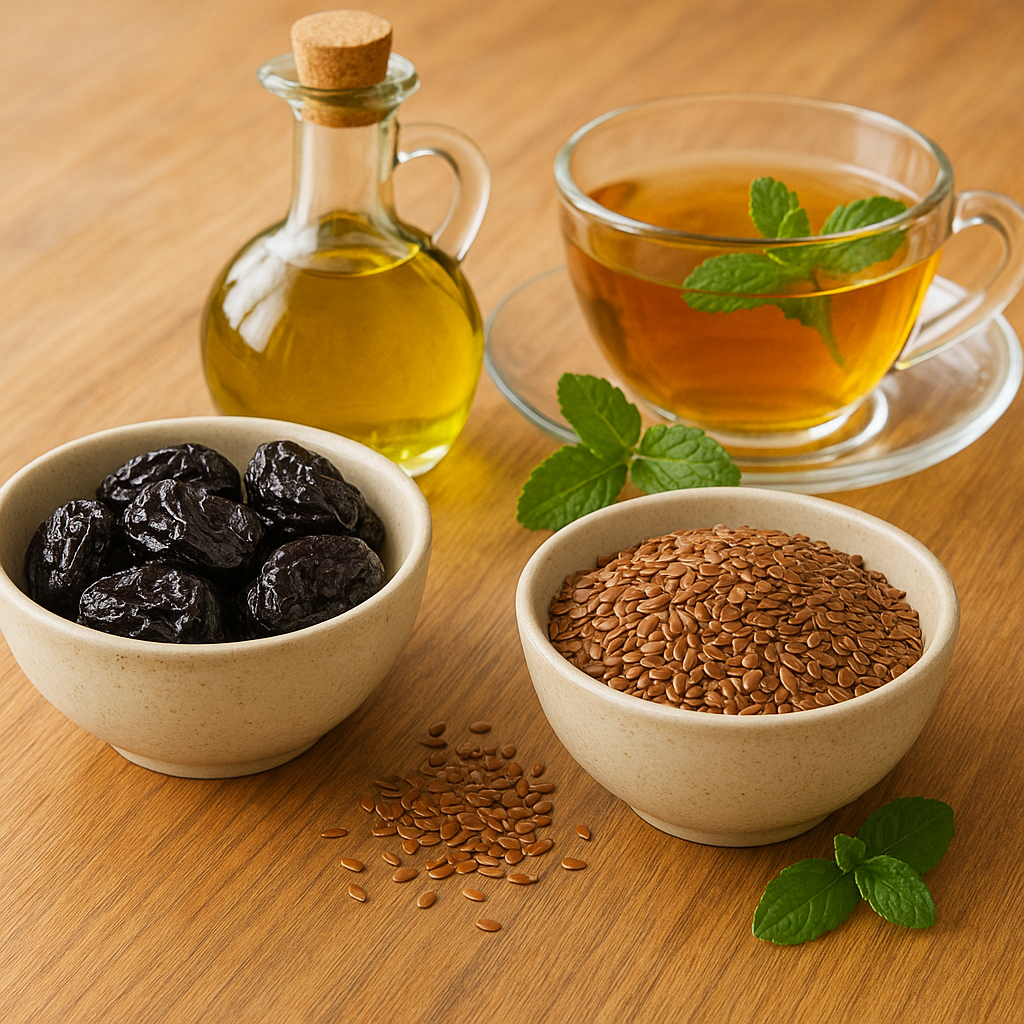
The 7 grandmother remedies evaluated
1. Prune compote or juice
Prunes are rich in soluble fibers and contain sorbitol, a sugar alcohol with osmotic properties that attracts water into the intestine. A homemade compote or a glass of concentrated juice can trigger a gastro-colic reflex in less than 6 hours.
Advantages: easily available, gentle on the stomach.
Limits: sometimes delayed effect, risk of bloating.
2. Flax seeds
Flax seeds form a viscous gel when in contact with water, lubricating the passage of stools. Consumed ground, they provide omega-3 and mucilages that support transit.
Practical advice: mix 1 tablespoon of ground seeds in a large glass of water and let rest for 10 minutes before drinking.
3. Warm olive oil
Slightly warmed, olive oil stimulates the liver and gallbladder, promoting bile secretion. This action can act as a gentle lubricating laxative.
Instructions: 1 to 2 tablespoons on an empty stomach, warmed with a splash of lemon juice.
4. Black Coffee
Coffee has a stimulating effect on the colon, through the secretion of gastrin. Some people notice an instant reflex after the first cup in the morning.
Precaution: avoid if you suffer from gastric acidity or hypertension.
5. Warm Lemon Water
A large glass of warm water, squeezed with half a lemon, serves both as a hydrator and a mild stimulant. The acidity of the lemon mechanically activates intestinal contractions.
Tip: always drink on an empty stomach for a faster effect.
6. Senna Infusion
Senna is a stimulant laxative recognized by the European Medicines Agency. It acts within 6 to 12 hours by increasing water secretion in the intestine and colonic motility.
Warning: limited use over time (no more than 7 days) to avoid colonic dependence.
7. Marine Magnesium
Marine magnesium acts as an osmotic laxative, attracting water into the intestine and softening stools. Its effect often appears in less than 4 hours.
Strengths: dual action on stress and motility. Risks: cramps, diarrhea if overdosed.
Summary Table of the 7 Remedies
| Remedy | Active Ingredient | Effectiveness | Warning |
|---|---|---|---|
| Prunes | Sorbitol + fibers | ⚡️ Fast | Bloating |
| Flax seeds | Mucilages | ⏳ Gradual | Hydration necessary |
| Olive oil | Lipids | ⚡️ Medium | Calories |
| Coffee | Caffeine | ⚡️ Very fast | Nervous excitation |
| Lemon water | Citric acid | ⏳ Mild | Dental enamel |
| Senna infusion | Anthracenosides | ⚡️ Fast | Dependence |
| Marine magnesium | Magnesium | ⚡️ Very fast | Cramps |

FAQ
1. How long should you wait before evaluating a natural remedy?
Depending on the remedy, allow between 4 and 12 hours for a full effect. Stimulant laxatives (senna, coffee) act faster than mucilages (flax seeds).
2. Can several remedies be combined?
Yes, for example prunes + hydration + flax seeds. However, avoid combining stimulants (coffee/senna) to limit cramps.
3. Are grandmother’s remedies risk-free?
No, some (senna infusion, magnesium) can cause electrolyte imbalances or colonic dependence if used for prolonged periods.
4. Should you consult a doctor?
If constipation persists for more than 72 hours despite these methods, a consultation is necessary to rule out a serious obstruction.
5. How to prevent impacted constipation?
Maintain a diet rich in fiber, drink at least 1.5 L of water per day, and engage in regular physical activity.
6. Are pharmaceutical laxatives more effective?
They often act faster but also carry a higher risk of side effects and dependence.
7. Additional homemade recipes?
Rhubarb compote or walnut leaf decoction can be tried, but their tolerance varies.