
| Key Points | Details to Remember |
|---|---|
| 🌙 Definition | Understanding melatonin and sleep phases |
| 🧠 Functioning | Exploring how it regulates the circadian cycle |
| 🌌 Nightmares | Identifying trigger factors during REM sleep |
| 🔬 Research | Reviewing clinical studies on the subject |
| ⚖️ Dosage | Evaluating the effects of different dosages |
| 💡 Advice | Optimizing intake to reduce disturbing dreams |
An unexpected dive into the world of melatonin, this article explores a question both simple and complex: can taking this supplement promote nightmares ? Often praised for its effect on sleep, melatonin sometimes encounters reports of disturbing dreams. We will untangle these testimonies, analyze existing studies, and propose avenues for those hesitating before adding this hormone to their nightly routine.
Sommaire
What is Melatonin ?
Origin and Physiological Role
Melatonin is a hormone naturally secreted by the pineal gland, located at the heart of the brain. Its secretion increases as light diminishes, signaling to the body that it is time to prepare for sleep. It acts in synergy with other neurotransmitters, modulating falling asleep and the architecture of sleep. In other words, it plays the role of an internal clockmaker, finely tuning the wake-sleep cycle.
Synthetic Melatonin: Why Use It ?
On the market, there are melatonin-based supplements created to counter jet lag, circadian rhythm disorders, or simply to facilitate falling asleep. Dosages generally range from 0.5 mg to 5 mg. Many use it without much questioning, convinced of its “naturalness.” Yet, this hormone, once supplied exogenously, can act differently depending on individual sensitivity or underlying sleep quality.
Nightmares: Mechanisms and Triggers
A nightmare is an intense dream, charged with negative emotions that awaken the person and often leave an impression of stress or anxiety. Devoid of any fictional artifice, it feeds on the sleeper’s emotional state, fears, and memories. Neurologically, it is during REM sleep, characterized by brain activity close to wakefulness, that dreams – and nightmares – take shape. Several factors can increase their frequency: chronic stress, medications, withdrawal from psychoactive substances, or irregular lifestyle habits.
Is There a Direct Link Between Melatonin and Nightmares?
Review of Clinical Studies
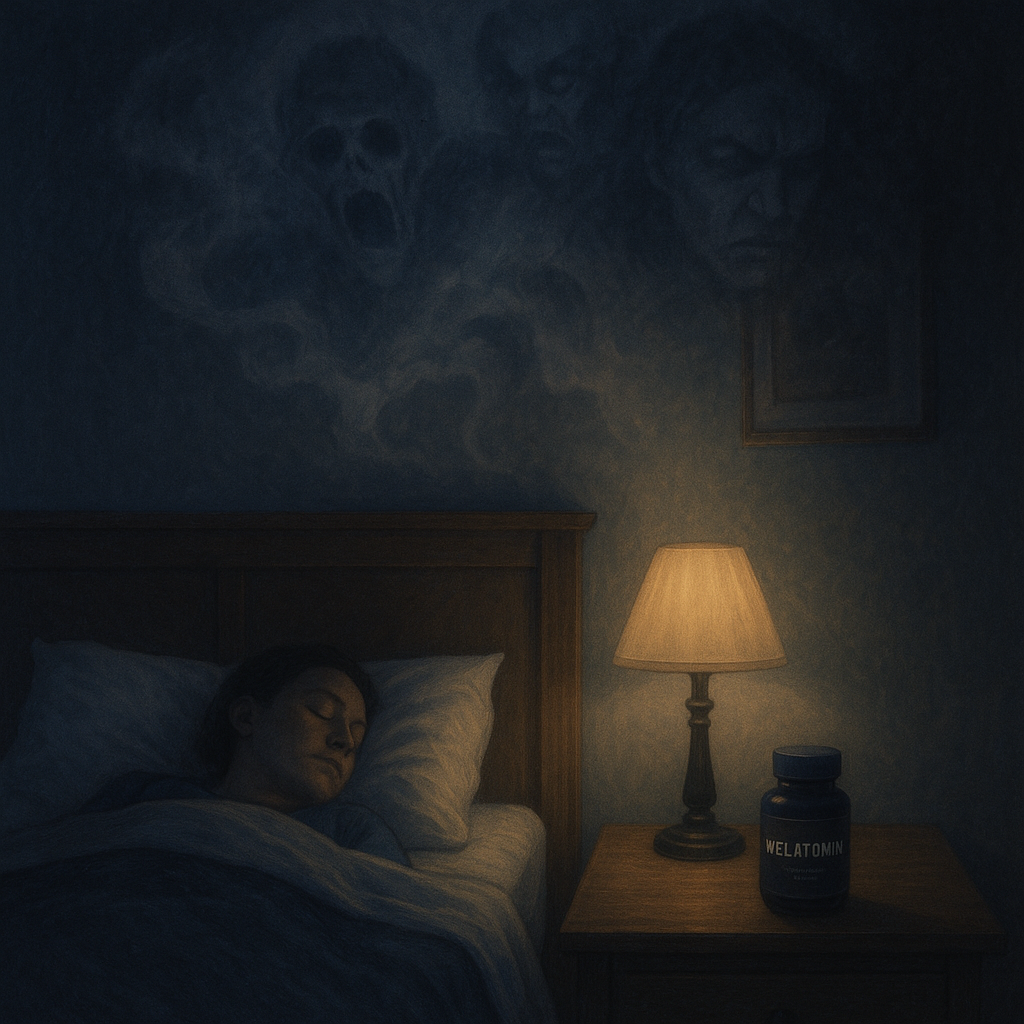
No scientific consensus establishes a formal link between melatonin and the exacerbation of nightmares. Some studies report a slight increase in vivid dreams after melatonin administration, without specifically mentioning frightening dreams. In other trials, patients follow a crossover protocol (with and without melatonin) and note no marked difference in terms of sleep quality or dream recall. It therefore seems that the impact is highly individualized, possibly linked to a reversed placebo effect in those expecting to experience nightmares.
Potential Mechanisms
Several hypotheses attempt to explain why some individuals associate melatonin with bad dreams:
- By modulating the duration of REM sleep, melatonin could lengthen this phase where dreams are the most intense.
- Taking it too close to bedtime can disrupt the natural rhythm of endogenous secretion, triggering a form of “internal shift” and more vivid dreams.
- Individual sensitivities to hormonal fluctuations, combined with an underlying state of stress, can amplify the memorization of negative dreams.
Confounding Factors to Consider
It is difficult to single out melatonin when a subject’s sleep behavior is influenced by multiple variables. Among them:
- Stress and anxiety: they naturally promote nightmares, regardless of melatonin intake.
- Diet and stimulants: coffee, alcohol, or heavy meals before bedtime play an equally important role.
- Other medications: antidepressants, beta-blockers, or antihistamines can alter the overall quality of REM sleep.
Tips for Using Melatonin Without Increasing Anxious Awakenings
More than a categorical ban, it is about finding the right dosage and conditions:
- Take a low dose (0.5 to 1 mg) if you are starting, preferably 45 minutes before bedtime.
- Maintain a regular schedule: fixed bedtimes and wake times, even on weekends.
- Combine intake with a sleep-friendly routine: dim lighting, light reading, breathing techniques.
- Observe for one to two weeks before increasing the dose, to detect any alteration in dream content.
Research Perspectives and Open Questions
Melatonin continues to be the subject of exploratory work, notably for its potential effects on parasomnias, jet lag, and childhood insomnia. Protocols still need refinement: at what precise time during the night does it prolong REM sleep? How do genetic profiles influence the response to melatonin? Future studies will need to include rigorous and standardized dream monitoring to determine whether, in fact, melatonin is a culprit or a convenient scapegoat.
FAQ
Does melatonin always cause nightmares?
No, most users do not report distressing dreams. When it happens, it is often related to a high dose or an already emotionally charged context.
What is the best dosage to avoid overly vivid dreams?
It is generally recommended to start with 0.5 mg to 1 mg, then adjust gradually. The goal is to reach the minimal effective threshold without exceeding what could alter your sleep architecture.
Should melatonin be stopped in case of frequent nightmares?
Before stopping, try shifting the intake time, combining it with a relaxing routine, and reducing screen exposure. If nightmares persist, consult a sleep specialist.
Do lifestyle changes influence nightmares more than melatonin?
In reality, stress, diet, and sleep hygiene play a major role. Melatonin supports, but it does not compensate for poor lifestyle habits.
Can melatonin be combined with other supplements to limit nightmares?
Some choose combined formulas (magnesium, GABA, soothing plants). However, be careful with interactions: it is better to seek the advice of a healthcare professional before mixing several active ingredients.