
| Key points | Details to remember |
|---|---|
| 📝 Definition | Ayurvedic root used for millennia for its adaptogenic properties. |
| 💆 Main benefits | Reduces stress, improves sleep, and boosts energy. |
| ⚖️ Use for women/men | Hormonal balance, stimulation of libido and fertility. |
| ⚠️ Side effects | Contraindications for pregnancy and thyroid disorders. |
| 💊 Forms & dosage | Choose powder, extract, or capsule according to your needs. |
| ⏳ Duration of use | Follow a 6 to 12-week course to observe effects. |
Ashwagandha, or Withania somnifera, is a flagship plant of Ayurveda, the traditional Indian medicine. For over 3,000 years, the dried root ground into powder has been used to support the body in cases of stress, fatigue, or hormonal imbalances. Today, modern science explores several of its virtues, confirming some ancient practices while highlighting necessary limits and precautions. This article aims to detail the true benefits of Ashwagandha, assess potential risks, and provide practical usage advice, whether you are a beginner or a regular user.

Sommaire
Main benefits of Ashwagandha
Stress, anxiety, and cortisol
Ashwagandha is credited with the ability to modulate the hypothalamic-pituitary-adrenal axis, thereby reducing excessive secretion of cortisol, the stress hormone. Several clinical trials, including a study in the Indian Journal of Psychological Medicine, have shown a significant reduction in anxiety markers in participants treated for 8 weeks. In practice, this can translate into better resistance to stressful situations, a more stable mood, and faster recovery after a stressful episode.
Unlike some anxiolytics, Ashwagandha does not cause excessive drowsiness or dependence. However, the adaptogenic effect is often felt after several weeks, hence the importance of consistency.
Sleep
By promoting hormonal balance, Ashwagandha contributes to deeper and more restorative sleep. Active compounds such as withanolides appear to act on GABA receptors, inducing a feeling of relaxation. Insomniac volunteers report an improvement in sleep onset latency and a decrease in nighttime awakenings after a course of Ashwagandha, according to a systematic review published in Phytotherapy Research.
However, be careful to favor taking it in the evening, to allow time for the active ingredients to act without overstimulating the body.
Concentration and memory
Beyond relaxation, the herb can facilitate mental clarity. Neuroscience studies suggest a neuroprotective action, thanks to antioxidant effects that preserve neurons from oxidative stress. Students and professionals subjected to high cognitive demands often notice a slight increase in concentration and a better ability to maintain attention over time.
For optimal use, combining Ashwagandha with a healthy lifestyle – sleep, hydration, stimulating activities – enhances this effect on working memory.
Energy and vitality
By acting on ATP production at the mitochondrial level, Ashwagandha provides a feeling of increased vitality without a sudden energy spike or rapid “crash” sensation. Athletes sometimes incorporate it into their routine to support endurance and accelerate muscle recovery. A study conducted on amateur cyclists even highlighted an increase in VO₂ max after supplementation.
This boost is gradual: mainly a reduction in perceived fatigue during prolonged efforts rather than an immediate “boost” comparable to caffeine.
Sexual performance and fertility
The traditional use of Ashwagandha includes supporting reproductive function in both sexes. For men, several clinical trials report an increase in sperm production and a reduction in sperm DNA fragmentation. Women can benefit from a better balance between estrogen and progesterone, with a positive impact on libido and cycle regularity.
However, it is not a fast-acting hormonal pharmaceutical but rather a mild tonic to be taken over several weeks to stabilize the endocrine system.
Regulation of blood sugar and thyroid
Several studies highlight the hypoglycemic effect of Ashwagandha, notably by stimulating insulin secretion and cellular sensitivity to glucose. Type 2 diabetic patients observed a moderate decrease in fasting blood sugar after one month of treatment, without severe hypoglycemia.
Regarding the thyroid, some reports mention a slight increase in T₃ and T₄ hormones, which can be interesting in cases of mild hypothyroidism. However, caution remains necessary: if under treatment, it is imperative to consult a professional to adjust doses.
Ashwagandha for women and men
For women
In women, Ashwagandha proves valuable for compensating hormonal variations related to the menstrual cycle or menopause. Regular intake can reduce hot flashes, improve sleep quality, and limit mood swings. In terms of fertility, the effect on the estrogen-progesterone balance sometimes facilitates conception, especially after stopping hormonal contraception.
However, in case of pregnancy, the plant is generally not recommended due to its potential uterine stimulating effect. Pregnant or breastfeeding women must absolutely discuss this with their doctor.
For Men
In the male population, Ashwagandha is often associated with an increase in testosterone and an improvement in libido. Indian researchers noted an average increase of 14% in free testosterone after 8 weeks of supplementation. This effect also contributes to better muscle density and faster recovery after exertion.
Beyond reproduction, this plant can support self-confidence and emotional well-being by subtly modulating key neurotransmitters and hormones.
Dangers and Side Effects to Know
Liver Problems
Isolated cases of liver toxicity have been reported, mainly related to overdosing or prolonged use without breaks. Symptoms range from a slight elevation of liver enzymes to more serious signs such as jaundice. To limit this risk, it is advised to choose a standardized extract that meets purity standards and to have liver parameters checked for any long-term treatment.
Contraindications
- Pregnancy and breastfeeding: avoid due to a possible stimulating effect on the uterus.
- Autoimmune disorders (multiple sclerosis, lupus, etc.): ashwagandha may theoretically exacerbate the immune response.
- Hyperthyroidism: the plant could increase T₃/T₄ levels.
Drug Interactions
If you are on sedative, anticoagulant, or antidiabetic treatment, Ashwagandha may potentiate the effect. It is imperative to consult a healthcare professional before combining it with any prescription medication.
How to Use Ashwagandha Properly?
Dosage and Timing
The usual dosage ranges between 300 and 600 mg of standardized extract (at 2.5–5% withanolides) per day. Some prefer the raw powder, between 1,000 and 2,000 mg daily, diluted in water or a smoothie. In the morning, it provides a gentle boost, useful in cases of chronic fatigue. In the evening, it promotes falling asleep, but taking it too late may slightly stimulate the body and delay sleep.
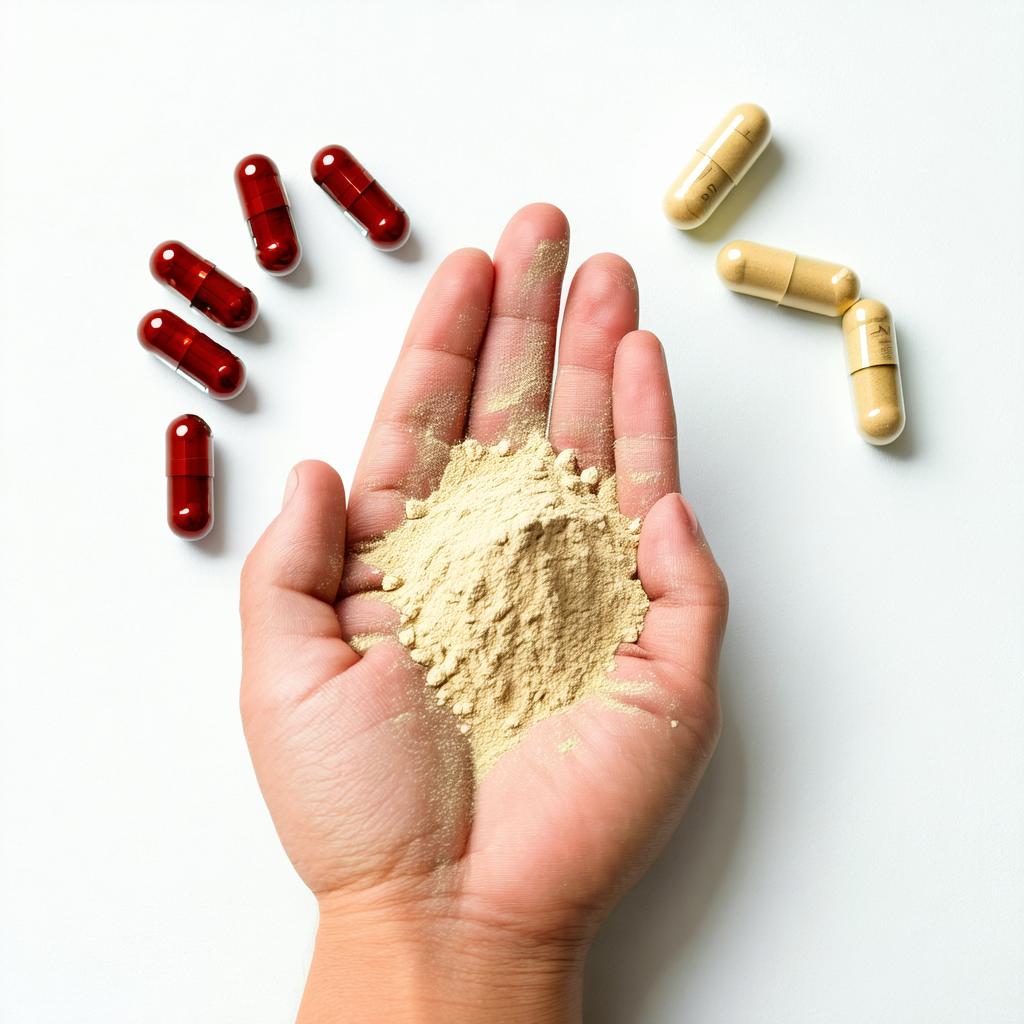
Powder vs Capsule vs Extract
- Powder: pure form, economical and versatile, but earthy taste.
- Capsule: precise dosages, convenient for travel, without strong flavor.
- Extract: maximum concentration of active ingredients, better yield.
Duration of Treatment
A 6 to 12-week course remains ideal to observe a lasting effect. It is advised to take a break of at least 2 weeks after each cycle to avoid any tolerance and allow the body to readjust its internal mechanisms.
FAQ
How long does it take to work?
Most users notice a reduction in stress and better sleep quality within 3 to 4 weeks. Effects on fertility or libido may require 6 to 8 weeks of regular intake.
Can it be taken for life?
Prolonged use is possible but not recommended without regular breaks. After 6 to 12 weeks of treatment, take at least 2 weeks off to preserve effectiveness and avoid accumulation.
Is it compatible with pregnancy?
No, due to a possible risk of uterine stimulation. Pregnant or breastfeeding women should seek medical advice before considering any supplement.
Ashwagandha and hair? And weight loss?
Some anecdotal reports mention an improvement in hair texture, without solid scientific evidence. As for weight loss, the effect on cortisol and blood sugar can indirectly support rebalancing, provided there is an appropriate diet and regular physical activity.
Conclusion
Ashwagandha offers a range of benefits, from anti-stress support to improved energy and hormonal balance. However, it is not a miracle cure: its benefits manifest over time and depend on the quality of the product as well as adherence to dosages. Before any treatment, it is always wise to check for contraindications and, if necessary, consult a healthcare professional. With judicious use, this ancient plant can become a valuable daily ally.