| Key Points | Details to Remember |
|---|---|
| 🍄 Definition | Understand what an adaptogen infusion is |
| 🔍 Necessary Equipment | Prepare pots, filter, and ingredients |
| 🕒 Preparation Time | Plan 30 to 45 minutes |
| 💧 Extraction Methods | Master infusion vs decoction |
| 🚀 Absorption Optimization | Combine lipids and cofactors |
| 📌 Storage Tips | Store in a cool place up to 48 hours |
Adaptogenic mushrooms are generating growing enthusiasm both for their virtues and their versatility in phytotherapy. Beyond pills, homemade infusion offers a more authentic gesture: smelling the steam, tasting the color. Here begins a detailed journey, between plant selection, precise protocol, and tips to boost bioavailability. At the end of this reading, you will have all the keys to make and optimize your drink at home.
Sommaire
1. Selecting Your Adaptogenic Mushrooms
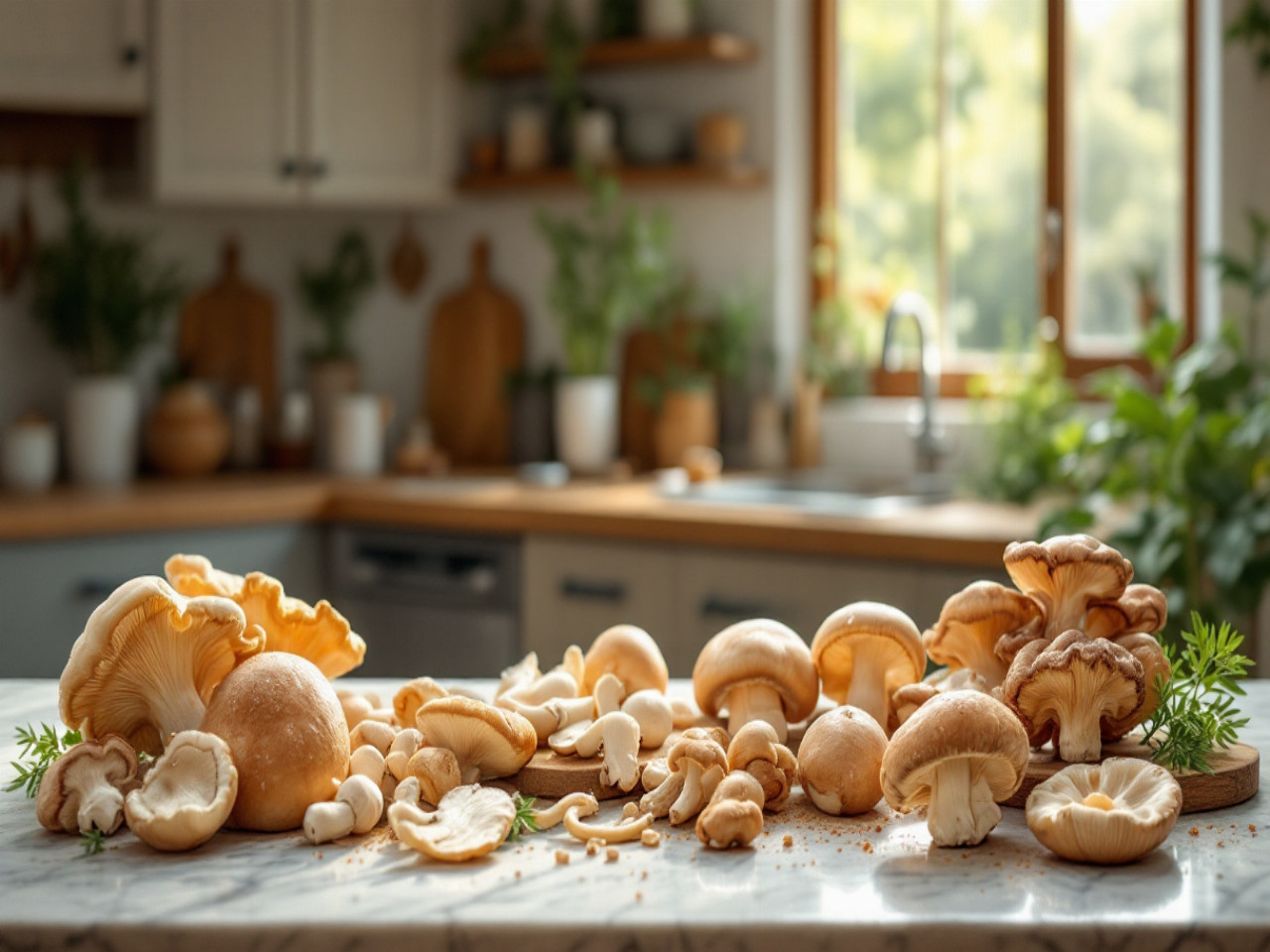
Everything starts with the raw material. Depending on the desired effect — stress reduction, energy, or concentration — certain species stand out. Reishi, for example, is favored for its calming qualities; its polysaccharides act on nervous system balance. To explore its virtues, you can consult this list of 10 scientifically proven benefits of Reishi.
Chaga, rich in antioxidants, suits those who rely on an immune boost. Cordyceps, for its part, is often chosen before physical effort to stimulate vitality. Finally, Hericium (lion’s mane) can support cognitive functions and memory.
You will find these extracts in powder form or as dried pieces. Each has a different solvent profile: powder diffuses faster, while pieces favor prolonged decoction.
For a complete overview of available varieties and other buying tips, the buying guide details the brands to prioritize and reliable sources for 2025.
2. Essential Equipment and Ingredients
- Filtered water (minimum 1 L).
- Dried or powdered mushrooms (5–10 g per liter).
- A stainless steel or heat-resistant glass pot.
- A fine mesh filter or a clean cloth.
- Optional: sunflower lecithin or a fat (coconut oil, whole milk).
Utensils must be very clean, without soap or detergent residue. Aluminum is absolutely avoided, as some compounds could negatively interact with active principles.
3. Step-by-Step Preparation
3.1. Dosage and Grinding
Start by weighing your mushrooms: count about 5 g of powder or 10 g of fragments per liter of water. If you start from dried pieces, grind them finely to expose more surface to solvents. A dedicated coffee grinder or a mortar works very well.
3.2. Infusion vs decoction
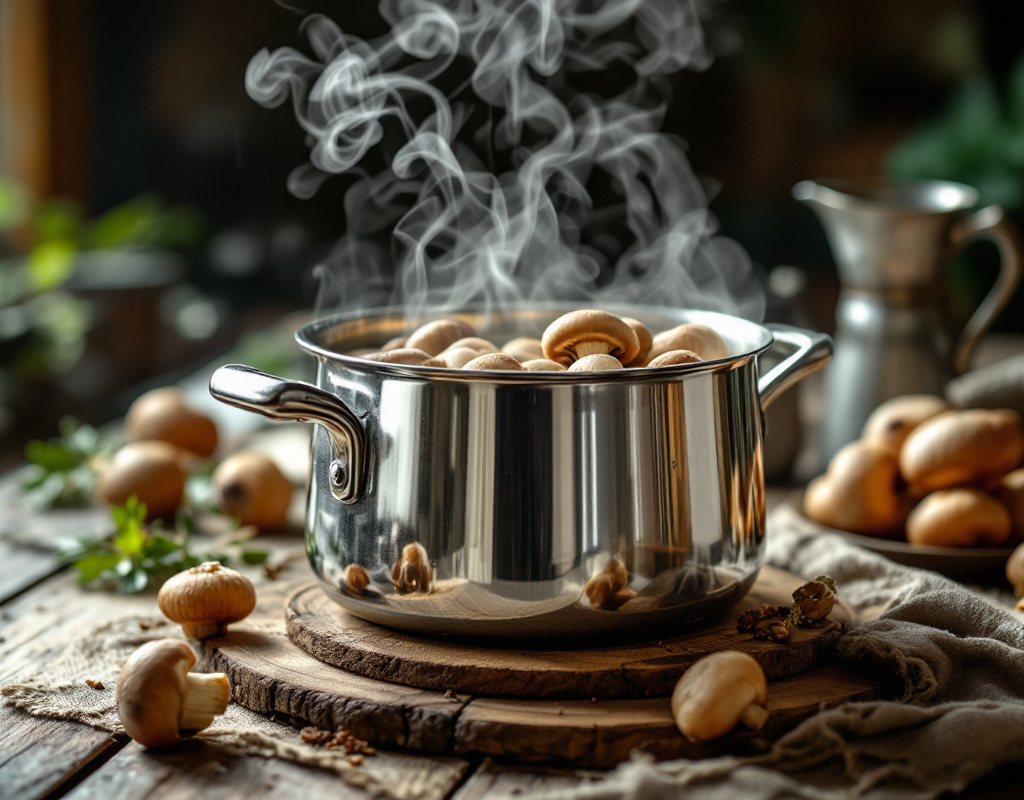
Simple infusion consists of pouring water at 90 °C over the powder, then letting it steep for 15 minutes. In contrast, decoction involves a first gentle boil for 20 minutes followed by a resting phase. This method releases more triterpenes and beta-glucans, complexes soluble only under high heat.
For a complete spectrum, favor decoction: it guarantees a more concentrated extract in liposoluble molecules.
3.3. Addition of lipids and cofactors
The active molecules of adaptogenic mushrooms, notably triterpenes, dissolve better in a fatty substance. Towards the end of cooking, incorporate a teaspoon of sunflower lecithin or coconut oil. You will see the surface slightly opalescent: a sign that the lipids have played their role as a carrier.
4. Maximizing the absorption of active ingredients
Bioavailability depends less on the raw dose than on how the ingredients are combined. Here are some tips based on feedback:
- Deliberately chew a small portion of residual powder in the cup to prolong oral contact.
- Split the intake: twice a day, morning and evening.
- Combine the infusion with a meal containing lipids (avocado, nuts, egg) to facilitate molecule transport.
- Add a pinch of black pepper: piperine can enhance the assimilation of certain compounds.
5. Storage and reuse
If you do not drink the entire infusion, store it in a closed glass bottle in the refrigerator for up to 48 hours. Before each consumption, gently reheat without bringing to a boil to avoid degrading the actives. You can also:
- Pour some extract into a smoothie or porridge.
- Let the water evaporate to obtain a dense paste, ideal for mixing with honey.
6. FAQ – Frequently Asked Questions
Can fresh mushrooms be used for infusion?
Fresh mushrooms contain more moisture and release different aromas. You will need to dehydrate then grind them for optimal extraction, otherwise the water does not sufficiently penetrate the cells.
What daily quantity is recommended?
Generally, 5 to 10 g of powder per day is sufficient. Beyond that, bioavailability does not increase significantly and you risk experiencing digestive heaviness.
Can several species be combined in the same infusion?
Yes, mixing Reishi and Cordyceps for example creates a more complete profile. Just be sure to adjust the dosages so as not to overload the decoction.
What is the difference between infusion and decoction?
Infusion mainly extracts water-soluble compounds in less than 15 minutes. Decoction also favors liposoluble molecules but requires more time and heat.
Are there any side effects?
Reactions are rare at low doses. At more than 20 g per day, some people may experience digestive disorders or headaches. Always start with a moderate dose.