| Key Points | Details to Remember |
|---|---|
| 🍄 Historical Origin | Appeared in Parisian quarries under Louis XIV |
| 🌱 Two Major Varieties | White (button mushroom) and brown (crimini/portobello) |
| 🏭 Global Production | Uncontested leader with 35% market share |
| 🥗 Nutritional Profile | Rich in proteins, vitamin D, and antioxidants |
| 👨🍳 Culinary Versatility | Used raw, sautéed, stuffed, or canned |
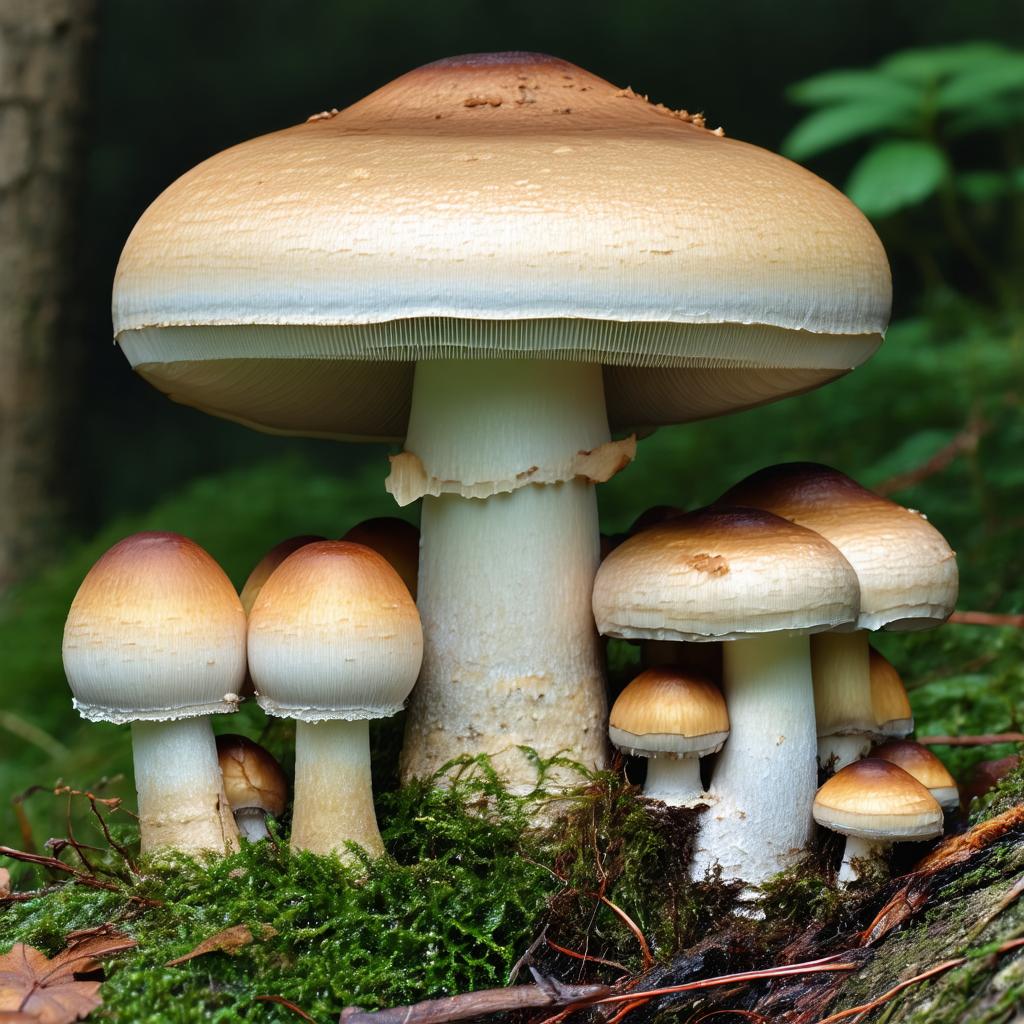
Who would suspect that this discreet mushroom, present in our salads and sautés, hides a historical saga worthy of the greatest novels? Behind its modest appearance, Agaricus bisporus proudly bears its title of “Paris mushroom,” inherited from a glorious past when it grew in the catacombs of the capital. Today a global star on market stalls, it represents nearly 40% of the world’s cultivated mushroom consumption. Yet, how many gourmets truly know its manufacturing secrets, its astonishing mutations, or its little-known health virtues?
Sommaire
The Underground Odyssey: At the Roots of the Parisian Mushroom
The story begins in the 17th century, when clever market gardeners spotted wild specimens growing spontaneously on horse manure. Legend has it that the first organized cultivation took place in the old gypsum quarries beneath the Butte-aux-Cailles – an ideal environment with its constant 90% humidity and stable temperature at 16°C. Jean-Baptiste de La Quintinie, chief gardener to Louis XIV, was reportedly one of the first to document its methodical cultivation. These abandoned cellars offered perfect darkness, explaining why the initial varieties were pure white: deprived of light, they developed no pigment.
From Paris to the World: The Global Conquest
Expansion began in the 19th century when French producers exported their know-how to England and then the United States. A decisive turning point occurred in 1893 when an American mycologist isolated a particularly vigorous strain in a Pennsylvania field – a strain that would become the ancestor of 95% of current cultivations. Ironically, France now massively imports this “Parisian” mushroom produced mainly in Poland, the Netherlands, and China. Global production today exceeds 8 million tons annually, transforming this local curiosity into a true agri-food phenomenon.
Botany and Varieties: The Chameleon of the Underwoods
Agaricus bisporus belongs to the Agaricaceae family, characterized by its pink gills turning chocolate brown at maturity. Its genetic peculiarity lies in its reproductive system: unlike most mushrooms that produce four spores, it generates only two – hence its name “bisporus.” This uniqueness explains its low genetic diversity and susceptibility to diseases.
The Three Faces of One Species
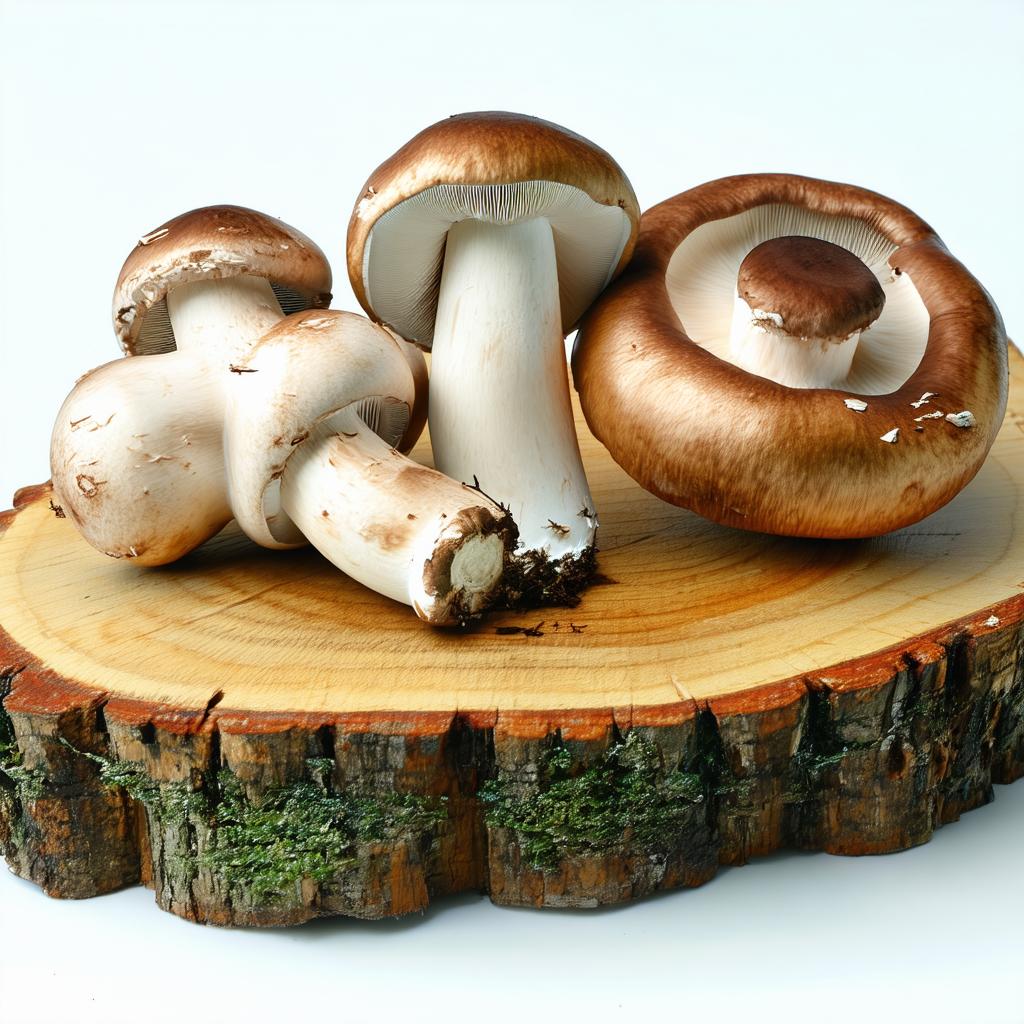
- The white mushroom: harvested young (2-4 cm), it is the most common form in Europe. Its mild flavor and firm texture make it an all-purpose ingredient.
- The crimini (or brown): adolescent version left to intermediate maturation. Its caramel color comes from slight light exposure during cultivation. Meatier, it develops more pronounced earthy notes.
- The portobello: the final stage where the cap spreads up to 15 cm. Its dark gills release complex aromas of roasted hazelnut, ideal for stuffing or grilling.
The Alchemy of Cultivation: From Cellars to High-Tech Factories
Producing Agaricus bisporus requires a delicate balance between tradition and innovation. The substrate, composed of 80% composted horse manure and straw, undergoes rigorous pasteurization to eliminate pathogens. After inoculation with mycelium, the incubation phase lasts 15 days in chambers at 25°C and 95% humidity. Then comes the crucial “casing” step: covering the substrate with a layer of calcareous peat that triggers fruiting.
“The temperature then drops to 17°C, mimicking the arrival of autumn – a natural signal for the mushroom that it’s time to fruit,” explains Marc Dubois, a grower for 40 years in Saône-et-Loire.
Harvests span 3 to 6 weeks per cycle, with manual picking every 2-3 days. An average yield reaches 30kg/m², making this one of the most productive crops worldwide. Recent innovations include substrate-free hydroponic systems and IoT sensors regulating microclimate and irrigation in real time.
Health and Environmental Challenges
This success has its downside: intensive monoculture favors pathogens like the mushroom fly (Lycoriella ingenua) or the La France virus. Producers now alternate biological methods (predatory nematodes) and high-tech solutions like germicidal UV. Another major issue: water footprint. It takes 15 liters of water to produce 1kg of mushrooms – a much better balance than typical vegetables, but it encourages recycling rinse water in modern farms.
A Nutritional Concentrate Under the Cap
Behind its whiteness hides a surprising nutritional profile. A 100g portion provides only 22 calories but up to 3g of protein – as much as half an egg. A true micronutrient factory, it supplies:
- 30% of the RDA in selenium (a powerful antioxidant)
- 25% in copper (essential for immunity)
- 15% in vitamin B2 (energy metabolism)
Its peculiarity lies in its ability to synthesize vitamin D under UV exposure – a boon for vegetarian diets. Recent studies focus on its polysaccharides (beta-glucans) which may stimulate macrophage activity. Unlike some forest specimens with marked adaptogenic properties, Agaricus bisporus positions itself more as a daily functional food.
Precautions and Misconceptions
Can it be eaten raw? Yes, but in moderation. It contains agaritine, a naturally occurring hydrazine molecule that degrades with cooking. Although quantities are minimal, sensitive individuals will prefer quick cooking. Another myth to debunk: washing. Contrary to beliefs, quickly rinsing mushrooms does not make them spongy – the key is not to soak them.
The Culinary Art: From Bite to Grilled Portobello
The magic of this mushroom lies in its transformation during cooking: the water contained in its cells (92%) is slowly released, concentrating flavors while creating a tender texture. Try this experiment: cut a raw mushroom in half. Its flesh is compact, almost chalky. After 5 minutes sautéing, it becomes tender and develops surprising umami notes thanks to the conversion of glutamate into guanylic acid.
| Preparation | Ideal Time | Culinary Tip |
|---|---|---|
| Raw | – | Thinly sliced with lemon and flat-leaf parsley |
| Sautéed | 5-7 min | Cook on high heat uncovered to avoid stewing |
| Grilled Portobello | 8-10 min | Brush with olive oil and rosemary before cooking |
| Canned | Pasteurization | Prefer glass jars over metal cans |
Star chefs exploit its multiple facets: raw, its crunchy texture enhances carpaccios; lightly seared, it elevates risottos; whole and stuffed, it becomes a gourmet vegetarian dish. The portobello form, with its concave cap, transforms into a “vegetable steak” when marinated in soy sauce, garlic, and smoked paprika before grilling.
Storage: Prolonging Freshness
The key? Avoid two enemies: stagnant moisture and suffocation. Forget airtight plastic bags that accelerate decay. Instead, place them in a paper bag in the fridge, with a paper towel sheet absorbing excess moisture. They will keep for 5 to 7 days. To keep them longer, an ancient technique still works: dry them in open air after slicing, then store in jars away from light. Rehydrated, they develop even more intense aromas.
FAQ on Agaricus bisporus
Does the Paris mushroom still grow in Paris?
The last Parisian mushroom farms closed in the 1970s, driven out by urbanization. French production relocated to the Loire Valley and Saumur region, where tuffeau stone offers conditions similar to the old quarries.
Why are mushrooms sold in trays sometimes slimy?
This texture indicates the beginning of decomposition. The slippery layer comes from bacteria breaking down the surface. It’s better to consume them quickly after cooking or peel them lightly.
Can Paris mushrooms be grown at home?
Absolutely! Ready-to-grow kits use pre-inoculated substrate blocks. Place them in a cool spot (15-18°C), spray water daily, and harvest after 2-3 weeks. One harvest yields 500g to 1kg.
Are there any contraindications to consuming them?
People on anticoagulants should moderate their intake as it contains vitamin K. Those allergic to molds may sometimes react to its spores. In such cases, prolonged cooking reduces risks.