| Key Points | Details to Remember |
|---|---|
| 🎯 Definition of Reishi | Traditional adaptogenic mushroom in Asian phytotherapy |
| 💊 Capsule Form | Precise dosage and quick intake without preparation |
| 🥄 Powder Form | Flexibility in recipes and dose adjustment |
| ⚖️ Selection Criteria | Health goals, lifestyle, digestive tolerance |
| 🌱 Quality and Origin | Traceability, organic labels and extraction method |
| 💰 Cost and Accessibility | Budget and availability depending on brands |
Reishi, often nicknamed the “mushroom of immortality,” comes in two main forms as dietary supplements: capsules or powder. In 2025, faced with the proliferation of offers, people seek to understand the nuances between these formats and determine which packaging best suits their profile, whether it is to strengthen immunity, improve sleep, or balance daily stress.
Sommaire
Understanding Reishi and Its Uses
The Ganoderma lucidum is a medicinal mushroom whose use dates back over 2000 years in traditional Chinese medicine. Its active molecules, notably triterpenes and beta-glucans, explain its reputation as an adaptogen. For those interested in its virtues, there is already a dedicated article on Reishi (Ganoderma lucidum): The Mushroom of Immortality, which details its history and traditional applications.
Main Documented Benefits
- Strengthening the immune system by modulating NK cells.
- Liver support and improved detoxification.
- Relaxing effects on the nervous system, promoting better sleep.
- Anti-inflammatory action via inhibition of certain cytokines.
Reishi Capsules: Advantages and Limitations
Advantages
- Quick intake and no preparation needed, ideal for on-the-go use.
- Consistent dosage from one tablet to another, safe to use.
- Vegetable-based capsule often compatible with vegan and allergen-free diets.
- Packaged in blister packs or airtight jars, easy to store.
Limitations
The main criticism concerns the capsule shell: it can delay the release of active ingredients and affect absorption. Additionally, some manufacturers use excipients to facilitate compression, complicating the composition. Finally, the price can be higher, especially for 100% pure capsules without additives.
Reishi Powder: Advantages and Disadvantages
Advantages
- Flexibility of use in smoothies, infusions, or culinary recipes.
- Concentrated aqueous or alcoholic extracts offering potentially higher bioavailability.
- Possibility to finely adjust the dosage according to the effects felt.
- Often packaged in resealable sachets or metal tins preserving freshness.
Disadvantages
The main drawback is the earthy taste, which can be off-putting. Its dosage requires a bit more precision and equipment (spoon, container). Finally, the powder is more sensitive to moisture and must be handled carefully to avoid clumping or loss of efficacy.
Detailed Comparison: Which Format for Your Profile?
| Criterion | Capsules | Powder |
|---|---|---|
| Ease of Use | Very easy to take | Requires preparation |
| Dosage Flexibility | Fixed | Customizable |
| Olfactory Sensitivity | Neutral taste | Earthy taste |
| Bioavailability | Standard | Potentially higher |
| Storage | Stable in container | Moisture sensitive |
| Average Price | High | Variable |
Choosing According to Your Goals
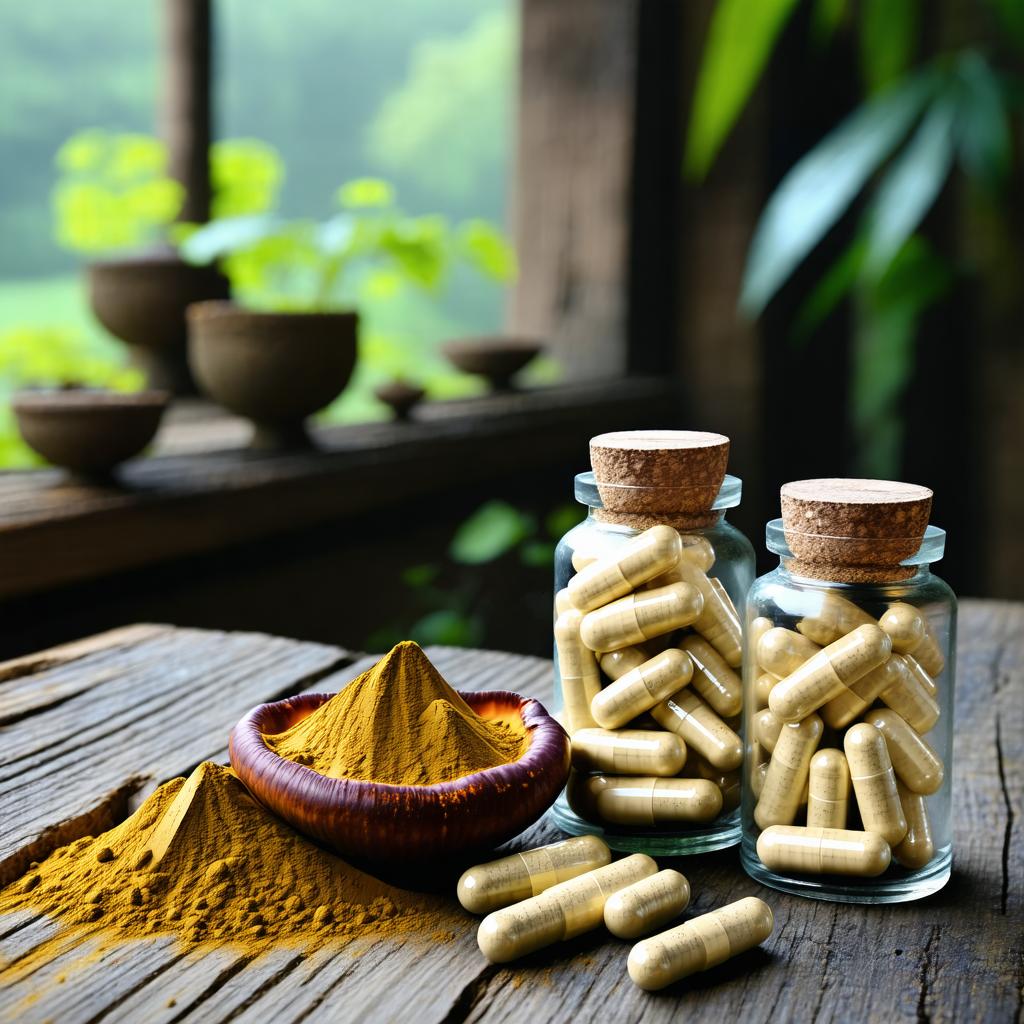
If you are a traveler or seeking simplicity, capsules are a turnkey solution. Conversely, health-conscious cooking enthusiasts and those who want to precisely adjust their daily dose will lean towards powder, which they will incorporate into a morning smoothie or honey infusion.
FAQ – Frequently Asked Questions
What is the bioavailability of Reishi powder compared to capsules?
Powder, especially standardized extracts, can offer slightly higher bioavailability since the active ingredient is free of any shell. However, extraction quality remains the determining factor.
Can Reishi powder be mixed into all types of preparations?
Yes, it is suitable for both hot and cold drinks as well as savory recipes (soups, purees) and sweet ones (heated with plant milk and honey).
What daily dosage is recommended?
Manufacturers often recommend between 1 g and 3 g of powder or 2 to 4 capsules per day, to be adjusted according to tolerance and desired effect.
Are there any side effects?
At high doses, some experience digestive issues or headaches. Following recommendations and medical supervision are advised for prolonged use.
How to best store these supplements?
In a dry place, away from light and heat. Powders require an airtight container to prevent moisture.