| Key Points | Details to Remember |
|---|---|
| 🍄 Definition | Ganoderma lucidum, mushroom with adaptogenic properties |
| 🛡️ Benefits | Stimulates the immune response and nervous balance |
| ⚙️ Mechanism | Modulation of macrophages and NK cells |
| 🔍 Criteria | Standardization in polysaccharides and triterpenes |
| 📝 Methods | Hydroalcoholic, aqueous or double extract |
| 💊 Dosage | 1–2 g per day depending on concentration |
| 🌿 Precautions | Check interactions and contraindications |
Alongside a careful lifestyle, Reishi extract stands out as a valuable ally to support our natural defenses. Its millenary reputation, rooted in traditional Chinese medicine, hides a complex bioactive composition that is now being discovered from a scientific perspective. How can one resist the temptation to benefit from its strengths to boost our immunity? This comprehensive guide deciphers the essential parameters to choose an effective Reishi extract and integrate it efficiently into your routine.
Sommaire
Reishi: Portrait of an Adaptogenic Mushroom
Origins and Bioactive Composition
Reishi, scientifically known as Ganoderma lucidum, naturally grows on the trunks of ancient trees. Long reserved for emperors in Asia, it contains a rich molecular palette: immunomodulatory polysaccharides, anti-inflammatory triterpenes, and glycoproteins. Each of these families contributes to a synergistic effect, more elaborate than the sum of its parts (see reishi benefits).
Immunostimulant and Adaptogenic Properties
At the heart of modern research, studies highlight Reishi’s ability to rebalance the immune system rather than overstimulate it. Clinical trials have noted a moderate activation of macrophages and NK cells, an essential phenomenon for a more reactive innate defense against aggressions. At the same time, its triterpenes soothe chronic inflammatory processes, a true scourge of our stressful era.
Choosing Your Reishi Extract: Quality Criteria
Origin and Traceability of Raw Material
The extract’s performance largely depends on the quality of the cultivated mushroom. Organic cultures are preferred, ideally controlled in Europe or Northern Asia, where traceability is stringent. The substrate (oak wood, chestnut) influences the richness in metabolites. Trusting a transparent producer who provides a certificate of analysis ensures a composition faithful to the claims.
Type of Extraction: Aqueous, Hydroalcoholic or Double Extract
Three processes coexist:
- Aqueous extract: ideal for water-soluble polysaccharides, mild flavor.
- Hydroalcoholic extract: concentrates mainly triterpenes, more bitter taste.
- Double extract: combines the best of both worlds, more complete but often more expensive.
The choice depends on objectives: favor pure immune defenses or also target an anti-stress effect thanks to triterpenes.
Standardization and Dosage of Active Ingredients
Deciphering the label becomes a detective game: look for the mention “standardized to,” followed by the percentage of polysaccharides (minimum 30% for a noticeable effect) and triterpenes (5–7%). These benchmarks guarantee consistent efficacy, essential for comparing brands and dosages.
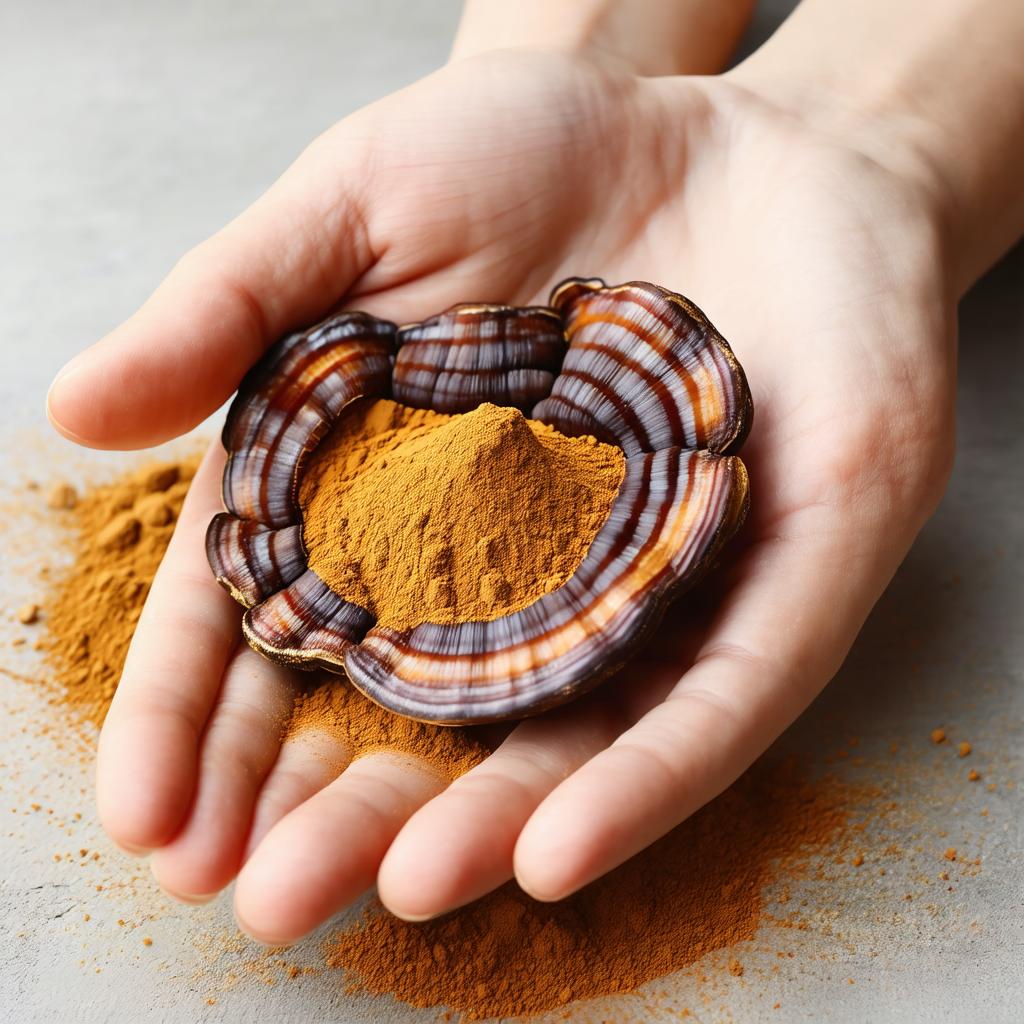
Image prompt: “A hand holding golden brown Reishi powder against a lush, misty forest background, natural and organic ambiance, soft lighting to illustrate a realistic and aesthetic WordPress article.”
How to Integrate Reishi Extract into Your Daily Life
Recommended Dosage and Intake Rhythm
For a healthy adult, start with 0.5 g per day, then increase up to 1–2 g if tolerance is good. Prefer taking it twice daily, morning and evening, to maintain a regulatory effect throughout the day. Over time, a 6–8 week cycle followed by a one or two-week break proves wise.
Pharmaceutical Forms: Powder, Capsules, Tincture
The powder dissolves easily in hot drinks (tea, broth) or smoothies. Capsules offer simplicity and precise dosing, while tincture allows rapid absorption of triterpenes thanks to alcohol. Each can adapt according to preferences and lifestyle.
Tasty Integration Tips
A dash in a turmeric-spiced porridge, a revamped golden milk latte, or incorporated into fresh vegetable juice: Reishi slips in effortlessly. If the bitterness surprises, mask it with a spoonful of honey, a pinch of cinnamon, or an orange zest.
Interactions, Contraindications and Precautions
- People on anticoagulants or immunosuppressants should consult a healthcare professional before starting.
- In case of autoimmune disorders (multiple sclerosis, lupus…), intake must be supervised by a specialist.
- Pregnancy and breastfeeding: data too limited, better to postpone use.
- Mushroom allergies: risk of skin or digestive reactions.
If headaches or unusual fatigue occur, reduce the dose or temporarily stop.
To Go Further
One might think all reishi are the same, yet cultivation and extraction methods make all the difference. To deepen the millenary history and holistic approach of Reishi, don’t miss our chronicle on the mushroom of immortality.
FAQ
Can you take Reishi daily?
Yes, provided that a gradual dosage is respected (0.5 g then up to 2 g/day) and 6–8 week cycles are followed with breaks in between.
What are the first noticeable effects?
Generally, a feeling of serenity and faster recovery in case of minor colds appear after 2–3 weeks.
Should powder or tincture be preferred?
Powder excels for culinary blends, tincture for rapid absorption of triterpenes. The double extract offers a comprehensive compromise.
Is Reishi compatible with other immune supplements?
Yes, it pairs well with quercetin, vitamin C, or zinc. Just be sure to stagger the intakes to avoid any digestive overload.