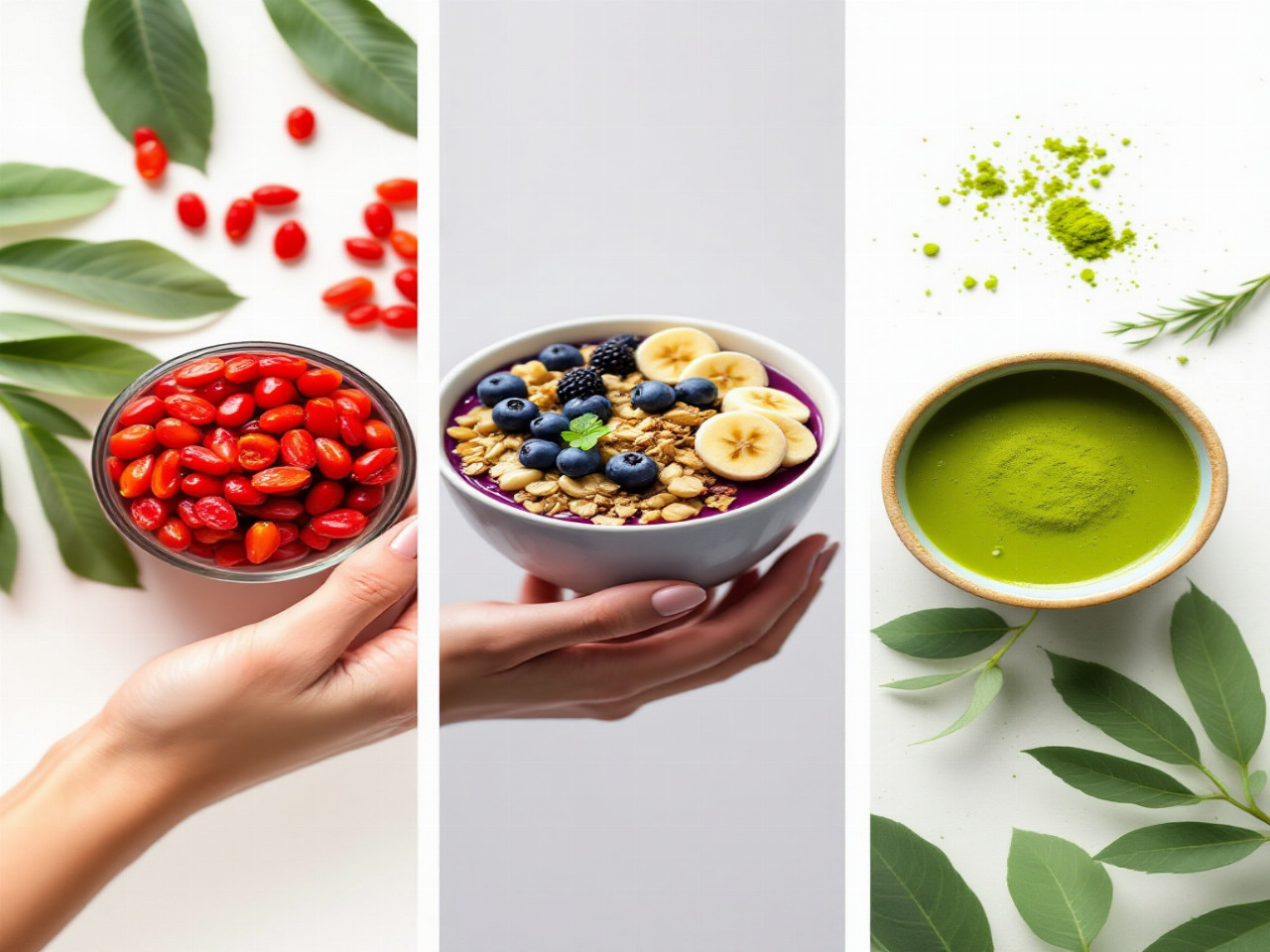
In recent years, the concept of “superfood” has established itself in the world of nutrition. Among these gems found wild or cultivated using traditional methods, three stand out for their antioxidant density: goji berries, açai, and matcha. One might think it’s enough to randomly pick these ingredients, but each powder, each berry hides its own identity, with a history, nutritional contribution, and specific beneficial effects. Rather than creating a fixed ranking, this comparison aims to enlighten the reader about the intrinsic qualities of each, while offering practical advice and daily use perspectives.
Sommaire
What is an antioxidant superfood?
The term “superfood” does not have an official definition in regulations, but it generally refers to a food whose nutritional density far exceeds that of common products. The antioxidants they contain fight free radicals responsible for cellular aging. Between vitamins, minerals, polyphenols, and other protective molecules, the range is vast. Regarding energy, we invite you to consult the Guide to the 10 Best Superfoods to Boost Your Daily Energy to discover other gems.
Goji Berries
Origin and cultivation
Native to the Himalayan regions and certain Chinese provinces, the goji berry (Lycium barbarum) is harvested from the tops of thorny bushes. Traditionally used in Chinese medicine, it grows between 900 and 2,500 meters in altitude. Rocky soils give it a taste that is both slightly sweet and tangy. In recent years, it has also been found in organic cultivation in Southern Europe, where shrub pruning is adapted to limit pesticide use.
Nutritional profile
The goji berry concentrates several vitamins (C, A, B2), iron, and selenium. For 100 g of dried fruit, there are about 11 g of protein, 7 g of fiber, and nearly 300 mg of vitamin C. Carotenoids, including zeaxanthin, help protect the retina. Finally, essential amino acids (including leucine) enrich this already dense profile.
Health benefits
It appears that these small berries stimulate the immune system, regulate blood sugar, and protect cells from oxidative stress. Studies also suggest an improvement in sleep quality and mood, probably linked to their richness in tryptophan, a precursor of serotonin. In practice, their plant-based iron content represents an interesting alternative for people suffering from mild deficiencies, provided they are combined with a vitamin C-rich food to optimize absorption.
Consumption tips
- Even dried, goji berries benefit from being rehydrated for 10 minutes in warm water.
- On a bowl of porridge or muesli, they add a natural sweet touch and a soft texture.
- You can also make a decoction by boiling 20 g of berries in 500 mL of water for 10 minutes.
Açai
Origin and cultivation
Originating from the Amazon rainforest, açai (Euterpe oleracea) is a palm whose small dark berries have crossed the Atlantic to conquer Western brunches. Hand-harvested, they require ultra-rapid processing to preserve their properties: immediately after picking, they are pulped then frozen or turned into powder. Controlled plantations in Brazil tend to respect indigenous lands and limit deforestation.
Nutritional profile
In 100 g of pulp, there are 4 g of fiber, 2 g of protein, and 5 g of lipids, including omega-6 and omega-9. On the antioxidant side, açai shines with its anthocyanin content: these pigments make it one of the fruits richest in anti-aging molecules. It also contains vitamins E and C, as well as minerals such as magnesium and potassium.
Health Benefits
Thanks to its high concentration of anthocyanins, açai may support cardiovascular health by improving blood flow and regulating cholesterol levels. The specific lipids, mostly unsaturated, contribute to the balance of fat metabolism. Some exploratory studies also suggest a moderating effect on inflammation, useful for athletes or people exposed to chronic stress.
Consumption Tips
- Frozen pulps blend easily into smoothie bowls, enhanced with fresh fruit and granola.
- In powder form, add 1 to 2 teaspoons to yogurt or plant-based milk.
- To boost the antioxidant effect, pair açai with a fruit rich in vitamin C (kiwi, citrus).
Matcha
Origin and Cultivation
Matcha comes from a Japanese green tea (Camellia sinensis) grown in the shade three weeks before harvest. This technique increases the production of chlorophyll and amino acids, notably L-theanine, responsible for the famous sensation of calm concentration. The leaves are then steamed, dried, and ground into a very fine powder.
Nutritional Profile
For one teaspoon (2 g) of matcha, there are about 70 mg of natural caffeine, 10 g of catechins (including EGCG) per 100 g, as well as vitamins A, C, E and minerals like chromium. The L-theanine content is particularly notable, promoting a state of alertness without excessive excitation.
Health Benefits
Matcha stands out for its caffeine/L-theanine synergy effect: less nervousness than with coffee, more focus than with regular tea. Catechins, for their part, are thought to play a key role in preventing certain cancers and protecting the liver. Studies also highlight an increase in basal metabolism, useful for those looking to optimize their body composition.
Consumption Tips
- For a classic ceremony, whisk 1 g of matcha with 70 mL of water at 60 °C until a fine foam forms.
- In a latte, mix 1 teaspoon of matcha with 150 mL of plant-based milk, sweetened with honey or agave syrup.
- It can even be incorporated into sweet preparations (pancakes, cookies) for a vegetal and colorful note.
Comparative Table of Main Nutrients
| Food | Key Antioxidants | Fiber (per 100 g) | Protein (per 100 g) | Vitamin C (per 100 g) |
|---|---|---|---|---|
| Goji Berries | Carotenoids, polysaccharides | 7 g | 11 g | ~300 mg |
| Açai | Anthocyanins, vitamin E | 4 g | 2 g | 15 mg |
| Matcha | Catechins (EGCG), L-theanine | – | 8 g* | 60 mg* |
*Values for 100 g of powder.
How to Choose According to Your Needs?
In reality, the best choice depends on the context of use. For a source of plant protein and iron intake, goji berries are well suited for small hunger pangs. If the goal is rather recovery after exercise and fighting inflammation, açai, rich in anti-inflammatory fatty acids, will be more appropriate. Finally, for a mental boost without jitters, matcha proves ideal. You can also combine these three foods: for example, a matcha-goji porridge or a smoothie bowl mixing açai and green tea powder.
Integration into Daily Diet
These superfoods integrate easily, even into the busiest schedules. For a vitamin-packed start to the day, a bowl based on açai or matcha awakens the taste buds and stimulates concentration. As a snack, goji berries can be taken anywhere, raw or blended into a savory mix, trail mix style. More surprisingly, matcha can enrich a pumpkin velouté for a vegetal nuance. Some ideas:
- Homemade granola: oats, goji berries, sunflower seeds, and coconut.
- Green smoothie: banana, spinach, a spoonful of açai powder, almond milk.
- Revisited pesto sauce: basil, pine nuts, matcha, and parmesan for an original tartine.
FAQ
Can these superfoods be consumed during pregnancy?
In reasonable amounts, yes. Goji berries are rich in vitamin A, but it is advisable not to exceed 30 g per day. Matcha contains caffeine, so limit to one or two small lattes per day. Açai, mildly stimulating, is safe in pulp or powder form.
Are there any contraindications or interactions?
People on anticoagulants should limit açai due to its vitamin K content. For matcha, sleep disorders or caffeine sensitivity require reducing the doses. Finally, goji could interfere with certain hypoglycemic or antihypertensive medications: medical advice is recommended.
What is the difference between matcha and classic green tea?
Matcha incorporates the whole leaf, ground into powder, whereas infused green tea only provides soluble compounds. The L-theanine profile is thus up to 5 times higher, and the flavor more umami, less astringent.
Do these superfoods replace a balanced diet?
No. They complement a varied diet rich in fruits, vegetables, lean proteins, and healthy fats. Their antioxidant contribution helps strengthen natural defenses but does not substitute for an overall healthy lifestyle.