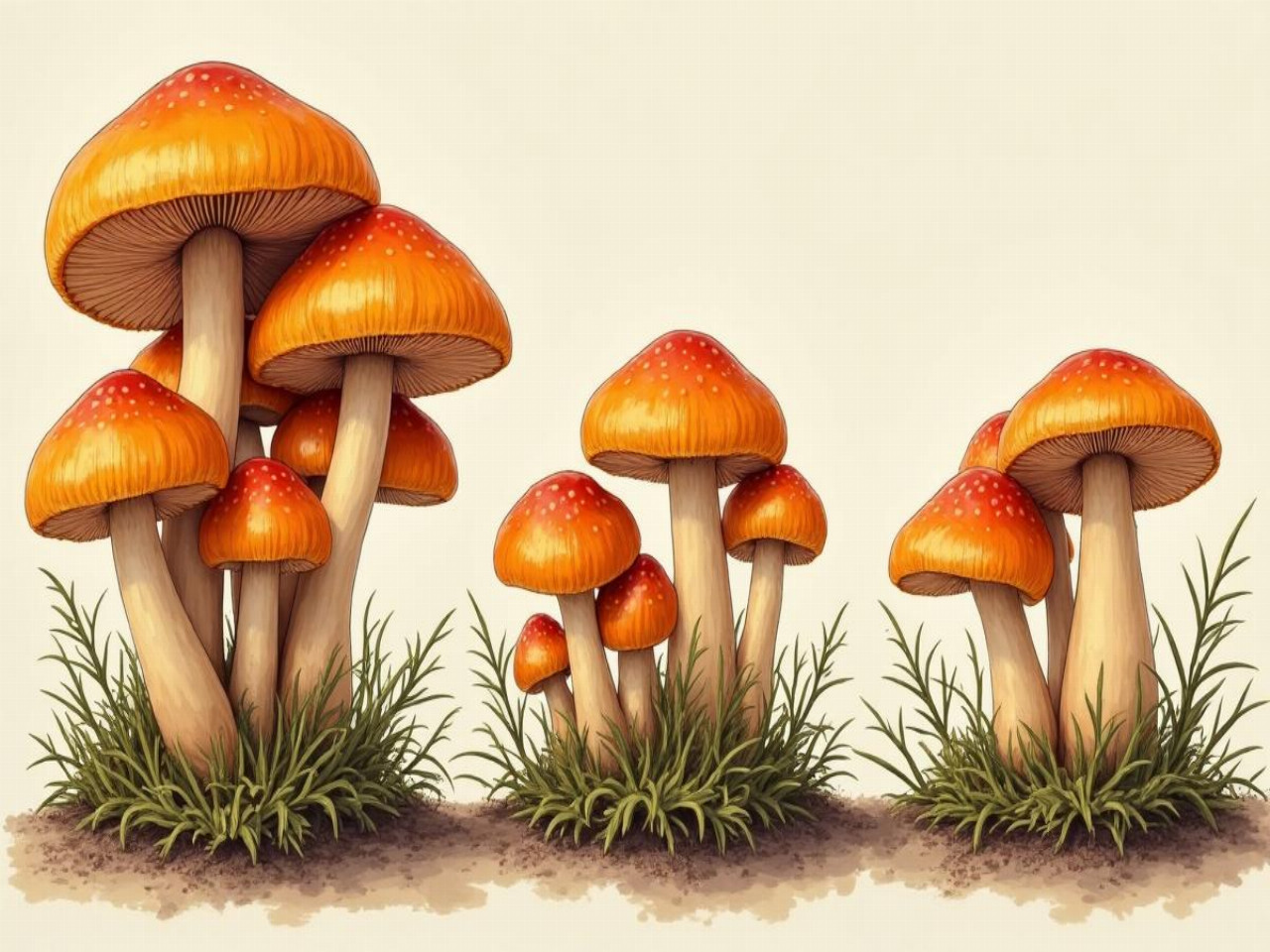
| Key Points | Details to Remember |
|---|---|
| 🍄 Identification | Cap 5-15cm honey-yellow with brown scales – Ring characteristic membranous |
| ⚠️ Toxicity | Raw consumption dangerous – Requires prolonged boiling before use |
| 🌳 Habitat | Parasite of weakened trees – Stumps and roots in tight groups |
| 🍽️ Preparation | Double cooking mandatory – Cooking waters systematically discarded |
| 💊 Research | Potential anticancer studied – Promising immunomodulatory compounds |
Armillaria mellea, this mushroom with a sweet name evoking honey, hides beneath its attractive appearance a complex and paradoxical nature. Present in our forests from autumn to early winter, it charms the eyes but demands the utmost respect. Its ambiguous reputation – both a formidable parasite of trees and a delicacy appreciated in some regions – makes it a fascinating subject for mycologists as well as discerning gourmets. This guide reveals its identification secrets, pitfalls to avoid, and ancient methods to tame it in the kitchen.
Sommaire
Armillaria mellea: portrait of a chameleon mushroom
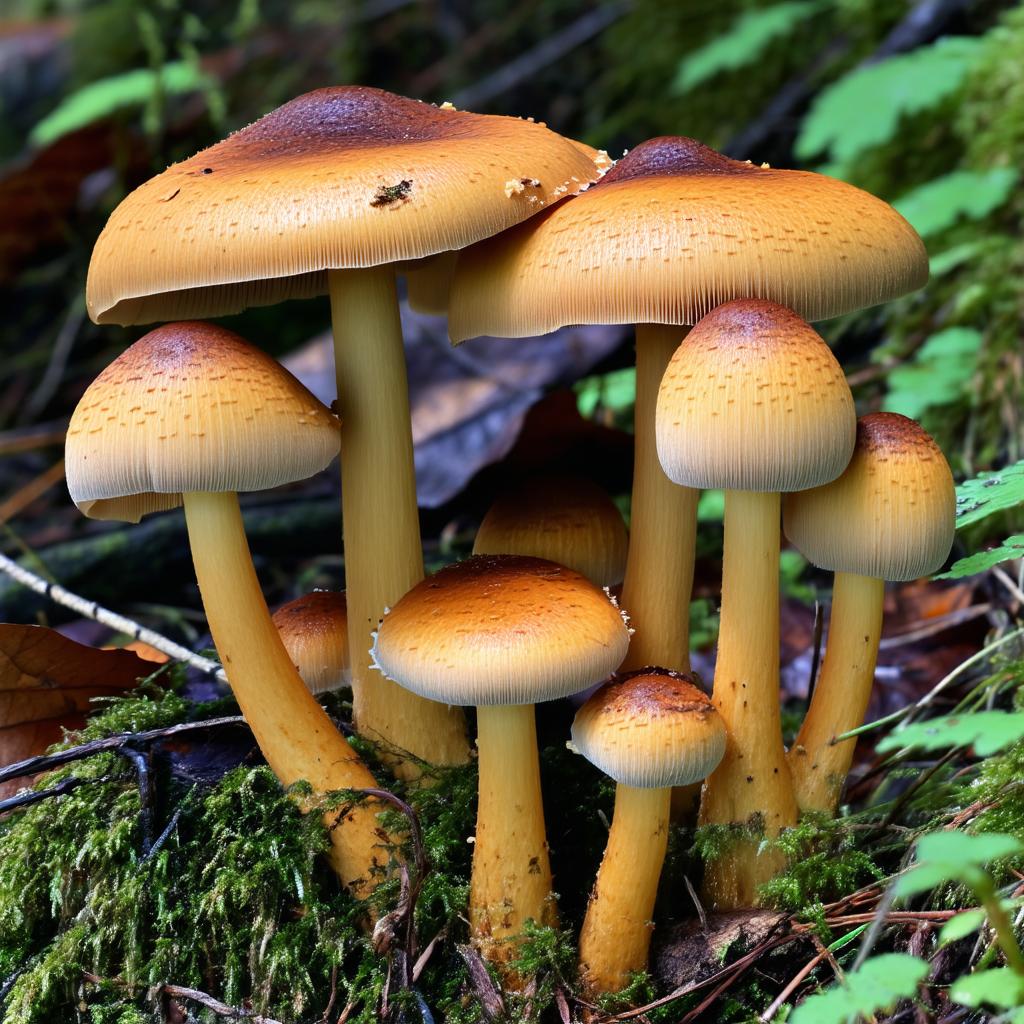
Identifying the honey-colored armillaria requires a trained eye, as its appearance varies significantly depending on age and environment. Young specimens have a hemispherical cap covered with brownish scales, as if dusted with cocoa. As it ages, it flattens to reach 15 cm in diameter, its cuticle becoming smooth and taking on that characteristic honey hue that gives it its name. But beware: in humid weather, its color darkens considerably, a classic trap for inexperienced gatherers.
Essential distinctive signs
Three elements are decisive for a sure identification:
- The persistent cottony ring under the cap, cream white and often striated
- Decurrent gills tightly packed, first whitish then spotted with rusty tones
- The base of the stem tapered, darker and clustered in tight tufts
An olfactory test reveals a pronounced forest scent, reminiscent of damp earth and rotting wood, while its firm but fibrous flesh slightly stains to the touch. These details make all the difference with its deceptive cousins like the changing Pholiota.
Dangerous look-alikes to know absolutely
The most feared confusion concerns the Deadly Galerina, fatally toxic, which shares the same habitats. Observe carefully: the Galerina has no ring and its gills turn rusty as it ages. Another impostor, the Tufted Hypholoma has a slimy cuticle and grows exclusively on conifers. An old mycological adage reminds: “The ring first, the color second” – wise precaution when one knows that a mistake can be costly.
From forest to plate: uses and precautions
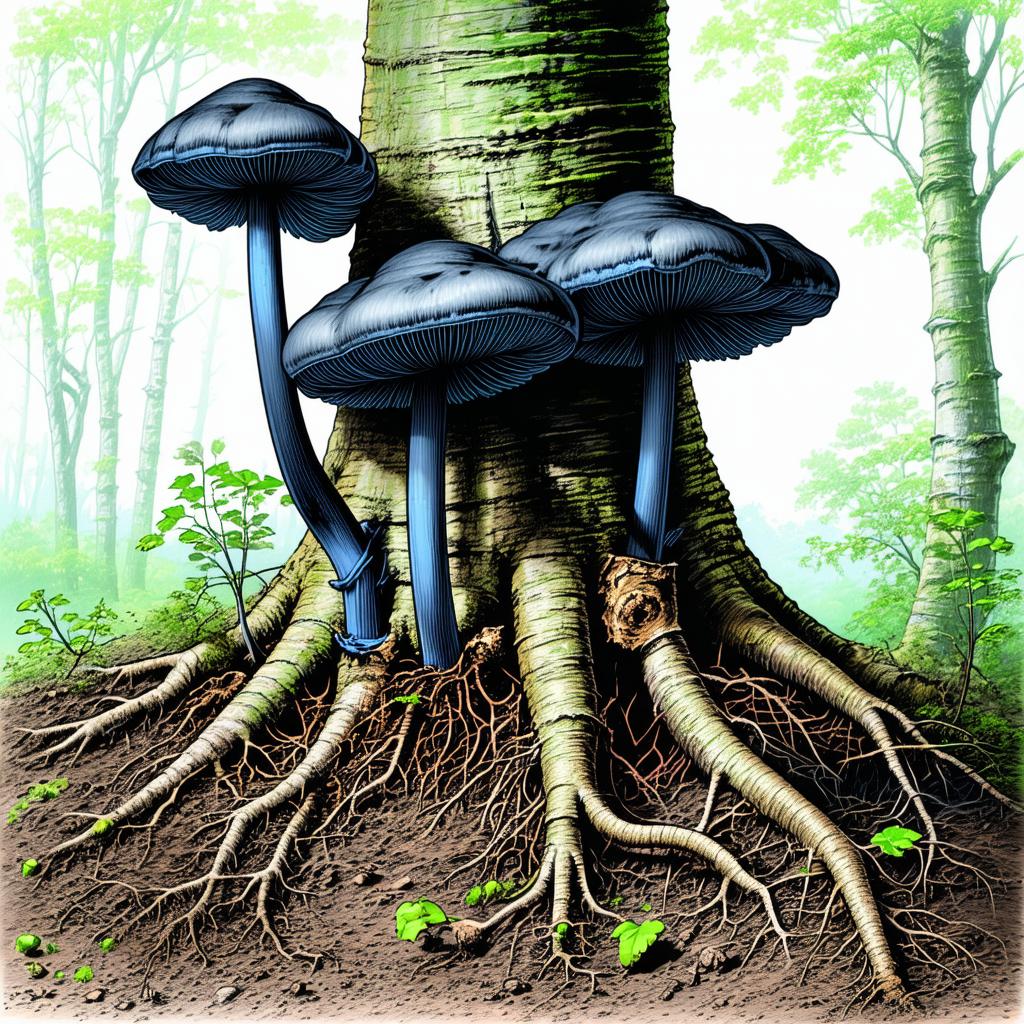
This paradoxical mushroom colonizes stumps and roots of weakened trees, sometimes forming huge underground colonies. Old orchards, deciduous hedges, and forest edges are its favorite grounds. If you spot it on a living tree, it is often a sign of advanced decline – the armillaria is a formidable pathogen capable of killing oaks, fruit trees, and vines thanks to its black rhizomorphs, true infectious underground cords.
Detoxification: essential ritual
Consumed raw, Armillaria mellea causes severe gastrointestinal disorders. Traditional populations have developed strict protocols:
- Scald the sliced mushrooms for 20 minutes
- Imperatively discard this first toxic water
- Rinse thoroughly with cold water
- Cook again for 15 minutes before preparation
This process eliminates lectins and other thermolabile compounds responsible for poisoning. Even after this treatment, sensitive stomachs should start with small portions.
Unknown culinary treasures
Once disarmed, this mushroom reveals unsuspected qualities. Its crunchy texture recalls that of the black trumpet, with an intense woody flavor that enhances reduced sauces. In the Balkans, it is marinated in cider vinegar with garlic and chili – a condiment appreciated with game. Innovative cooks use it dried and ground into powder as an umami enhancer in vegetable broths. An ancestral Corsican recipe combines it with chestnuts and brocciu in crispy pies.
Beyond cooking: emerging medicinal properties
If armillaria fascinates science, it is for its complex polysaccharides with remarkable biological effects. In vitro studies have highlighted promising immunostimulant activities, notably on macrophage activation. Even more surprisingly, armillarine – a sesquiterpene derivative isolated from its mycelium – shows interesting preliminary results against certain cancer cell lines. These researches are at an experimental stage but open fascinating perspectives.
These discoveries are part of a broader movement exploring mushrooms with adaptogenic properties. Species like Reishi or Cordyceps are the subject of serious investigations for their ability to help the body adapt to physiological stress, a path that many researchers consider promising for modern integrative medicine.
Ecological impact and responsible harvesting
Despite its reputation as a tree killer, Armillaria plays an essential ecological role. In mature forests, it accelerates the decomposition of dead wood, thus recycling nutrients. Its gigantic mycelial networks—some covering several hectares—connect trees to each other, facilitating underground exchanges. The Oregon specimen, 2400 years old, even holds the record for the largest living organism on Earth!
“Harvesting Armillaria mellea requires humility and knowledge: only take half of a cluster, leave the young shoots, and avoid polluted areas where it concentrates heavy metals.”
The alternative of controlled cultivation
Faced with risks of confusion and pollution, several European mushroom farms now offer Armillaria cultivated on sterile substrate. This controlled production offers:
| Advantage | Impact |
|---|---|
| Reduced toxicity | 80% reduction of irritating compounds |
| Traceability | Absence of environmental pollutants |
| Availability | Harvest possible outside the natural season |
These experimental cultivations remain marginal but represent an interesting alternative to enjoy this extraordinary mushroom without risks.
Frequently asked questions about Armillaria mellea
Can Armillaria be consumed without prior cooking?
Absolutely not. Raw consumption systematically causes severe vomiting and diarrhea. Double heat treatment is mandatory.
How to differentiate Armillaria mellea from the deadly galerina?
The deadly galerina has no ring, its cap is hygrophanous (changing color with humidity), and it grows in small isolated groups rather than dense clusters.
Are there dietary supplements based on Armillaria?
Very rarely in Europe. Some Asian laboratories offer standardized extracts, but their effectiveness in humans requires more clinical research.
Why do some people react badly even after cooking?
Individual sensitivity varies, and some compounds resist heat. People suffering from inflammatory bowel syndromes should avoid it.