| Key Points | Details to Remember |
|---|---|
| 🏷️ Definition | Chronic pain in the groin and pubic area related to muscles and tendons. |
| ⚠️ Causes | Sports overuse, muscle imbalances, pelvic instability. |
| 🩺 Diagnosis | Clinical examination supplemented by imaging (ultrasound, MRI) if necessary. |
| 💪 Treatment | Progressive rehabilitation, targeted strengthening, pain control. |
| 🔁 Return to sports | Progression based on functional criteria, not just absence of pain. |
| 🛠️ When to operate | Surgery considered after prolonged failure of conservative treatments. |
Pubalgia sometimes turns an enduring athlete into a cautious patient: dull pain in the lower abdomen, discomfort when putting weight on the leg, irritation during accelerations. One might think a few days of rest would suffice, but in reality, management requires method, patience, and well-conducted rehabilitation. This guide breaks down what pubalgia really is, how to diagnose it, which interventions work best, and how to build a reliable return to activity without relapse.
Sommaire
Understanding Pubalgia: Anatomy, Mechanisms, and Triggers
Pubalgia is not a single “disease” but rather a painful syndrome around the pubic symphysis: insertion of the adductors, rectus abdominis, ligaments, and peri-articular structures. In athletes, the most frequent cause is an imbalance between the strength of the adductors and that of the deep abdominals; these conflicts create repeated microtrauma. Sometimes, pelvic instability linked to hypermobility or poor running technique maintains the pain. In non-athletic patients, pubalgia can result from surgeries, arthropathies, or chronic inflammations.
Characteristic Clinical Signs
The pain is typically located in the lower abdomen, groin, or upper thigh, often unilateral at first then sometimes bilateral. It appears during effort — sprints, changes of direction, shots in football — and eases at rest, before reappearing upon return to activity. A decrease in performance, apprehension when climbing stairs, and discomfort when coughing or carrying loads are frequently observed.
Diagnosis: clinical examination and useful imaging
The starting point remains the medical history and orthopedic examination: palpation of insertions, resisted adduction tests, search for abductor deficit, and evaluation of lumbopelvic control. Dynamic ultrasound can reveal tendon lesions or bursitis; MRI is useful for detecting a bone fissure, severe tendinopathy, or an associated pathology. These examinations also help to rule out a true inguinal hernia, osteoarticular pubalgia, or visceral involvement.
Conservative treatments: the preferred option
Several clinical evidences show that a properly applied non-surgical approach resolves the majority of pubalgias. The idea is to reduce inflammation, correct muscle imbalances, and restore a stable motor pattern.
1. Relative rest and activity adaptation
Complete rest is not always necessary; rather, aggravating movements should be reduced. For example, replacing sprints with cycling, or limiting twisting movements. Completely stopping training for weeks promotes atrophy and delays recovery. The goal is to alternate rest, painless activities, and targeted rehabilitation.
2. Physiotherapy and targeted rehabilitation
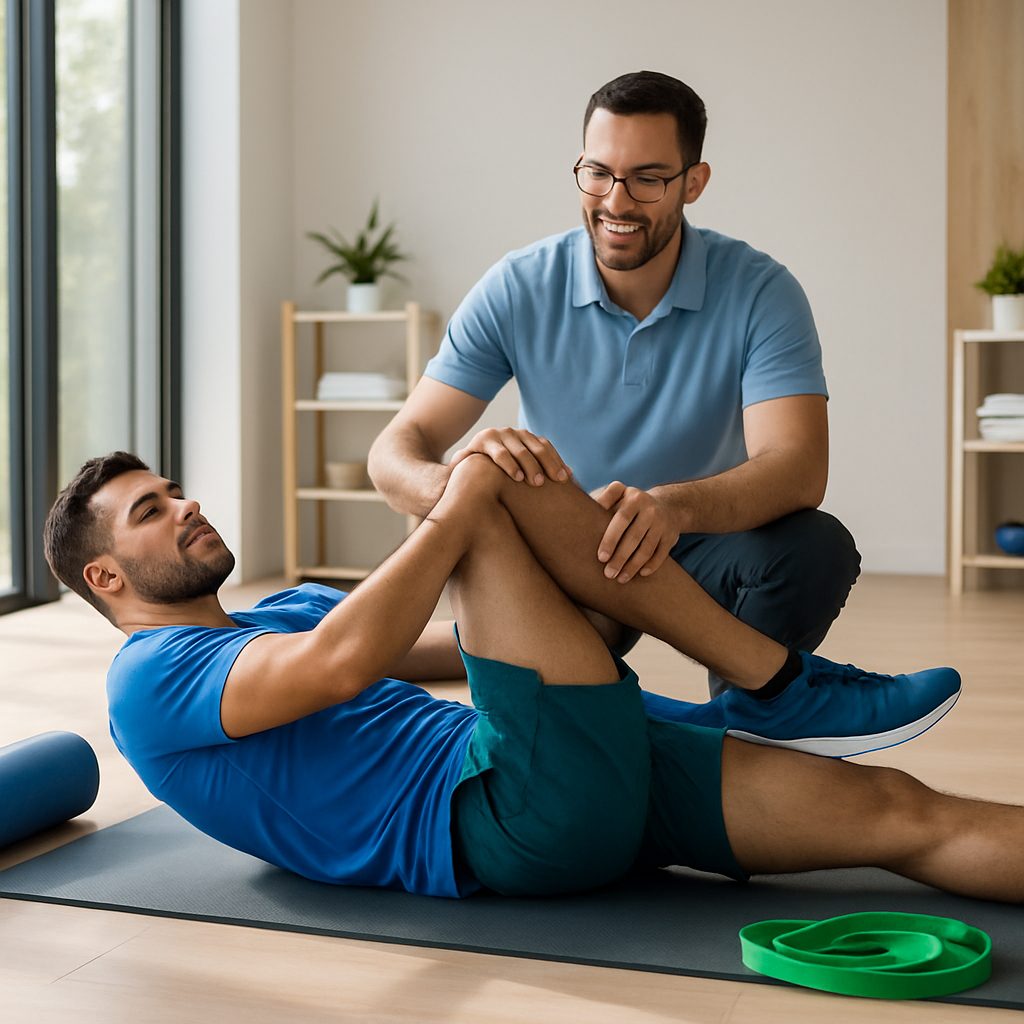
Rehabilitation is the heart of the treatment: strengthening the deep abdominals (transverse), activating the gluteal muscles, balancing adductors and abductors, and pelvic proprioception. A good physiotherapist will propose a progressive plan over several months, with assessable stages. We start with closed chain exercises, then progress to single-leg efforts and finally specific exercises related to the practiced sport.
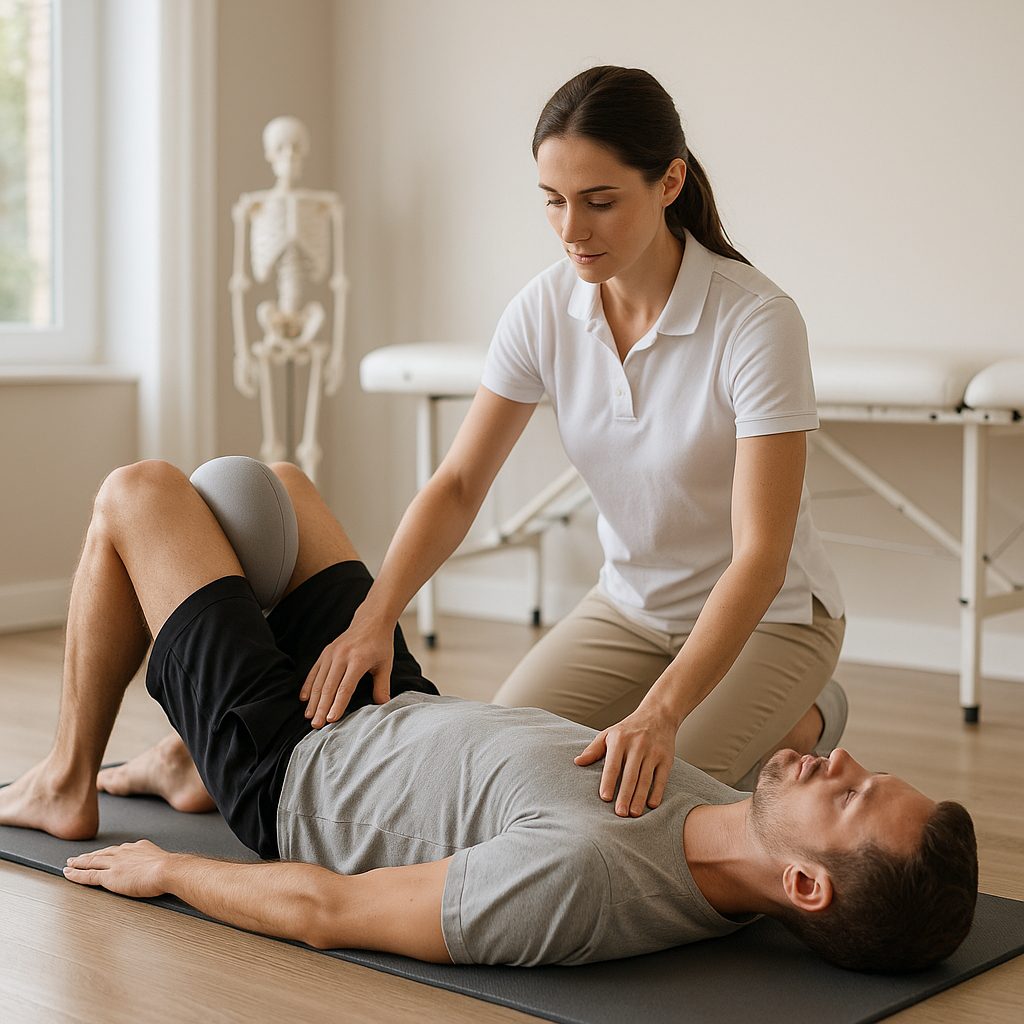
3. Practical exercises — typical progression
- Phase 1 (acute pain): gentle static core stabilization (10–20 s), transverse contractions in lying position, gentle stretches of the adductors.
- Phase 2 (stabilization): unilateral bridge, glute activation, guided single-leg support work, eccentric strengthening of the adductors.
- Phase 3 (functional): controlled jumps, progressive accelerations, directional change drills with progressive load.
Each phase typically lasts 2–6 weeks depending on pain and response to treatment. Progression should be based on functional criteria (range of motion, asymmetry, quality of movement) and not only on complete disappearance of pain.
4. Pain management and adjuncts
Anti-inflammatories and analgesics can be used short-term to allow rehabilitation, without masking a problem that requires correction. Infiltrations (corticosteroids) have a limited but useful role if local inflammation is severe and blocks physiotherapy. Shock waves or laser therapy may help some patients, particularly for chronic tendinopathies, although results vary.
Comparative Table of Therapeutic Options
| Treatment | When to use it | Estimated time before improvement |
|---|---|---|
| Functional rehabilitation | First-line treatment for most athletes | 6–12 weeks for noticeable improvement |
| Medications (NSAIDs) | Acute pain, inflammatory phase | 48–72 hours for symptomatic effect |
| Corticosteroid injection | Partial failure of conservative measures, localized pain | Days to weeks, variable effect |
| Shock waves / advanced physio | Chronic tendinopathies | Several weeks with repeated protocol |
| Surgery | Refractory pain after 3–6 months or structural lesions | Recovery 3–6 months depending on procedure |
Surgery: when and what options?
Surgery is not a reflex. It is considered when well-conducted rehabilitation (at least 3 to 6 months) does not yield results, or if imaging shows a clear lesion: significant tendon tear, pubic symphysis instability, or confirmed sports hernia. Procedures may aim to repair tendons, release adhesions, or stabilize the symphysis. The choice depends on the assessment, age, and athletic level. After surgery, rehabilitation remains essential to restore muscle chains and prevent recurrence.
Prevention and gradual return
Prevention is based on three simple but demanding principles: muscle balance, quality of movement, and management of training load. Include at least two sessions per week of strengthening exercises for the abductors and transverse muscles, work on sprint technique, and avoid sudden increases in intensity. When returning, rely on functional criteria: no pain during specific effort, asymmetry <10%, and satisfactory postural control before increasing load.
FAQ — Frequently Asked Questions about Pubalgia
- Can you continue running with pubalgia?
- Running without adapting can worsen the lesion. It is preferable to temporarily replace it with less traumatic activities (cycling, swimming) while continuing strengthening exercises.
- How long before returning to competitive sport?
- Most athletes recover in 8–12 weeks with well-conducted rehabilitation, but some chronic cases require several months. The decision should be functional, not just pain-based.
- Are injections dangerous?
- Used occasionally they can help, but repeated corticosteroids can weaken tissues, hence the need to combine them with targeted rehabilitation.
- How to differentiate pubalgia from an inguinal hernia?
- Clinical diagnosis often distinguishes the two, but if doubt persists, a dynamic ultrasound or MRI will provide the necessary precision.
- Are there exercises to avoid?
- Sudden twisting movements, repeated short sprints, and kicks without postural control should be avoided until lumbopelvic control is restored.
Practical advice for daily life
- Monitor posture at work: chronic imbalance increases pelvic strain.
- Break up training: increase load progressively with active recovery sessions.
- Document your pain: a simple diary helps the therapist adjust rehabilitation.
- Work on thoracic mobility and glute strength: distant muscles influence the pelvic chain.