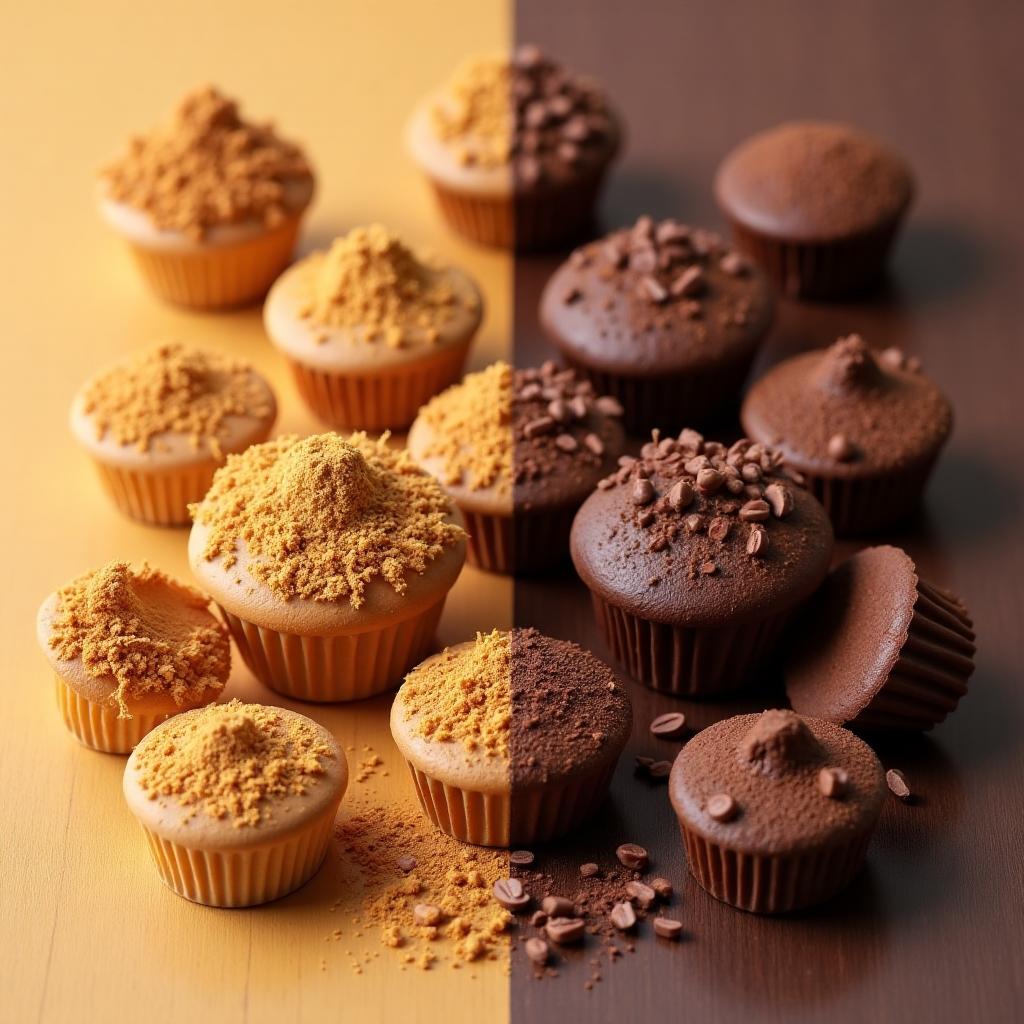
Carob, derived from the carob tree, and cocoa, the core of the cacao tree, compete in our desserts for their taste and nutritional power. While cocoa seduces with its antioxidants and intense aroma, carob relies on its caffeine-free nature and richness in fiber. This comparison guides you in choosing the option best suited to your desires and needs.
Sommaire
In brief
😊 Carob: caffeine-free, rich in fiber and naturally sweet, it suits light and anti-fatigue recipes.
🍫 Cocoa: concentrated in antioxidants and deep flavor, it boosts mood and promotes blood circulation.
🌱 Nutritional profile: carob provides more complex carbohydrates, cocoa more quality fats and polyphenols.
⚖️ Culinary use: carob works as powder or syrup to sweeten dishes, cocoa pairs with ganaches, mousses and rich pastries.
Origins and history of carob and cocoa
Cocoa finds its roots in Central America where the Mayas and Aztecs used it as a ritual drink. Introduced to Europe in the 16th century, it quickly became a luxury product. Carob, for its part, comes from the Mediterranean basin: in ancient Greece, its pods were already used to sweeten drinks and breads. Long underestimated, it is now back in the spotlight for its dietary qualities.
Carob: from the Mediterranean basin to your dessert
The carob pod contains a sweet pulp, dried and ground to obtain a naturally brown powder. This caffeine-free alternative has established itself as a mild sweetener, sometimes used as syrup or gluten-free flour.
Cocoa: journey from the tropics to kitchens worldwide
Cocoa beans undergo fermentation, roasting and grinding to become powder or cocoa butter. Their complex profile, blending fruity notes and bitterness, makes them a favorite ingredient for chefs.
Nutritional composition: strengths and differences
To choose between carob and cocoa, the table below compares their contents per 100 g of powder.
| Nutrient | Carob (100 g) | Cocoa (100 g) |
|---|---|---|
| Calories | 222 kcal | 228 kcal |
| Proteins | 4.6 g | 19.6 g |
| Fats | 0.7 g | 21.1 g |
| Carbohydrates | 88 g (of which 49 g sugars) | 50 g (of which 1 g sugars) |
| Fiber | 39 g | 33 g |
| Antioxidants (ORAC) | not measured | 55,000 μmol TE |
| Caffeine | 0 mg | 230 mg |
Taste and texture: nuances to consider
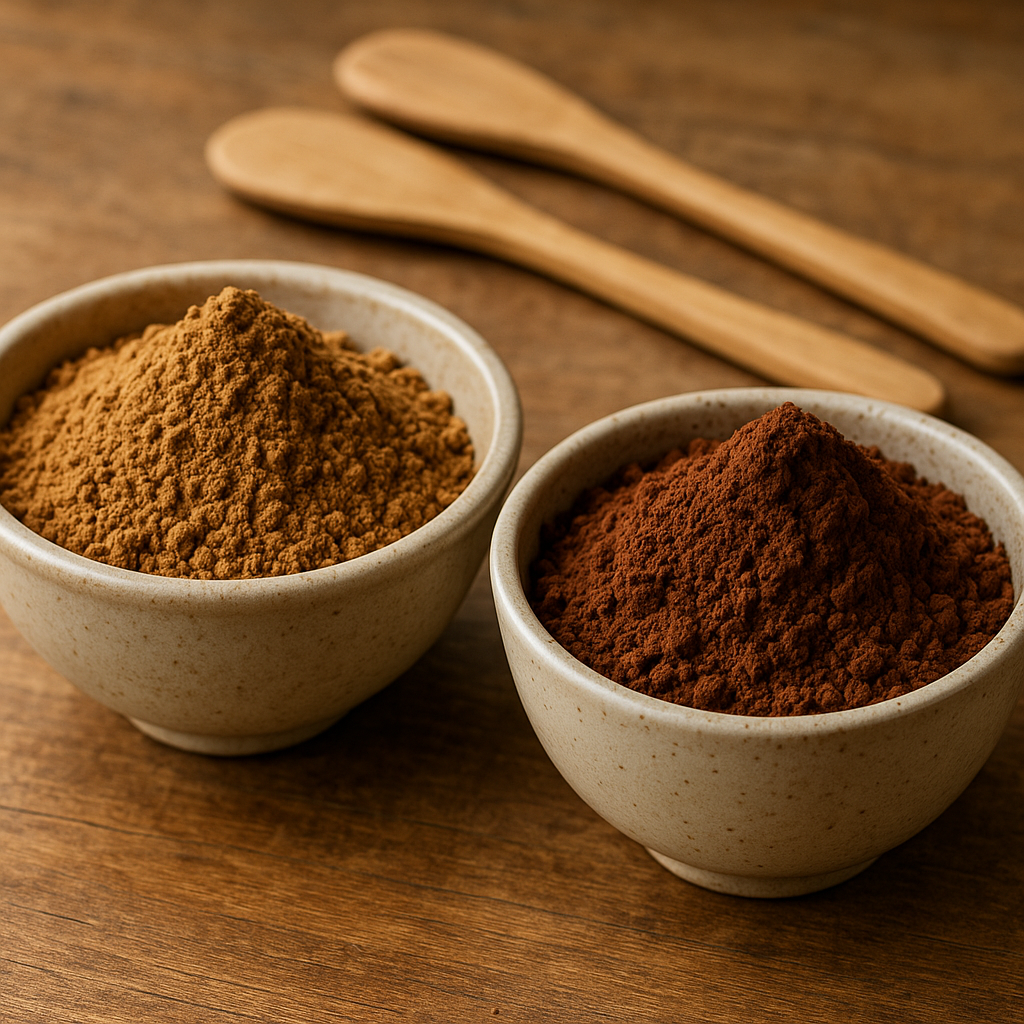
Carob powder offers a natural sweetness, sometimes described as a slight caramel flavor. It is less bitter than cocoa, perfect for sensitive palates. Cocoa, on the other hand, presents a wider aromatic palette: fruity, woody, almost spicy depending on its origin and roasting.
In ground form, carob is more granular, which can influence certain recipes. Cocoa, fine and fatty thanks to the butter it contains, dissolves more evenly in liquid preparations.
Culinary uses: recipes and tips
Recipes with carob
- Light mousse: mix 40 g of carob powder, 300 ml of plant-based milk, and 2 tbsp of agar-agar, heat for 2 minutes.
- Energy smoothie: 1 banana, 1 tbsp of carob, 200 ml of almond milk, chia seeds.
- Homemade bars: oats, date puree, carob powder, and dried fruits.
Recipes with cocoa
- Melting cake: 200 g of dark chocolate, 100 g of butter, 4 eggs, 100 g of sugar, 50 g of flour.
- Airy mousse: 150 g of chocolate, 4 separated eggs, a pinch of salt, whisk firmly.
- Gourmet crepes: replace 20 g of flour with 20 g of cocoa, add 1 tbsp of vanilla sugar.
Health benefits and precautions
- Carob: moderate glycemic index, caffeine-free, suitable for intolerant individuals and children.
- Cocoa: rich in magnesium, flavonoids, and polyphenols, good for the heart and mood.
- To moderate: sweetened versions or those high in fat (spreads) can negate the benefits.
“The antioxidants in cocoa help reduce oxidative stress and protect cells.” – Journal of Nutritional Biochemistry
Which choice for which dessert?
For a light treat without stimulants, opt for carob in cold recipes or those with low cooking. If you are looking for an intense aroma and cardiovascular benefits, cocoa remains essential. Don’t hesitate to play with mixing the two powders to balance flavor and sweetness.
FAQ
Can carob completely replace cocoa in baking?
Yes, in most recipes, but the taste will be milder and less bitter. You need to adjust the sugar and texture by sometimes adding fat.
Is raw cocoa healthier than carob?
Raw cocoa retains its antioxidants but remains high in caffeine. Carob offers a stimulant-free alternative, better for children and sensitive individuals.
Can carob and cocoa be mixed?
Absolutely: a ratio of 1/3 carob and 2/3 cocoa softens the bitterness while maintaining a good polyphenol content.
Which powder contains the least sugar?
Pure cocoa generally contains less sugar (1 g/100 g) compared to 49 g/100 g for carob.
Is carob suitable for gluten-free diets?
Yes, naturally gluten-free, it is ideal for intolerant individuals or to vary pleasures.