| Key Points | Details to Remember |
|---|---|
| 🔍 Instant Identification | Recognizes 5000+ foods via photo or barcode |
| 📊 Nutritional Analysis | Calculates calories, macros, and micronutrients in real time |
| 🎯 Advanced Personalization | Adapts recommendations according to health goals and conditions |
| ⚠️ Technological Limits | Approximate detection on complex homemade dishes |
| 🌱 NOVA Classification | Integrates the degree of food processing |
| 📈 Behavioral Impact | Durably changes eating habits |
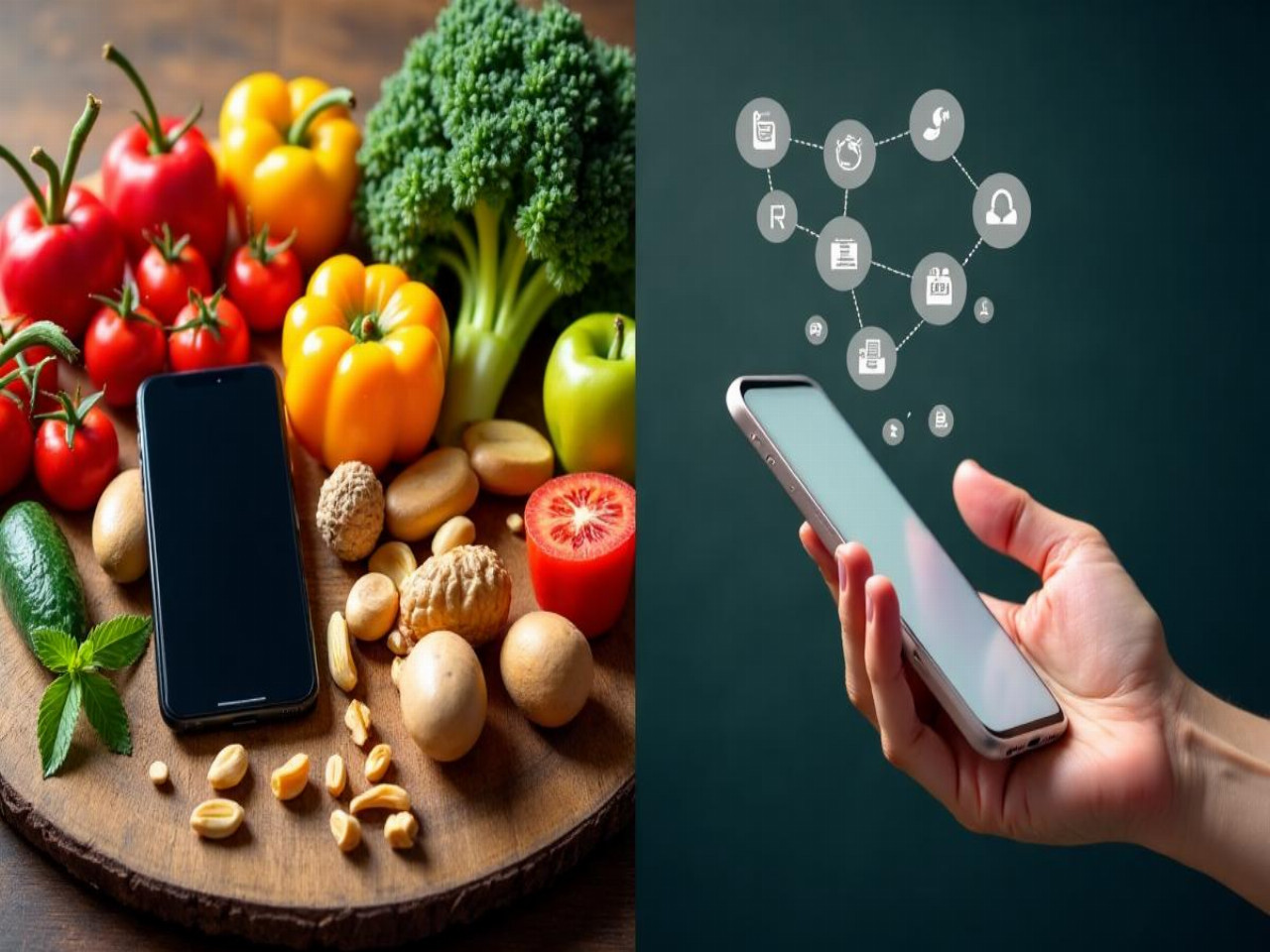
Your smartphone has become a digital nutritionist. These applications transform the plate into actionable data, promising a revolution in our relationship with food. Between technological feats and practical limits, how do these tools concretely redefine our daily nutrient management? An exploration behind the scenes of this innovation that is already part of millions of users’ daily lives.
Sommaire
Technological Decoding: How Does Food Recognition Work?
Behind the apparent simplicity of a photo lies a complex process involving several technologies. The application first analyzes the image using computer vision algorithms trained on millions of food images. These systems identify shapes, colors, and textures to establish matches with its database. For a composed dish like a Niçoise salad, the AI segments each ingredient before analyzing them individually. The second step cross-references these results with official nutritional information (such as the CIQUAL tables in France), adjusted according to the estimated portion size using dimensional references. Some applications even enhance precision by integrating the specific brand when scanning a barcode, thus accessing the exact product composition.
Deep Learning at the Service of Your Plate
Convolutional neural networks, specialized in image processing, constantly improve thanks to machine learning. The more users validate or correct identifications, the more the system refines its predictions. A MIT study revealed that the best applications now reach 87% accuracy on raw foods, compared to only 65% three years ago. This rapid progress explains why some now recognize the difference between a button mushroom and a shiitake, or distinguish farmed salmon from wild by subtle texture differences.
Nutritional Tracking: Beyond Simple Calorie Counting
While measuring energy intake remains fundamental, modern applications offer much more sophisticated features. Yazio and Lifesum provide detailed micronutrient tracking of your vitamin B12, iron, or zinc intake, with personalized alerts in case of potential deficiency. For athletes, MyFitnessPal integrates algorithms that recalculate protein needs based on training intensity. The real breakthrough lies in adaptation to medical conditions: Foodvisor automatically suggests gluten-free alternatives for celiacs, while Nutrimatic adjusts lipid intake for type 2 diabetics.
The Behavioral Impact of Visualized Data
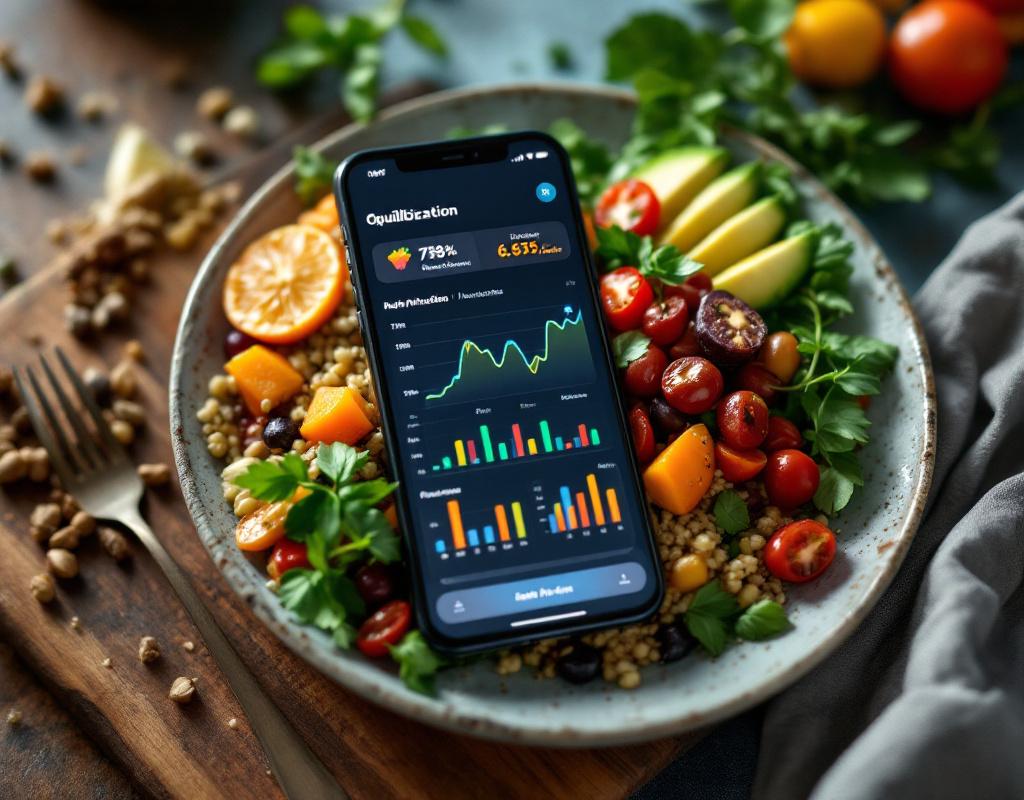
The strength of these tools lies in their ability to make the invisible visible. Seeing your carbohydrate distribution displayed in charts over the week creates an immediate awareness. Nutritionists report that 68% of their patients spontaneously change their food choices after two weeks of use. The “nutritional scoring” system adopted by several apps (inspired by Nutri-Score) transforms the abstraction of nutrients into understandable feedback. When your meal turns red because it contains 15g of added sugars, the effect is more meaningful than a table of values.
Integration of the NOVA Classification: A Step Toward Less Processed Food
The boundary between “good” and “bad” calories becomes obsolete in the face of a more decisive criterion: the degree of food processing. Pioneering apps like Open Food Facts or Siga now incorporate the NOVA classification, categorizing products into four groups according to their level of industrialization. This system identifies ultra-processed foods – these compositions of deconstructed ingredients reconstituted with additives – which sometimes represent up to 60% of daily calories in Western diets. By scanning a product, the app can alert you: “This biscuit belongs to NOVA group 4, containing 7 additives and hydrolyzed proteins.” This feature fills a crucial gap, as a Nutri-Score A product can very well be ultra-processed.
Toward Effective Reduction of Ultra-Processed Foods
The integration of the NOVA classification into mobile apps changes the practical game. Rather than just saying “eat less processed,” these tools provide an actionable filter at the supermarket. Users report having reduced their ultra-processed food consumption by 40% in three months simply by following app notifications. The “healthy alternatives” function offers less processed substitutes: plain oats instead of sweetened muesli, or unsweetened applesauce instead of a chocolate bar. This approach aligns with recent WHO recommendations on health risks linked to intensive industrial processes.
The Unavoidable Limits of Current Technology
Despite impressive progress, these applications face several pitfalls. Visual recognition shows its blatant weaknesses with complex homemade dishes. A shepherd’s pie will be identified as “mashed potatoes with meat” without precisely quantifying the potato/beef ratio. Sauces and homogenized mixtures pose problems – the technology struggles to differentiate a light béchamel from a Mornay sauce rich in cheese. Another black spot: the chronic underestimation of seasonings. An INRAE study showed that apps systematically forget 80% of the olive oil added to salads, skewing lipid calculations.
| Application | Strengths | Major Pitfalls |
|---|---|---|
| Yazio | Precise micronutrient tracking | Limited French database |
| Foodvisor | Recognition of typical dishes | Expensive subscription |
| MyFitnessPal | Extensive food library | Frequent errors in user entries |
The Trap of Approximate Manual Entry
When recognition fails, manual entry becomes a major source of inaccuracies. Users often choose approximate equivalents (“roast chicken” instead of “braised chicken thigh”), creating ±20% discrepancies on actual intake according to a study published in the Journal of Nutritional Science. The phenomenon worsens with personal recipes: few take the time to weigh each ingredient before cooking, and no app can automatically adjust nutritional values after thermal transformation. Result: your homemade zucchini gratin appears in the nutrition journal with partially fictitious data.
Future Perspectives: Where Is Digital Nutrition Heading?
The next revolution will come from synchronized connected devices. Already, smartwatches correlate caloric expenditure measured by accelerometer with food intake. Tomorrow, temporary digestible sensors (already tested by the start-up Proteus) will be able to transmit data on actual nutrient absorption. Advances in miniaturized spectrometry hint at smartphones capable of analyzing the molecular composition of food. But the most promising innovation concerns predictive AI: by cross-referencing your biological data, habits, and preferences, apps will anticipate your sugar cravings and propose alternatives even before the binge hits.
Toward Genetic Hyper-Personalization
Some applications are already exploring the integration of genomic data. Nutrigenomix or DNAFit use your DNA profile to tailor recommendations. If your genes indicate slow caffeine metabolism, the app will automatically delay the time of your last coffee. For carriers of FTO gene variants associated with obesity, it will strengthen alerts on saturated fats. This nutrigenetic approach obviously raises major ethical questions but represents a quantum leap in nutritional personalization.
FAQ: Nutritional Applications
- Do these applications replace a nutritionist?
No, they complement professional follow-up but do not diagnose deficiencies or complex pathologies. - Which is the most accurate for French dishes?
Foodvisor excels in traditional cuisine thanks to its enriched French database. - Can these tools be used for free?
Basic versions are free, but advanced functions (NOVA analysis, micronutrient tracking) require a subscription (€5-10/month). - How to avoid obsession with numbers?
Set target ranges rather than fixed values and disable notifications after 8 p.m.