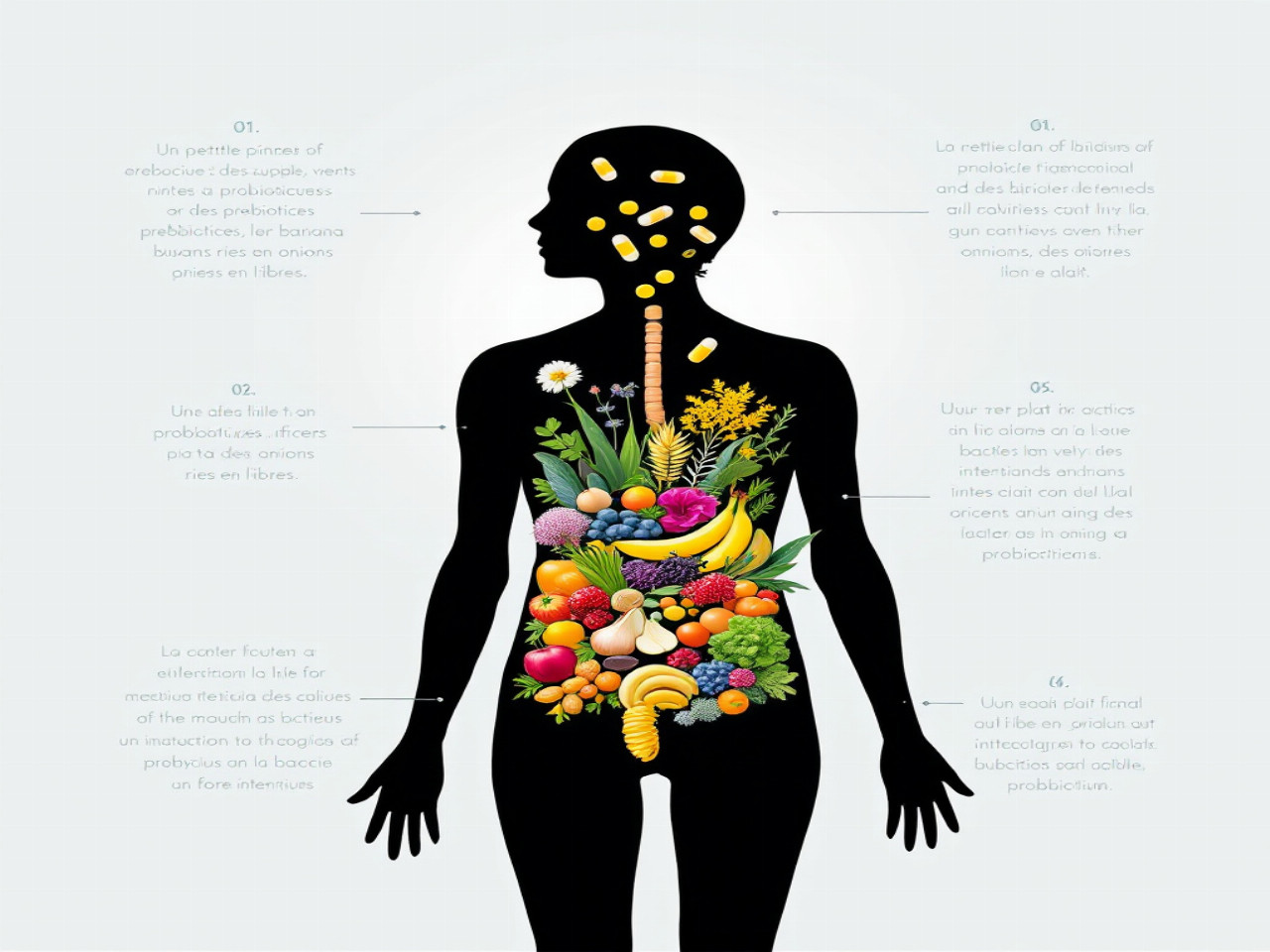
The intestinal flora, porous and abundant, orchestrates a large part of our digestive and immune balance. One might think that everything depends on diet or genetics, yet discreet actors — prebiotics and probiotics — profoundly influence the composition and functioning of this micro-universe. By tracing back to the origins of these two concepts, we better understand how to nourish and populate our intestines to promote better overall health. The issue goes beyond simple digestion management: it touches on inflammation modulation, defense against pathogens, and, perhaps even more, the impact on our mental well-being.
Sommaire
The Intestinal Microbiota: A Complex Ecosystem
Composition and Role of Microorganisms
Inside our digestive tract reside billions of bacteria, fungi, and viruses, forming a dynamic network. Some species digest resistant fibers, while others produce vitamins or regulate the permeability of the mucosa. It follows that each individual has a unique microbiota, influenced by age, lifestyle, and even stress. Rather than a simple organ, the microbiota resembles a microscopic metropolis in constant evolution, adaptable but vulnerable to certain imbalances.
Prebiotics: Fuel for Your Good Bacteria
Mode of Action and Fermentation
Prebiotics are non-digestible food ingredients that reach the colon intact, where they serve as a substrate for beneficial bacteria such as Bifidobacterium or Lactobacillus. By fermenting these fibers, these microorganisms produce short-chain fatty acids (SCFAs) — notably butyrate — essential for colonic health. Far from being a simple mechanical amendment, the intake of prebiotics selectively stimulates certain strains, also modulating neurotransmitter production and gastrointestinal hormone excretion.
Natural Food Sources
These molecules are found in:
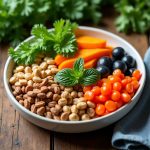
- Root vegetables: Jerusalem artichoke, parsnip, beetroot.
- Legumes: lentils, chickpeas, white beans.
- Whole grains: barley, rye, oats.
- Alliaceae: garlic, onion, leek, with a profile rich in fructo-oligosaccharides.
By varying sources, one obtains both a range of soluble and insoluble fibers, optimizing bacterial diversity. Added to this are synthetic prebiotics, such as inulin or FOS (Fructo-Oligo-Saccharides), appreciated as dietary supplements, especially to target a specific deficiency or slowed transit.
Probiotics: Living Allies
Daily Functioning
Probiotics correspond to living microorganisms which, when administered in adequate amounts, confer a benefit to the host. They can temporarily colonize the colon, prevent the proliferation of pathogens by occupying space and secreting antimicrobial substances, and even modulate the local immune response. More than a simple bacterial word-of-mouth, their effectiveness depends on the strain, dosage, and ability to survive the acidic environment of the stomach to reach the intestine.
Choosing the Right Strain and Formulation
Among the most studied:
- Lactobacillus rhamnosus GG, known to reduce the duration of acute diarrhea.
- Bifidobacterium lactis, often used to balance the infant microbiota.
- Saccharomyces boulardii, a probiotic yeast effective against certain nosocomial diarrheas.
Microencapsulated or delayed-release formulations are preferred, ensuring survival until the colon. Furthermore, a minimum concentration of 10^9 to 10^10 CFU (Colony Forming Units) per dose is generally recommended to expect a significant clinical effect.
Comparison Table: Prebiotics vs Probiotics
| Criterion | Prebiotics | Probiotics |
|---|---|---|
| Nature | Non-digestible fibers | Living microorganisms |
| Mechanism | Colonic fermentation, SCFA production | Colonization, pathogen competition |
| Examples | Inulin, FOS, GOS | Yeasts, lactobacilli, bifidobacteria |
| Objectives | Stimulate beneficial bacteria | Introduce or strengthen specific strains |
Synergy between Prebiotics and Probiotics
Synbiotics: when duo rhymes with efficiency
The combination of prebiotics and probiotics — or synbiotics — aims to create an environment favorable to the survival and growth of the introduced strains. By simultaneously providing the “food” and the “roommate,” sometimes better implantation and prolonged effect are observed. In some studies, this duo allows for a faster reduction of irritable bowel syndrome symptoms or improves lactose tolerance, compared to isolated probiotic administration.
Health Impacts and Practical Recommendations
Clinical Applications and Evidence
Beyond digestion, the role of pre- and probiotics is now being explored in:
- Modulation of chronic inflammation (chronic inflammatory bowel diseases, atopic dermatitis).
- Immune support, notably in preventing winter infections.
- Prevention of metabolic complications (insulin resistance, obesity).
- Mood regulation, via the gut-brain axis.
Results are often encouraging, but interindividual variability calls for dose adjustments and prioritizing medical follow-up when dealing with severe pathologies.
Tips for Integrating Prebiotics and Probiotics
To optimize the action of these allies:
- Vary sources: combine vegetables, whole grains, and fermented products (yogurt, kefir, kimchi).
- Space out probiotic and antibiotic intake, or wait until the end of treatment for maximum effectiveness.
- Start with a low dose in case of bloating, then gradually increase.
- Consult a healthcare professional before any prolonged supplementation, especially for immunocompromised individuals.
FAQ: Frequently Asked Questions
1. Should prebiotics and probiotics be taken at the same time?
Ideally, a synbiotic is designed to offer a balanced combination, but nothing prevents consuming fibers and ferments separately. The essential thing is to maintain a diverse diet and properly dose intake according to individual needs.
2. Do probiotics act immediately?
Their establishment in the microbiota can take several weeks. Benefits are often gradual, visible after two to three weeks of regular use.
3. Are prebiotics reserved for vegetarians?
No, anyone can benefit from them. Although they are abundant in vegetables, specific supplements are also available for those who have difficulty diversifying their diet.
4. Are there any side effects?
Bloating or gas may occur when introducing prebiotics, but these generally fade after one to two weeks. Regarding probiotics, reactions are rare, except in very fragile individuals.
5. What is the difference between probiotic yeast and probiotic bacteria?
Saccharomyces boulardii is a yeast resistant to antibiotics and effective against certain diarrheas, while lactobacilli and bifidobacteria are bacteria that can more finely modulate intestinal metabolism.