
| Key Points | Details to Remember |
|---|---|
| 🤔 Definition | Collagen: essential structural protein for skin elasticity and firmness. |
| 🔍 Types | Five major types (I, II, III…), each with a specific role in tissues. |
| ⚪️ Role in Acne | Possible regeneration, but risk of comedogenicity depending on the formula. |
| 💡 Best Practices | Choose a non-comedogenic serum and test before use. |
| 📃 Recommendations | Combine collagen with healthy lifestyle: hydration, balanced diet. |
| ❓ FAQ | Precise answers on application frequency and possible interactions. |
Browsing cosmetic aisles or dietary supplements, one often encounters flattering promises related to collagen. Yet, when acne appears, the question becomes tricky: is this same star ingredient an ally or a trap for acne-prone skin? Let’s dive into this complex duo to know how to react at the right time.
Sommaire
What is collagen? Foundations and variants
Structural and dynamic role
Collagen makes up 30 % of the protein mass in our body. As the framework of our connective tissues, it ensures a solid mesh for the skin, limits the formation of fine lines, and supports healing. In other words, one might think that its external supply mechanically accelerates skin repair.
Main available forms
On the market, we mostly find marine, bovine, or bacterial fermentation-derived collagen. The first offers good bioavailability, the second is more economical, while the plant-based version appeals to vegetarians. Each differs by its molecular size, which influences penetration depth.
Acne: decoding the mechanisms at play
Excess sebum and bacterial interaction
Clogged pores lead to overproduction of sebum, a favored environment for Cutibacterium acnes. The result? Inflammation, microcysts, and sometimes pigmented scars. A seemingly simple equation, but triggers remain multiple: stress, hormones, hygiene, or unsuitable cosmetics.
Aggravating factors and individual sensitivities
Certain ingredients can clog the skin or disrupt pH, making the epidermis more vulnerable. Between lipid congestion and weakened skin barriers, any poorly calibrated care ends up sustaining inflammation.
Interaction between collagen and acne: benefit or dead end?
Positive aspects: regeneration and healing
A targeted supply of collagen peptides stimulates endogenous synthesis and contributes to better post-inflammatory healing. The equation is therefore appealing for those looking to reduce the appearance of marks left by old pimples.
Precautions to take: comedogenicity and lipid loads
On the other hand, some serums or creams rich in collagen rely on greasy bases (heavy vegetable oils, butters). These risk clogging pores and impairing skin breathing. Cherry on the cake: the sebum rebound effect can worsen acne outbreaks.
How to react? Practical advice and protocols
Choose the right formula
- Opt for hydrolyzed collagen with low molecular weight, which penetrates more easily.
- Check for the mention “non-comedogenic” and a formula without fragrance or silicone.
- Favor light textures, gel or lotion, to avoid clogging.
Application procedure
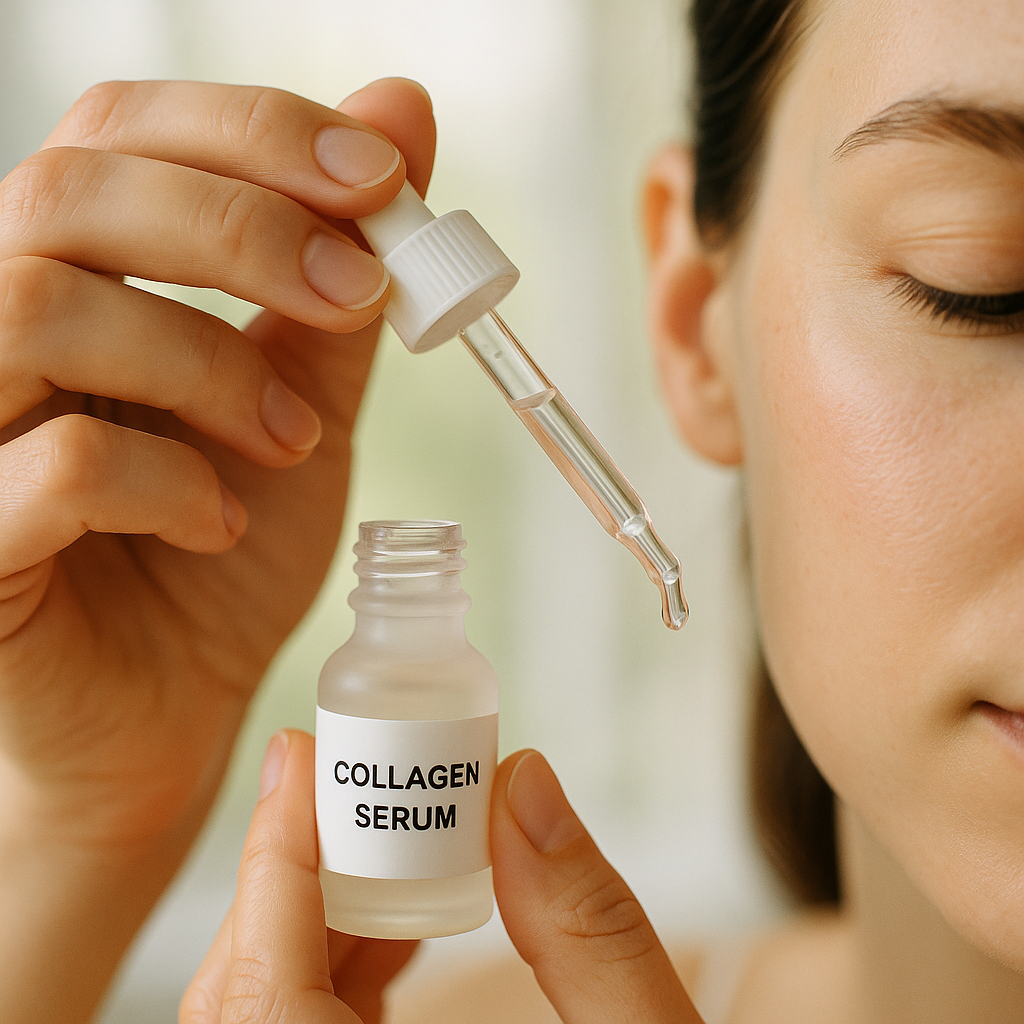
On perfectly cleansed skin, apply a thin layer of serum then let it absorb for a few moments. Complete with a moisturizer adapted to combination to oily skin and a sunscreen in the morning. In fifteen days, you will notice the gradual reduction of redness and a more even skin texture.
Diet and lifestyle
Beyond local application, diet plays a leading role. Foods rich in vitamin C (citrus fruits, cruciferous vegetables) promote collagen production, while sufficient hydration keeps the epidermis supple. Chestnuts, fatty fish, and legumes complete this anti-inflammatory palette.
Studies and feedback
“A daily supplementation of 5 g of hydrolyzed collagen led, after eight weeks, to a significant improvement in skin elasticity and a faster recovery of acne lesions.” – Journal of Dermatological Science.
Of course, these results vary depending on age, complexion, and skin type. Key takeaway: consistency in intake and patient observation of effects.
FAQ — Collagen and acne
- 1. Can collagen be taken as a cure if you have acne-prone skin?
- Yes, provided you choose a light, hydrolyzed, and non-comedogenic formulation. Oral supplements often prove gentler on the skin than some topical products rich in fatty substances.
- 2. How often should a collagen serum be applied?
- 1 to 2 times a day, morning and/or evening, on makeup-free skin. Always respect the waiting time before adding another cream.
- 3. What is the difference between marine and bovine collagen?
- Marine collagen has smaller peptides and better absorption, but it is often a bit more expensive than the bovine version.
- 4. How long before seeing improvement?
- The first effects on hydration can appear as early as two weeks, while deep regeneration generally takes 6 to 8 weeks.
- 5. Are there ingredients to avoid simultaneously?
- Formulas containing very occlusive oils (coconut, shea) or heavy silicones should be avoided to prevent clogging pores.