
| Key Points | Details to Remember |
|---|---|
| 🌱 Definition | Bisglycinate iron and glycerophosphate iron, two organic forms of iron. |
| ⚙️ Mechanism | Bisglycinate uses amino acids, glycerophosphate relies on a glycerol phosphate. |
| 🔍 Absorption | Bioavailability more stable for bisglycinate, moderate variability for glycerophosphate. |
| 🤰 Tolerance | Less intestinal irritation often reported with bisglycinate. |
| 📏 Dosage | Daily dosage adapted according to anemia and medical monitoring. |
| 🔗 Interactions | To avoid certain foods or medications that hinder absorption. |
During pregnancy, iron needs increase dramatically to support fetal growth and blood volume adaptation. Choosing the right supplement then becomes more than just a preference: it is a matter of digestive comfort and effectiveness. Here, we compare bisglycinate iron and glycerophosphate iron to help you untangle their strengths and limitations.
Sommaire
Why is iron so essential during pregnancy?
Over the weeks, red blood cell production accelerates to carry more oxygen. Without sufficient reserves, anemia can develop, causing fatigue, dizziness, or premature contractions. Rather than enduring these symptoms, it is better to anticipate daily iron intake. But beyond the numbers, it is the chemical form of the supplement that determines absorption and digestive comfort.
Origins and structures of the two iron complexes
Bisglycinate iron: a bond with amino acids
Bisglycinate iron is a chelate where the iron ion (Fe2+) binds to two glycine molecules. This peptide-mimicking association facilitates passage through the intestinal mucosa, partially bypassing the usual absorption processes. Consequently, bioavailability is often higher than that of non-chelated ferrous salts.
Tip: taking bisglycinate on an empty stomach or at the beginning of a meal can optimize its absorption while limiting interactions.
Glycerophosphate iron: a phosphate doped with glycerol
Less common, glycerophosphate iron associates the ferrous ion with a glycerol phosphate group. This structure has the advantage of a more neutral release pH, which reduces irritation of the intestinal wall. However, its absorption depends more on bacterial flora and gastric contents, hence variability among women.
Comparison of Bioavailability and Absorption
In several clinical studies, bisglycinate shows an absorption rate of about 20 to 25%, whereas glycerophosphate reaches 15 to 18%. This difference may seem modest, but it makes perfect sense when considering the dosage: sometimes more glycerophosphate is needed to achieve the same net iron intake. However, this potential overdose is not always the best solution, as side effects also increase.
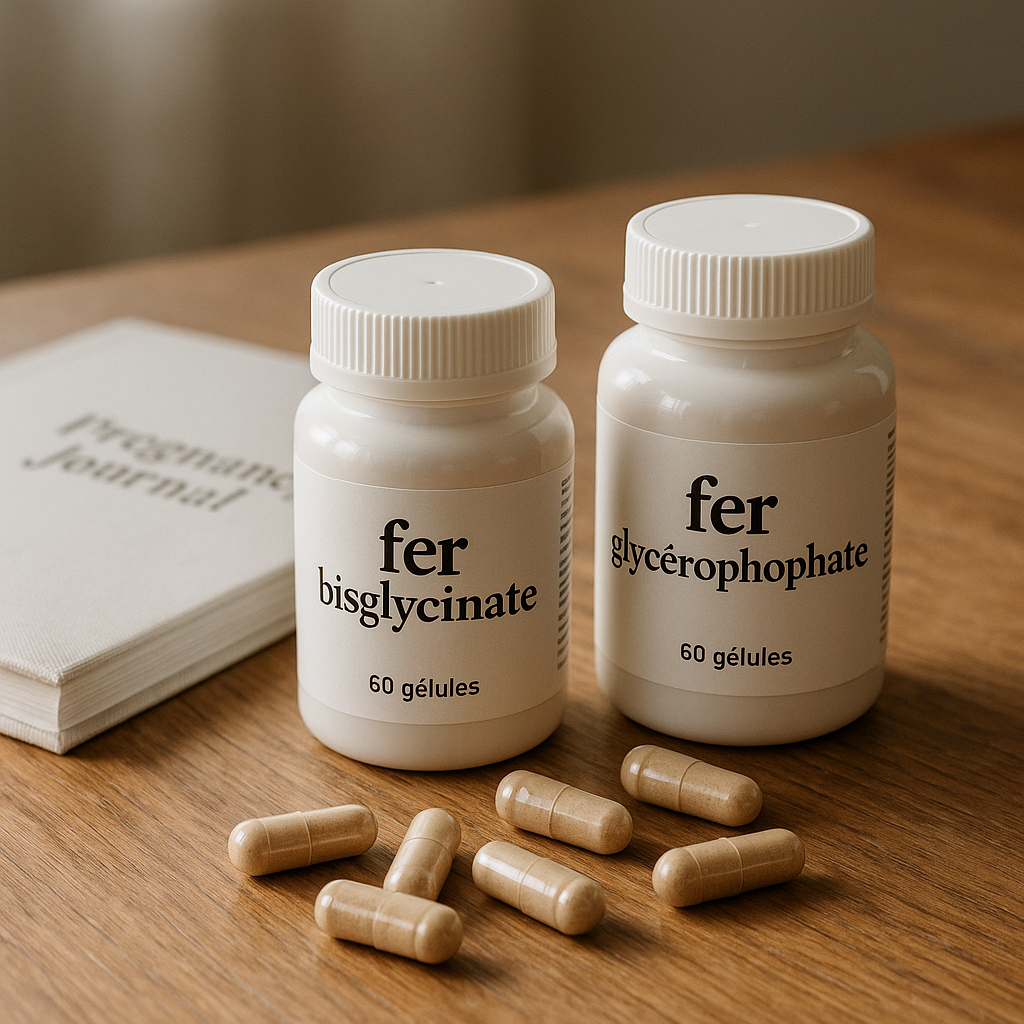
When choosing, bisglycinate offers a more consistent absorption curve, while glycerophosphate can be affected by variations in intestinal pH. If you have already experienced burning or nausea with an iron supplement, this is a factor to consider.
Gastric Tolerance: Which Best Avoids Discomfort?
Many expectant mothers fear bloating or constipation. With bisglycinate, reports mention fewer refluxes and discomfort, probably thanks to the buffering effect of glycine. Glycerophosphate, by taking longer to dissociate, can cause greater water retention in the colon and increase the feeling of heaviness.
- Bisglycinate: generally non-irritating, suitable for sensitive intestines.
- Glycerophosphate: slower circulation, some cases of cramps reported.
Recommended Dosage and Intake Advice
Recommendations vary between 30 and 60 mg of elemental iron per day during the second and third trimesters. For bisglycinate, the dose is closer to 30 mg in a single intake, while glycerophosphate often requires 40 to 50 mg, divided into two doses to limit concentration peaks.
| Form | Daily Dose | Frequency |
|---|---|---|
| Bisglycinate Iron | 30 mg | 1 dose |
| Glycerophosphate Iron | 40–50 mg | 2 doses |
To maximize effectiveness, avoid combining your supplement with tea, coffee, or calcium-rich products. Favor a glass of orange juice, a natural source of vitamin C, just before.
Who Is Each Formula For?
If your goal is to minimize digestive discomfort and enjoy a single intake, bisglycinate often proves more comfortable. Conversely, if your practitioner assesses higher needs or if you tolerate divided doses well, glycerophosphate is an interesting alternative. Since each tolerance curve is unique, do not hesitate to start with a moderate dosage before adjusting.
FAQ
Which iron supplement should be preferred in case of nausea?
Nausea is often related to gastric acidity. Bisglycinate, which is more neutral, is generally better tolerated. It does not cause irritation of the mucous membrane and is easier to digest.
Can bisglycinate iron and probiotics be taken together?
Yes, probiotics can stabilize the intestinal flora and facilitate the absorption of bisglycinate, without any major risk of interference.
Should doses be taken on an empty stomach?
Bisglycinate is better tolerated when taken on an empty stomach, whereas glycerophosphate benefits from a light intake (such as plain yogurt) to buffer the release of iron.
Which form of iron is suitable for severe anemia?
In cases of pronounced anemia, an iron infusion or intravenous treatment can be considered. Oral forms remain useful for prevention or moderate cases.
When should a specialist be consulted?
If symptoms persist despite supplementation or if the red blood cell count does not improve, hematological follow-up is necessary. Your doctor will adjust the form and dose according to your profile.