Female alopecia can develop gradually or suddenly, affecting confidence and well-being. This question-and-answer guide breaks down the most common causes and details suitable treatments, from medical care to complementary approaches.
🔍 Essential Definition: Female alopecia encompasses several forms of hair loss, from hormonal mechanisms to autoimmune reactions.
⚙️ Key Causes: Hormonal imbalances, genetic predispositions, intense stress, iron or vitamin D deficiencies play a major role.
💡 Practical Diagnosis: A dermatological exam and targeted blood test quickly identify the type of alopecia and associated deficiencies.
✨ Effective Solutions: Minoxidil, hair transplantation, low-level lasers, nutritional supplements, and stress management offer validated options.
Sommaire
Understanding Female Alopecia
Hair thickness and density change over time: in some women, hair loss becomes abnormal. Knowing how to decipher the underlying mechanisms guides targeted solutions.
Definition and Mechanisms
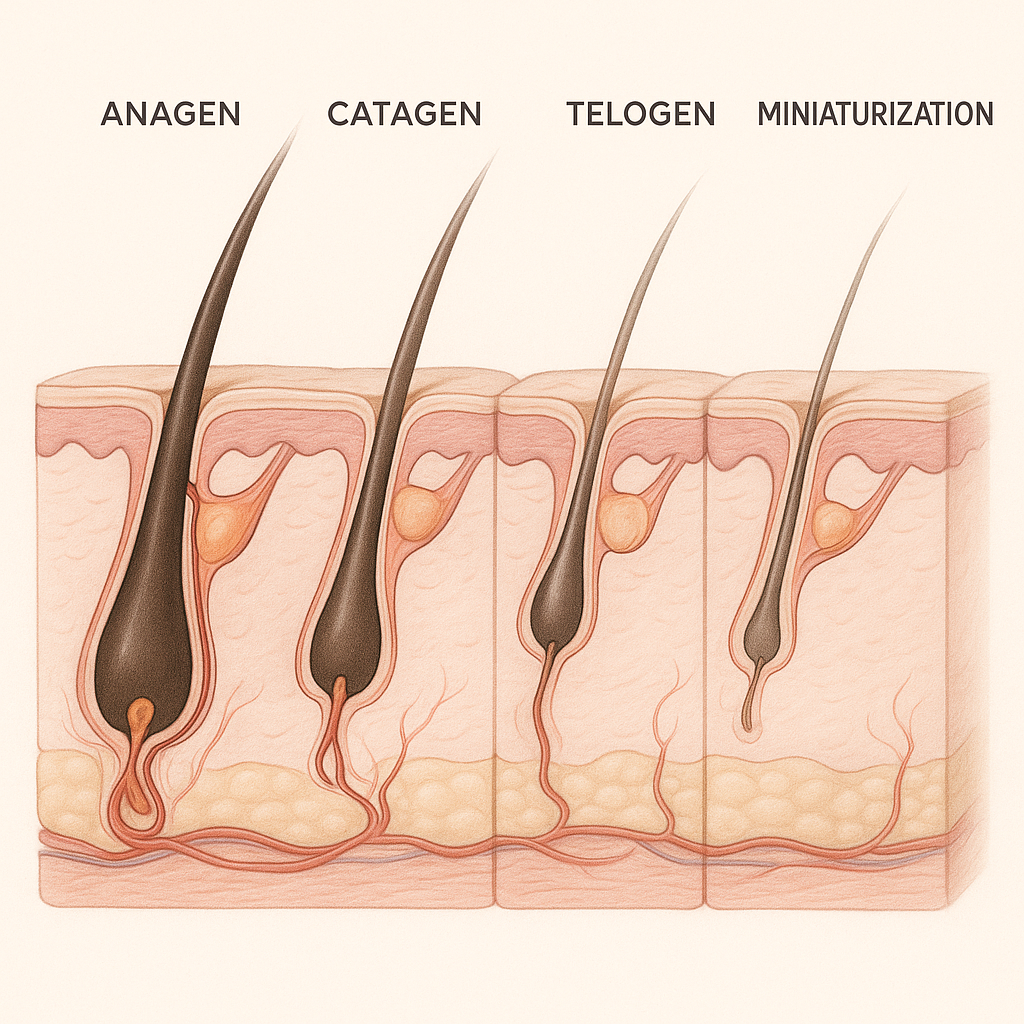
Alopecia corresponds to a significant decrease in the number of hairs on the scalp. Each bulb undergoes a cycle: anagen phase (growth), catagen (transition), and telogen (rest and shedding). When the anagen phase shortens or the follicle atrophies, a gradual thinning or bald patches are observed.
Main Causes
- Hormonal imbalances: menopause, polycystic ovary syndrome, thyroid disorders.
- Genetic factors: familial transmission of androgenetic sensitivity.
- Autoimmune reactions: alopecia areata with targeted follicle attacks.
- Nutritional deficiencies: insufficient iron, zinc, vitamin D, or proteins.
- External factors: toxins, anti-cancer treatments, repeated traction, and irritated scalp.
Identifying Your Type of Alopecia
Each form manifests differently: localized patches, diffuse thinning, or sudden shedding. A clinical and biological assessment guides precise diagnosis.
Androgenetic Alopecia
The most common: follicles miniaturize under the effect of dihydrotestosterone (DHT). The frontal hairline may recede, the crown widen. Slow progression, often hereditary.
Alopecia Areata
Sudden appearance of bald, round or oval patches. Autoimmune mechanism where the defense system attacks follicles. Often reversible but unpredictable.
Telogen Effluvium
Major stress, childbirth, surgery, or emotional shock cause a massive shift of follicles into the telogen phase. Hair loss occurs 2 to 3 months after the event and can last several months before recovery.
Other Forms and Associated Symptoms
Itching, greasy or dry dandruff, and even redness can accompany certain types of alopecia. An irritated scalp or chronic itching deserves parallel attention, as described in a comprehensive guide on itch relief.
Treatments and Solutions
Acting early maximizes the chances of stabilization or even regrowth. Targeted treatments, local care, and nutritional support are often combined.
Medications and Medical Interventions
- Minoxidil (topical solution): stimulates microcirculation, lengthens the anagen phase. Visible effects after 3 to 6 months.
- Finasteride (off-label use in women): blocks the conversion of testosterone into DHT; discussion with the doctor is necessary in case of possible pregnancy.
- Corticosteroid injections: for alopecia areata, soothe the local autoimmune reaction.
- Hair micrografting: transfer of resilient follicles to thinning areas. Long-lasting results but invasive procedure, to be considered after hormonal assessment.
- Low-Level Laser Therapy (LLLT): low-dose red light that revitalizes the follicle. Non-invasive device, regular use at home.
Complementary Approaches and Lifestyle Hygiene
Hair loss can worsen in case of deficiencies or chronic stress. Here are some suggestions:
| Approach | Goal | Recommendation |
|---|---|---|
| Nutrition | Provide amino acids and minerals | Rich in iron, quality protein, omega-3 |
| Stress management | Limit cortisol release | Meditation, coaching, moderate physical activity |
| Gentle hair care | Respect the scalp | Sulfate-free shampoos, circulatory massages |
| Targeted supplementation | Address deficiencies | Iron-vitamin D complex, biotin |
FAQ
What is female alopecia?
It is excessive hair loss in women, linked to various mechanisms: hormones, genetics, autoimmunity, or deficiencies.
How to know if it is androgenetic or areata?
Androgenetic manifests as diffuse or frontal thinning, areata by round and clear patches, often without itching.
Is minoxidil dangerous?
Well tolerated locally, it can cause irritation. Regular monitoring ensures safe use.
Can alopecia be prevented?
Limit stress, balance diet, avoid hairstyles that are too tight, and consult at the first sign of abnormal hair loss.
What role does nutrition play?
Deficiencies in iron, zinc, vitamin D, and proteins worsen hair loss. An appropriate intake supports regrowth.