Psyllium and chia seeds are two excellent allies to relieve transit and optimize digestion. Psyllium quickly forms a volumizing gel, ideal for regulating transit, while chia seeds offer a rich nutritional profile, including omega-3 and antioxidants. Depending on your needs—quick action or nutritional intake—one may prove more suitable than the other.
📌 Psyllium: a highly hydrophilic mucilaginous fiber, swells quickly and facilitates evacuation. Visible action in 24 to 48 hours.
📌 Chia seeds: soluble & insoluble fibers, source of healthy lipids and proteins. Gentle effect on transit, better in continuous cure.
📌 Use: Occasional constipation vs sluggish transit; bloating and Irritable Bowel Syndrome (IBS) often favor psyllium.
📌 Mode of consumption: psyllium is diluted in water, chia is soaked in a liquid or sprinkled on preparations. Hydration is essential to avoid discomfort.
Sommaire
Origins and nutritional composition
Derived from the seeds of Plantago ovata, psyllium has gained fame thanks to its high content of mucilaginous fibers. Chia seeds come from Salvia hispanica, a plant native to Central America, and are sought after for their rich and varied composition.
Psyllium: a concentrated fiber
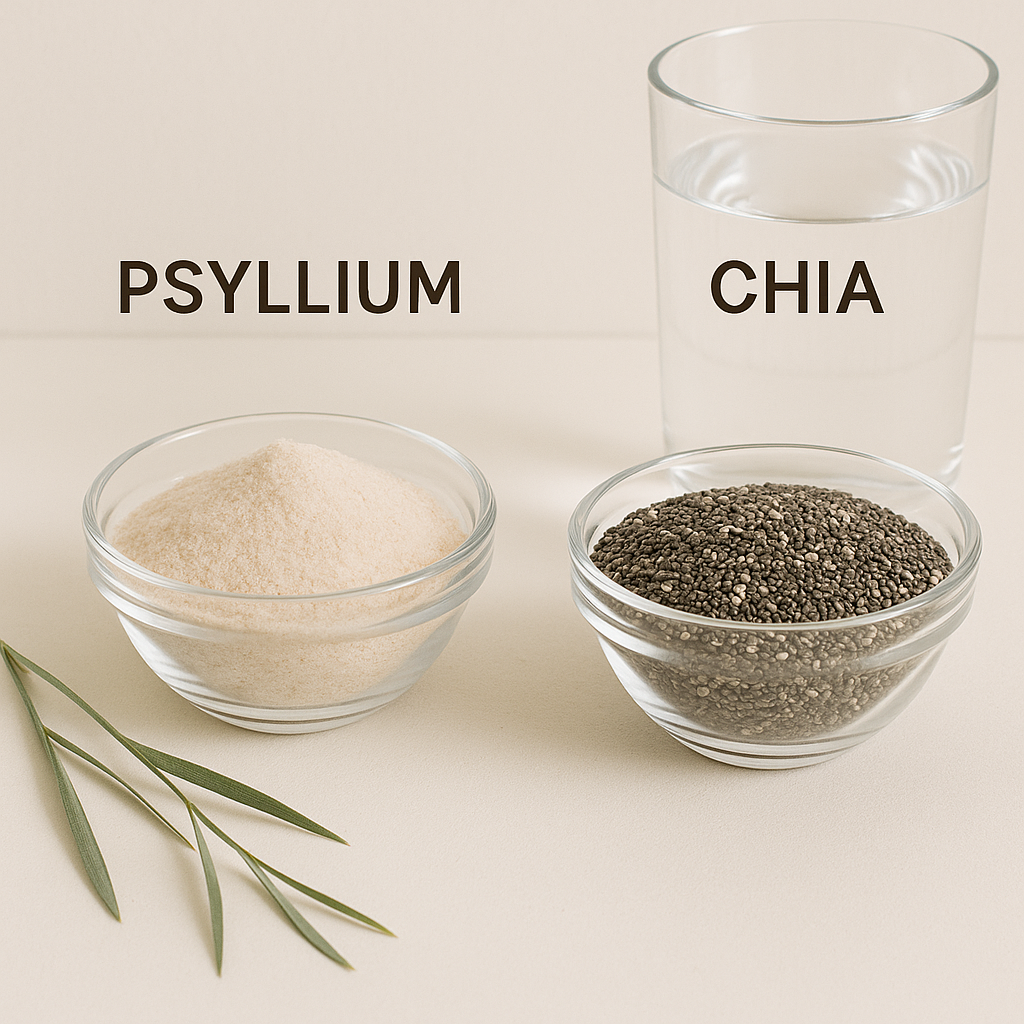
Psyllium is composed of more than 70% soluble fibers. In contact with water, these fibers swell to form a viscous gel that traps water and toxins. This texture facilitates the passage of stools without irritating the mucosa. In terms of micronutrients, psyllium remains low in calories but its strength lies in its hydrophilic power.
Chia seeds: a nutrient cocktail
Chia combine:
- 30% lipids (omega-3 fatty acids);
- 20% plant proteins;
- 35% fibers (soluble and insoluble);
- richness in minerals (calcium, magnesium, phosphorus).
Their dual offer of fiber + nutrients makes chia a versatile ingredient, which provides a feeling of satiety and can be incorporated into puddings, smoothies, or salads.
Mechanisms of Action on Digestion
Both fibers affect stool consistency and intestinal mobility, but through slightly different pathways.
Bulking and Lubricating Effect of Psyllium
The gel formed by psyllium envelops food residues and increases stool volume. This mechanical property stimulates the receptors of the intestinal wall, triggering a more effective peristaltic movement. For people suffering from FODMAP tolerance issues, this gentle fiber can reduce symptoms without excessive fermentations.
Action of Chia: Hydration and Sequestration
Chia seeds also form a gel, less viscous than psyllium. The gel surrounds the mucosa, slows gastric emptying, and allows a gradual release of nutrients. This gentleness suits people seeking a moderate laxative effect and additional nutritional intake.
Advantages and Disadvantages
The choice depends on your profile: sluggish transit, bloating, intolerances, or nutritional needs. Here is a synthetic comparison:
| Criterion | Psyllium | Chia Seeds |
|---|---|---|
| Type of fiber | Soluble mucilaginous | Soluble + insoluble |
| Action | Powerful and fast | Gentle and progressive |
| Nutritional profile | Pure fibers | Omega-3 lipids, proteins, minerals |
| Side effects | Bloating if poorly hydrated | Gas & swelling in excess |
| Culinary use | Drinks, small spoons | Puddings, smoothies, breads |
| Cost | Affordable | Slightly higher |
How to Consume Them Properly?
Good hydration is the key to avoiding discomfort and optimizing effectiveness.
Dosage and Preparation of Psyllium
Start with 1 teaspoon (5 g) of psyllium in 200 ml of water, thirty minutes before a meal. Gradually increase up to 10–15 g per day if necessary. Always respect an 8-hour interval between fiber intake and medications to limit drug interactions.
Dosage and Preparation of Chia Seeds
Soak 1 tablespoon (15 g) in a glass of beverage (water, plant-based milk) for at least 10 minutes. The gelled consistency can be adjusted according to soaking time. Integrate gradually, up to 30 g per day, splitting doses for optimal comfort.
Choice According to Your Goals
Your specific needs will guide the choice between these two fibers:
- Sluggish transit: psyllium for a fast and targeted action (effects in 24–48 h according to time to effect).
- Sensation of satiety: chia in culinary preparations for caloric and nutritional intake.
- Irritable bowel: psyllium, often better tolerated than other fermentable fibers.
- Long-term cure: chia provides lasting nutritional support.
Finally, if you are still unsure, you can gradually combine the two, making sure to adjust quantities to find your personal balance.
FAQ
- 1. Can psyllium cause bloating?
- Yes, if consumed without enough water, the fiber swells in the intestine, causing gas. Drink at least 250 ml per serving.
- 2. How long does it take to feel the effect of chia?
- Generally, 2 to 3 days of regular use are necessary for a noticeable effect on transit.
- 3. Are chia seeds eaten raw?
- Soaking is preferred to facilitate digestion. Raw, they may irritate the mucous membrane.
- 4. Can psyllium and chia be mixed?
- Yes, mixing 1 spoonful of each optimizes fibers and nutrients, while diversifying the effect on digestion.
- 5. What is the caloric content of chia seeds?
- About 490 kcal per 100 g, mainly from omega-3 lipids.
- 6. Is psyllium suitable for gluten-free diets?
- Yes, psyllium is naturally gluten-free and can replace xanthan gum in baking.