| Key Points | Details to Remember |
|---|---|
| 🍄 Definition | Three adaptogenic mushrooms with distinct profiles |
| 💡 Main Benefits | Reduction of stress, stimulation of energy, cognitive support |
| ⚙️ Mechanism | Modulation of the HPA axis, antioxidant and immune action |
| 📊 Dosage & Forms | Powder, capsules, fluid extract depending on the goal |
| 😲 Evidence | Clinical and in vitro studies validating efficacy |
| 🌀 Combinations | Possible synergy or sequential cures |
At the crossroads of traditional medicine and modern research, three medicinal mushrooms are the focus of all attention to soothe stress and exhaustion: Reishi, Cordyceps, and Lion’s Mane. Each carries its millenary heritage and scientific studies, but which one truly stands out when looking for a boost against fatigue or better resistance to daily tensions? In this comparison, we dissect their specificities, modes of action, and provide practical advice to help you choose the one (or ones) that will suit you best.
Sommaire
Why Adaptogenic Mushrooms Are Appealing Against Stress
The concept of adaptogen is based on the idea that certain plants or mushrooms help the body better respond to stress, whether physical, emotional, or environmental. Unlike a targeted treatment, an adaptogen aims at the overall balance of metabolism and hormonal regulation systems. Our three candidates offer common virtues: regulation of the hypothalamic-pituitary-adrenal axis, antioxidant action, and strengthening of immune defenses. But beyond this shared foundation, each develops its own bioactive arsenal.
In practice, integrating an adaptogenic mushroom into your routine is like adding thermal underwear that adapts to the temperature: it neither acts too strongly nor too weakly, but stabilizes the whole. The choice then depends on the desired intensity, individual sensitivity, and of course, the intended effect: relieving persistent anxiety, supporting energy during overwork, or even improving concentration.
Scientific Evidence in Support
Laboratories quickly became interested in these mushrooms. Clinical trials show that Reishi can reduce cortisol production under chronic stress, while Cordyceps improves respiratory capacity and endurance. Lion’s Mane, for its part, stimulates the secretion of NGF (Nerve Growth Factor), a key factor for neuronal health and mental vitality. These data are based on human and animal models, which provides a **good level of evidence** when aiming for natural care.
Comparative Profile: Reishi, Cordyceps & Lion’s Mane
More than just a list of virtues, here is a detailed dive into the profile of each.
Reishi (Ganoderma lucidum)
A true star of Chinese medicine, Reishi is nicknamed the “mushroom of immortality.” Its richness in triterpenes explains its ability to calm inflammation, modulate stress, and promote restorative sleep. It is also attributed with antiviral and immunomodulatory actions.
For chronic fatigue, it gently acts on hormonal balance, without ever causing excessive stimulation. Some points require caution: people on anticoagulants or suffering from coagulation disorders should remain careful. A common dosage ranges between 1,500 and 3,000 mg of dry extract per day, ideally split into two doses.
If you hesitate between capsule or powder, know that different supplement forms offer you either practicality (capsule) or the possibility to finely adjust the dosage (powder). The key: an adaptable routine, morning and evening.
Cordyceps (Cordyceps sinensis or militaris)
Long reserved for the Tibetan mountains, Cordyceps has gained the world for its tonic and stimulating action. It increases ATP production, providing more energy at the cellular level, and optimizes oxygen transport in the blood. Result: less fatigue, better endurance, and an ideal boost during burnout periods or sustained efforts.
For athletes, an intake of 1,000 to 2,000 mg per day can translate into a notable improvement in performance. Its stimulating profile makes it less suitable before bedtime. Some interactions with immunosuppressants have been mentioned, so it is better to consult a professional if you are under treatment.
Regarding textures, mainly concentrated extracts in beta-glucans and adenosine are found. In infusion or capsule form, the ritual becomes almost morning: a small dose to start the day smoothly.
Lion’s Mane (Hericium erinaceus)
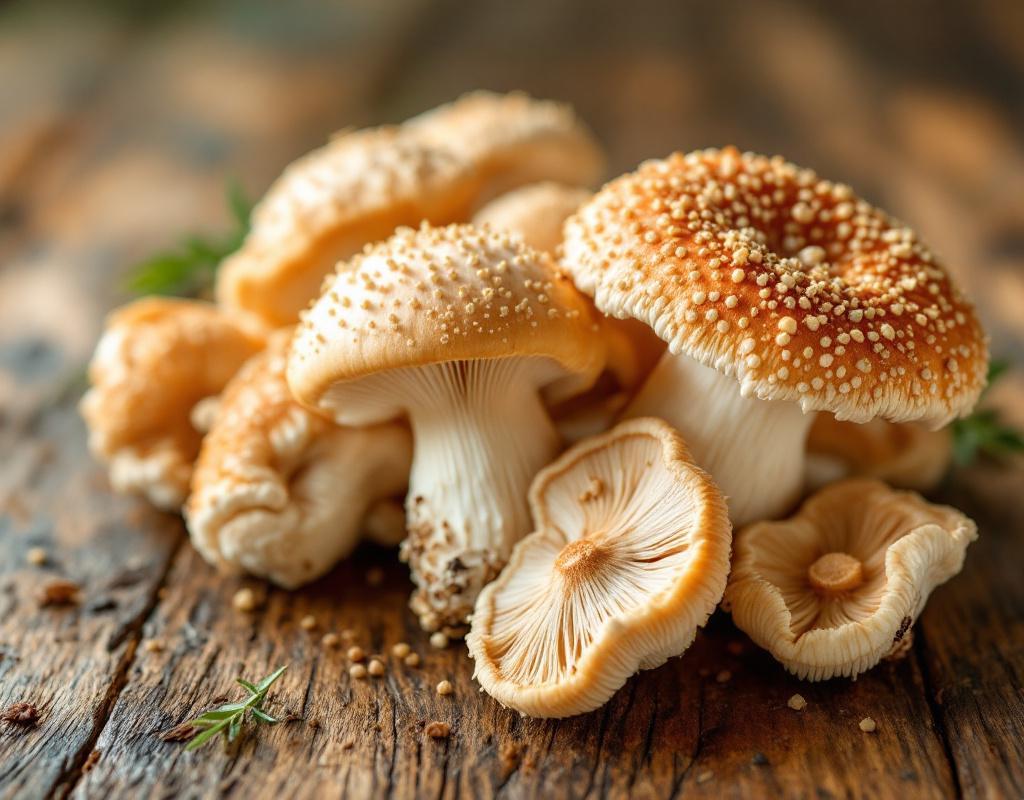
Rarer under Western latitudes, the lion’s mane intrigues with its tentacular shape and reputation as “food for thought.” Its compounds, including hericenones and erinacines, stimulate NGF synthesis, promoting neuronal regeneration and mental clarity.
It is the best ally for those who want to preserve their concentration, soothe mental stress, and limit cognitive fatigue. In a cure of 500 to 1,000 mg per day, an improvement in mood and short-term memory is often observed. The effects are subtle but lasting, provided the treatment is maintained over time (3 to 6 months).
Quick Comparison Table
| Mushroom | Strengths | Daily Dosage |
|---|---|---|
| Reishi | Relaxing, immunomodulatory, sleep | 1,500–3,000 mg |
| Cordyceps | Energy, endurance, oxygenation | 1,000–2,000 mg |
| Lion’s Mane | Concentration, neuroprotection | 500–1,000 mg |
How to Choose According to Your Need
- Persistent fatigue: start with Cordyceps for an energetic boost.
- Stress and insomnia: rather opt for Reishi to promote relaxation and sleep.
- Cognitive decline: bet on Lion’s Mane to support memory and mental clarity.
- Synergies: combine Reishi and Cordyceps at the beginning of the treatment, then switch to Lion’s Mane to maintain the effect.
Practical Tips for a Successful Treatment
Beyond the choice of mushroom, a few golden rules ensure optimal effectiveness:
- Favor standardized extracts (≥ 30% beta-glucans) for reliable concentration.
- Divide your treatment into periods of 6 to 8 weeks, with 2-week breaks to avoid any habituation.
- Store powders and capsules away from humidity and heat to preserve active compounds.
- Integrate them into an overall routine: regular sleep, sufficient hydration, and balanced diet.
FAQ
Is Reishi more effective than Cordyceps against stress?
Reishi has a calmer and more restful action, ideal for reducing cortisol spikes and improving sleep, while Cordyceps acts more on energy. If your stress is accompanied by insomnia, Reishi will be more suitable.
Can Reishi, Cordyceps, and Lion’s Mane be taken simultaneously?
Absolutely, but it is better to dose each mushroom sparingly and seek professional advice if you are on medical treatment. A sequential approach (boost then relaxation then focus) often remains more balanced.
How long before feeling the effects?
The perception varies according to individual sensitivity: some notice a difference after two weeks, others after a month. Consistency in intake (daily, without skipping days) is essential to observe lasting results.
Are there any contraindications?
Generally, these mushrooms are well tolerated. However, avoid Reishi in case of coagulation disorders and consult a specialist if you are on immunosuppressants or anticoagulants.