
| Key Points | Details to Remember |
|---|---|
| 🍽 Definition | Understand the concept of basal metabolic rate |
| 🔢 Calculation | Apply the appropriate formulas |
| ⚖️ Adjustment | Adapt caloric intake |
| 📝 Planning | Structure daily meals |
| 🥗 Food Selection | Choose based on macronutrients |
| 🔍 Monitoring & Adjustments | Measure and adjust regularly |
Developing a personalized meal program is not an impossible mission, but it requires a minimum of thought and method. Starting from your basal metabolic rate, this daily energy base, you will calculate your caloric needs, distribute macronutrients, and choose foods adapted to your tastes and goals. No miracle recipes or impossible-to-find ingredient lists: we keep everything simple, realistic, and sustainable. The key is a nutritional plan that fits into your daily life, adjustable as soon as your needs evolve.
Sommaire
1. Understanding Basal Metabolic Rate
1.1 Definition and Role in Nutrition
Basal metabolic rate corresponds to the minimal energy your body spends at rest to maintain vital functions (breathing, blood circulation, temperature maintenance, etc.). It represents 60% to 75% of your daily energy expenditure. If you exceed or stay below this value without adjusting your intake, you risk respectively involuntary weight gain or a permanent lack of energy.
1.2 Factors Influencing Basal Metabolic Rate
- Age: it naturally decreases with the years.
- Sex: average muscle mass differs between men and women.
- Body Composition: the more muscle you have, the more calories you burn at rest.
- Hormones: thyroid, cortisol, and others modulate your energy rate.
- Climate: a cold environment can slightly increase your expenditure.
2. Calculating Your Basal Metabolic Rate
2.1 Classic Formulas
Several equations exist, the most common remains the Harris-Benedict formula and its modernized variant, Mifflin-St Jeor. They take into account weight, height, age, and sex. Example for Mifflin-St Jeor:
10×weight (kg) + 6.25×height (cm) – 5×age (years) + 5 (male) / –161 (female).
This result corresponds to the calorie expenditure at rest. It serves as a starting point to determine your total caloric intake based on your daily activity.
2.2 Tools and Applications
If you prefer to avoid manual calculations, many mobile apps and online sites offer instant calculators. In just a few clicks, you get your basal metabolism and can even adjust it according to different activity levels, from sedentary to regular athletics.
3. Create Your Personalized Meal Plan
3.1 Define Your Caloric Goals
Three main options are available:
- Maintenance: aim for an intake equivalent to your basal metabolism adjusted for activity.
- Weight loss: create a deficit of 10% to 20% of your total needs.
- Muscle gain: increase intake by 5% to 15% to develop muscle mass.
Choose your goal based on your health status and schedule, and write it down clearly before moving on to the next phase.
3.2 Macronutrient Distribution
Once the total calorie count is defined, distribute it among carbohydrates, proteins, and fats:
| Goal | Carbohydrates | Proteins | Fats |
|---|---|---|---|
| Maintenance | 45% | 25% | 30% |
| Weight loss | 35% | 30% | 35% |
| Muscle gain | 50% | 25% | 25% |
These guidelines are adjustable according to your tolerance and preferences: the important thing is consistency over the week.
3.3 Choosing Foods
Beyond the numbers, the quality of products makes the difference. Favor:
- Varied proteins (fish, eggs, legumes, lean meats).
- Complex carbohydrates (whole grains, legumes, tubers).
- Good fats (nuts, olive oil, avocado).
- Fiber and micronutrients (fruits, colorful vegetables).
To save time, you can rely on personalized meal platforms that offer adapted menus delivered weekly.

4. Plan Your Meals Daily
4.1 Sample Typical Menu
To illustrate, here is an example of a balanced day for a maintenance goal (2,200 kcal):
- Breakfast (550 kcal): oatmeal porridge, plant-based milk, red fruits, chia seeds.
- Morning snack (200 kcal): Greek yogurt and a few almonds.
- Lunch (650 kcal): grilled chicken, quinoa, roasted vegetables, drizzle of olive oil.
- Afternoon snack (200 kcal): apple and a square of dark chocolate.
- Dinner (600 kcal): pan-seared salmon, sweet potato, steamed spinach, lemon.
Of course, vary protein and starch sources each week to avoid monotony.
4.2 Organization Tips
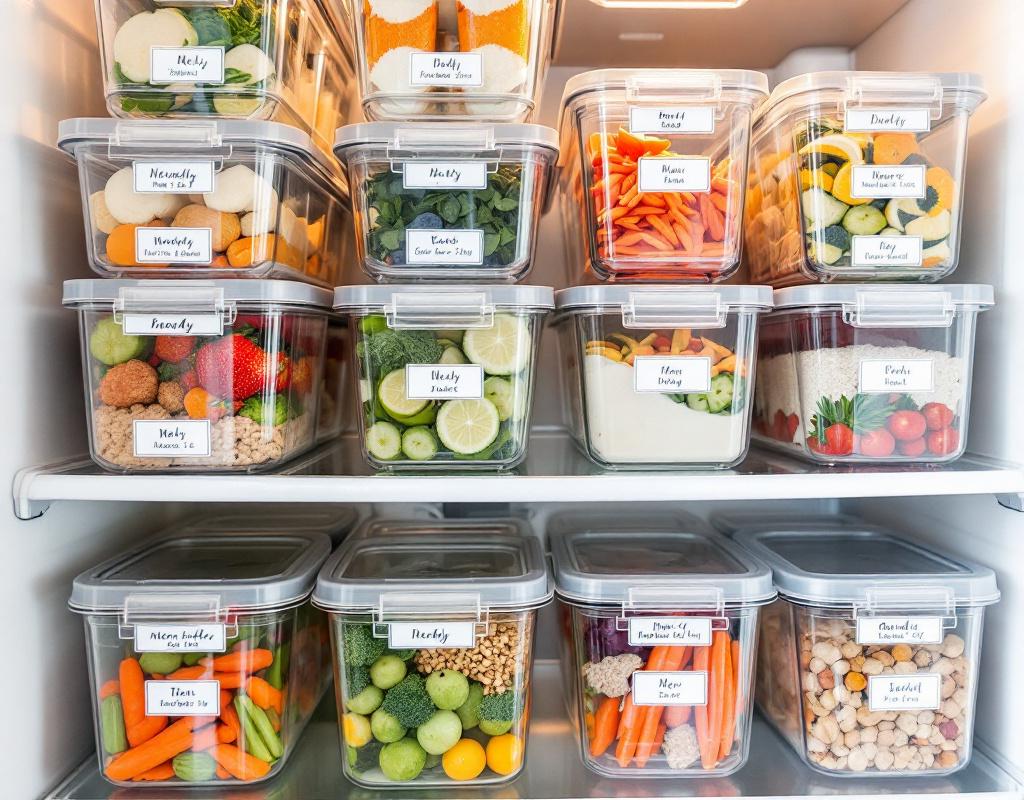
- Batch cooking: prepare several portions in one session for the whole week.
- Shopping list ready in advance, sorted by sections (fresh products, groceries, frozen).
- Labeling: date, content, and nutritional value on each container.
- Flexibility: one free meal per week to maintain motivation.
5. Monitor and Adjust Your Program
5.1 Keeping a Food Diary
Note each meal, its quantity, and your feelings (hunger, satiety, energy). We are not seeking perfection, but transparency: it is by comparing your data that you will determine whether the caloric intake is appropriate or needs to be revised.
5.2 Adjusting After Stabilization
Once your target weight is reached, the post-goal stabilization phase consists of gradually reintroducing calories to avoid weight regain. You then adjust your intake by 5% every two weeks and observe the trend on the scale and your energy.
6. Additional Tools and Resources
- Nutrition tracking apps (MyFitnessPal, Yuka for food quality).
- Platforms for personalized meal planning and delivery.
- Forums and experience-sharing groups.
- Specialized guides to boost metabolism during dieting.
FAQ
What is basal metabolism and why calculate it?
Basal metabolism represents the energy your body consumes at rest for its vital functions. Calculating it allows you to precisely adjust your caloric intake and avoid deviations that lead to unwanted weight gain or loss.
Which formula should I choose to estimate my basal metabolism?
The Harris-Benedict and Mifflin-St Jeor formulas are widely validated. Mifflin-St Jeor is considered more accurate for modern profiles. If in doubt, compare both and adjust according to your feelings.
How should I distribute macronutrients in my diet?
Generally, 45% carbohydrates, 25% proteins, and 30% fats are recommended for maintenance. You can vary depending on whether you aim for weight loss (more protein) or muscle gain (more carbohydrates). The key is consistency in the total weekly caloric intake.
Can I follow this program if I am vegetarian or vegan?
Absolutely. Replace animal proteins with tofu, tempeh, legumes, and optionally plant-based protein powders. Favor legume/cereal combinations to obtain a complete amino acid profile.
How do I know when to adjust my plan?
If you plateau for more than two weeks without reaching your goal, review your food diary and activity level. A slight 5% adjustment in calories or macronutrient distribution can restart progress.