
| Key Points | Details to Remember |
|---|---|
| 🍽️ Definition | Understand the role of superfoods |
| 🌙 Benefits | Facilitate falling asleep |
| 🌿 Examples | Explore 10 key ingredients |
| 🛌 Methods | Incorporate these foods into dinner |
| 📝 Results | Improve sleep quality |
| 🌐 Accessibility | Easily find in stores |
In the evening, after a long day, we all dream of a peaceful night. Yet, mental agitation, stress, or difficult digestion can be party poopers. What if the key to more restful nights lay on your plate? Superfoods – packed with targeted nutrients – slip into your dinner to calm the brain and pamper your body. Ready to discover these unsuspected allies? Follow the guide.
Sommaire
Why bet on superfoods at dinner?
Beyond the simple notion of “eating well,” some foods have specific virtues that promote falling asleep and maintaining deep sleep. These include elements like tryptophan, a precursor to serotonin, and magnesium, which relaxes muscles and calms the nervous system. Quite smart to rely on them rather than snacking on just anything in front of the TV.
Imagine for a moment that every bite is a step toward a gentler night: fewer twitches, fewer nighttime awakenings, waking up fresh as morning dew. It’s possible, provided you know what to put on your plate and especially when! The idea is to establish a dietary routine that aligns with the natural sleep cycle.
Before diving into the heart of the matter, know that the quality of your rest also depends on other factors: dimmed lighting, room temperature, and above all, regularity. But to stay focused on food, let’s concentrate on these ten powerful nutrients that activate at bedtime.
Top 10 evening superfoods
1. Almonds – the little magnesium treasure
Did you know that a handful of almonds (about 30 g) covers nearly 20% of your daily magnesium needs? This often-overlooked mineral acts as a true muscle relaxant. After an intense day, a bowl of almonds can reduce nervous tension and soothe muscle cramps which, believe me, do not help falling asleep.
- Practical tip: Snack on them plain or soaked in a little water to aid digestion.
- Mixology tip: Add them roughly crushed on plain yogurt with a touch of honey.
2. Cashew nuts – a boost of tryptophan
Cashew nuts are no slouch when it comes to amino acids. They provide a good dose of tryptophan, which is used to produce serotonin and then melatonin, our sleep hormone. Enough to rebalance the internal clock and gently prepare you to fall into the arms of Morpheus.
In the evening, favor the dry-roasted version, without added sugar. Paired with a few banana slices, you get a combo that is both tasty and functional.
3. Banana – the potassium + tryptophan ally
Known mainly for its fiber and quick energy, the banana also shines for its potassium and tryptophan content. Potassium helps regulate blood pressure, while tryptophan initiates the chemical chain toward melatonin. Result: deeper sleep, without untimely awakenings.
A welcome variation: blend it into a smoothie with warm almond milk, a cloud of cinnamon, and a hint of nutmeg. Simple and effective.
4. Kiwi – the fruit with proven virtues
Several studies show that consuming one to two kiwis an hour before bedtime can reduce the time it takes to fall asleep by nearly 15 minutes. Why? Its richness in antioxidants, vitamin C, and serotonin. All elements that work in synergy to promote continuous sleep.
To avoid weighing down your stomach, eat it plain or as a quick compote, without added sugar. 🌱
5. Warm milk – the unbeatable classic
The retro charm of a glass of warm milk is not just anecdotal. It contains tryptophan and calcium, a duo that facilitates melatonin production. The little extra: the warmth of the liquid relaxes the digestive tract and sends a “pause” signal to your body.
Revised version: infuse it with a vanilla bean or a chamomile tea bag to boost its relaxing power.
6. Chia seeds – micro power in omega-3
These tiny seeds are packed with omega-3s, fiber, and plant-based proteins. Omega-3s, more often praised for their cardiovascular benefits, also affect mood and stress modulation. In the evening, prepare a chia pudding by soaking them in plant-based milk and add red fruits for a light and satisfying dessert.
7. Chamomile – calming infusion
Entered into the pantheon of soothing plants, chamomile contains apigenin, a flavonoid that binds to certain receptors in the brain to induce drowsiness. A cup of infusion before bedtime can really make a difference, especially if you tend to ruminate.
“A cup of chamomile is a bit like a liquid lullaby: it soothes and prepares you for the night.”
8. Spinach – magnesium and iron to the rescue
Spinach is a treasure trove of magnesium and bioavailable iron. These two minerals contribute to muscle relaxation and the regulation of nervous balance. To avoid boredom, incorporate them in a light omelet, or sauté fresh spinach with a hint of garlic and a drizzle of olive oil.
9. Oats – gentle carbohydrates and melatonin
Oat flakes provide complex carbohydrates with slow digestion, avoiding glycemic spikes. They also contain plant-based melatonin. A bowl of savory porridge (with a poached egg) or sweet (with a drizzle of honey) makes a gentle, satisfying, and sleep-promoting dinner.
10. Walnuts – cocktail of melatonin and magnesium
Finally, walnuts (especially English walnuts) are a concentrate of melatonin, magnesium, and good fats. To be consumed naturally, a small handful is enough to beautifully close your day. The omega-3s they provide act on the regulation of neurotransmitters, guiding you towards easier falling asleep.
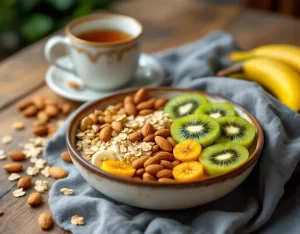
How to integrate these superfoods into your evening routine
So that all this doesn’t remain just a list of ideas, think about creating a routine: choose two or three options among these ten superfoods and make them your evening ritual. For example:
- Plain yogurt with crushed almonds and chia seeds
- A chamomile infusion and two fresh kiwis
- A savory oat porridge followed by a banana and a glass of warm milk
The secret is consistency. Your body eventually associates these flavors with the idea of calm and naturally prepares the ground for quality sleep.
FAQ
Can I eat all these foods every night?
It’s better to vary to avoid boredom and diversify intake. Two to three superfoods per dinner are enough.
Are there any contraindications?
Beware of allergies (nuts, milk) and digestive intolerance issues. Adjust according to your tolerance and consult a professional if needed.
When should I stop eating before sleeping?
Try to have your last light meal at least 1.5 hours before bedtime to allow digestion to take place without disturbing your rest.