| Key Points | Details to Remember |
|---|---|
| 🦶 Definition | Numbness: sensations of tingling or pins and needles |
| 🩺 Causes | Nerve compression, poor positions or circulatory disorders |
| 🏠 Home Care | Stretching, massages and alternating hot/cold |
| 🏃 Activity | Regular walking and ankle movements |
| 🚑 Consultation | Warning signs: persistent numbness or intense pain |
We have all experienced that sudden tingling when we stand up after sitting too long: the feet go numb, it’s unpleasant and sometimes a bit worrying. However, there is no need to panic at the first sign of pins and needles. In this article, we explore in detail how to relieve this numbness, understand its triggers, and adopt simple actions to regain a feeling of comfort and lightness.
Sommaire
Understanding Foot Numbness
Sensations and Mechanisms
Numbness, or paresthesia, manifests as a partial loss of sensation, often described as a feeling of “pins and needles” or tingling. Physiologically, this reflects a slowing down of nerve signal transmission between the feet and the spinal cord. Imagine passing information through a clogged pipe: communication is slowed down, or temporarily interrupted.
Common Causes
Several factors can trigger these sensations:
- Poor postures: crossed legs or prolonged sitting on a hard chair.
- Excessive pressure: shoes that are too tight or heels that are too high compressing the nerves.
- Circulatory problems: insufficient blood circulation can cause numbness.
- Neuropathies: diabetes or vitamin deficiencies (B12) that alter nerve conduction.
Often, a combination of several of these elements is observed, making each situation unique.
Home Remedies and Exercises
Targeted Stretching
Performing a few stretching movements is sometimes enough to restart circulation and nerve conduction. Lean forward, heels pressed to the ground, hands resting on a chair back: you feel the stretch at the back of the calves and under the feet. Hold the position for 20 to 30 seconds, release slowly, then repeat three times.
Massages and Self-Mobilization
A daily self-massage offers a double benefit: releasing muscle tension and stimulating blood flow. You can:
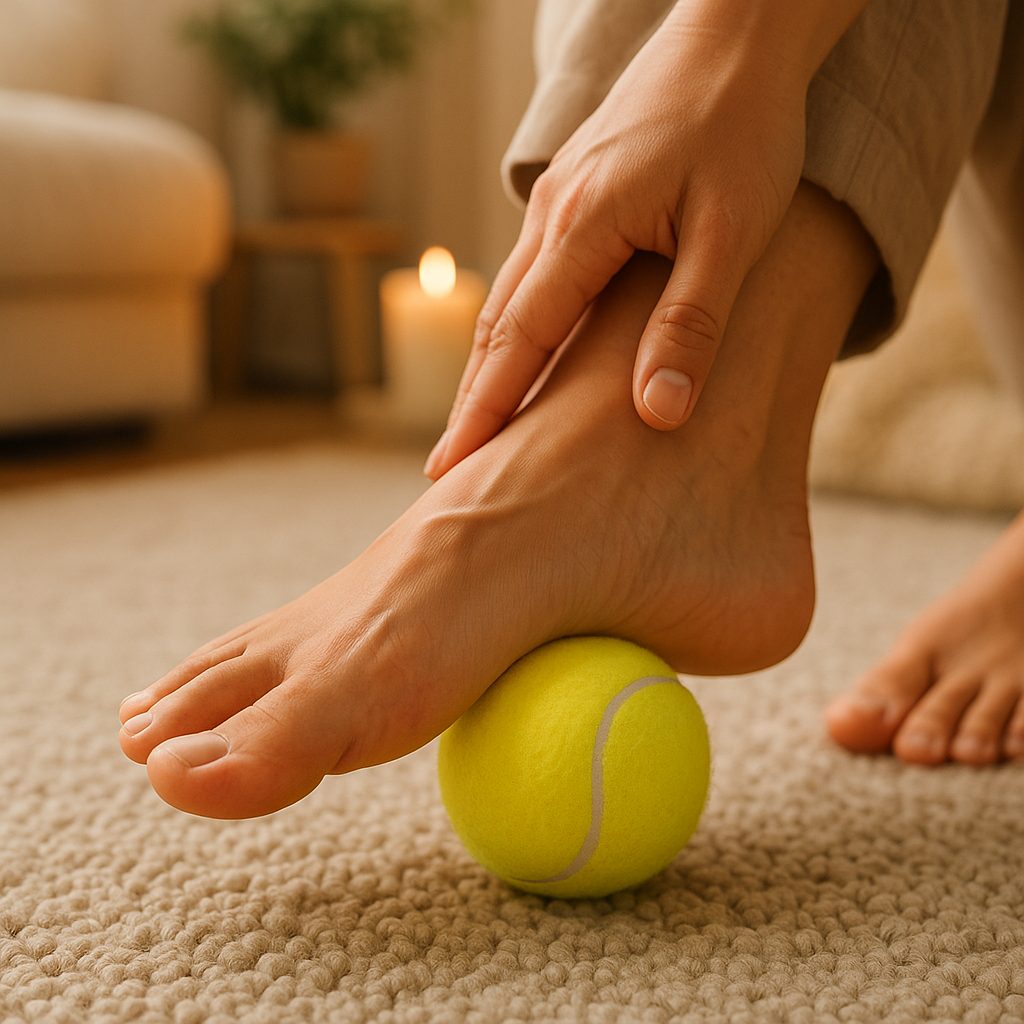
- Roll a tennis ball under the sole of the foot, applying light pressure.
- Gently pinch the toes, one by one, to separate the small muscles.
- Make large circles with the ankle, first in one direction, then the other.
Hot/Cold Alternation
Thermotherapy promotes vasodilation, while cold temporarily tightens the vessels to restart the venous pump upon returning to room temperature. Proceed as follows:
- Apply a hot water bottle or a warm foot bath (37–40 °C) for 5 minutes.
- Switch to cool water (15–18 °C) for 30 seconds.
- Repeat twice in a row, then let the feet rest until they regain their natural warmth.
Improving Blood Circulation
Adapted Physical Activity
Walking is one of the best ways to maintain good circulation in the extremities. You don’t need to run a marathon: 30 minutes a day at a moderate pace is enough to activate the muscle pump. Also consider some heel-to-toe lifts, even while standing at your desk.
Shoes and Posture
Unsuitable shoes can compress the arch or the Achilles tendon. Choose a pair that offers good ankle support, a flexible sole, and enough space for the toes. Also avoid staying still for too long: alternate between sitting and standing to vary pressure points.
When to Consult a Professional
Warning Signs
If the tingling persists for several days, becomes painful, or is accompanied by muscle weakness, it is better to make an appointment. Prolonged numbness may reveal a more serious neuropathy, lumbar stenosis, or a neurological deficit that needs investigation.
Medical Assessment and Treatments
During a consultation, the practitioner may prescribe:
- Blood tests to check blood sugar and vitamin levels.
- Imaging (MRI, ultrasound) to rule out nerve compression.
- A neurophysiological assessment (electromyogram) if neuropathy is suspected.
Treatment will then vary between rehabilitation, posture adjustment, and, if necessary, medication to relieve inflammation or pain.
Daily Prevention
- Change position every 30 minutes when sitting.
- Take active breaks: walk a few steps, lift your heels.
- Maintain good hydration: water promotes blood fluidity.
- Practice relaxation activities (yoga, pilates) to relax muscle chains.
FAQ
Why do my feet go numb upon waking?
During the night, a too rigid position can compress a nerve. A poorly placed pillow or a mattress that is too firm often plays a role.
Can diabetes be the cause?
Yes, excess sugar in the blood gradually damages peripheral nerves, causing tingling and numbness.
How to distinguish a benign numbness from an emergency?
A simple tingling that disappears after a few minutes often results from poor posture. If the sensation persists, intensifies, or is accompanied by weakness, it is a warning not to be ignored.
Do vitamin supplements really help?
In case of deficiency (B12, B6), supplementation can accelerate nerve recovery. It should always be decided after blood tests and medical advice.