| Key Points | Details to Remember |
|---|---|
| 📊 **Initial Objective** | **Simplify** nutritional information via a color code (A green to E red) and letter |
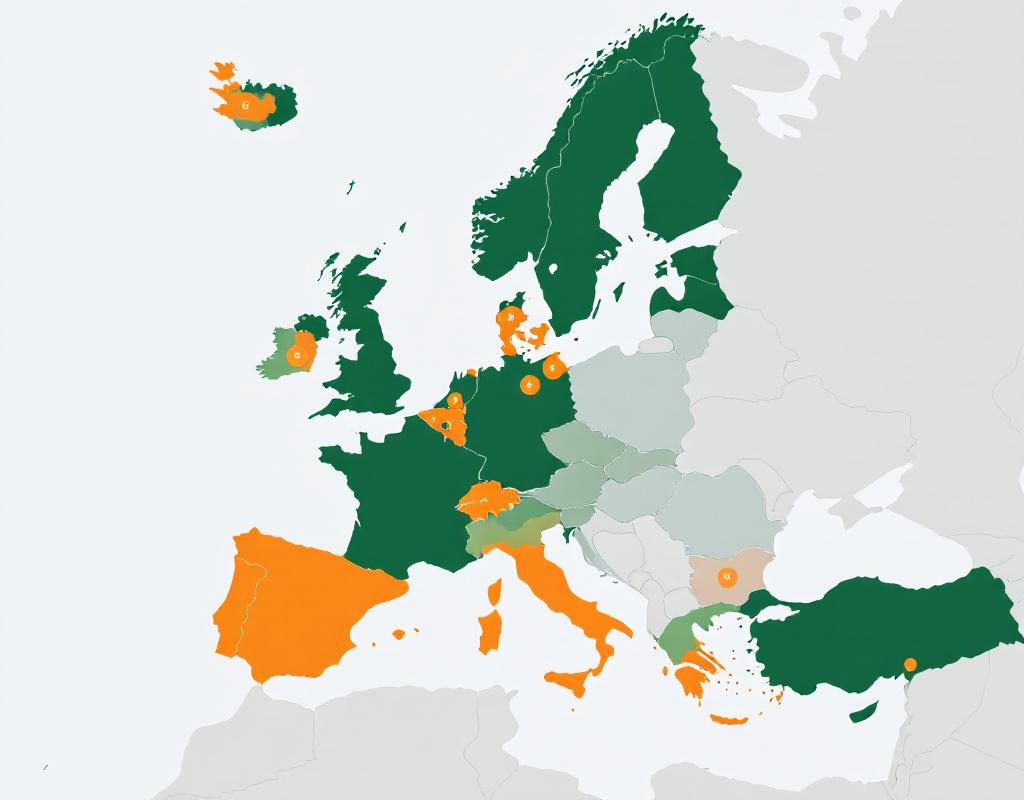
| 🌍 **Current Adoption** | **7 European countries** use it, but Italy and 6 Member States still resist |
| ⚠️ **Recurring Criticisms** | **Unfair penalization** of PDO cheeses and unprocessed vegetable oils |
| 🔄 **Changes 2025** | **Revised algorithm** better integrating saturated fats and added sugar |
| 🎯 **Key Issues** | **European harmonization** against the agri-food lobby and **consumer decoding** |
| 📈 **Proven Effectiveness** | **+18%** healthy products chosen when the logo is visible (Public Health France study) |
Since its launch in 2017, the Nutri-Score has divided shelves and opinions. This simplified nutritional labeling system, recognizable by its colored dots, promised a revolution in our food choices. Seven years later, on the eve of a major revision planned for 2025, it is time for a nuanced assessment. Between undeniable successes in certain aisles and fierce resistance from several Member States, the European Nutri-Score adventure resembles a nutritional detective novel. Will the announced algorithm adjustments manage to reconcile Italian cheesemakers and French nutritionists? How to prevent the labeling from becoming a distorted marketing tool? And above all, will it finally be possible to standardize its deployment across the EU?
Sommaire
The contrasting impact of Nutri-Score since 2017
The first impact studies conducted by Public Health France reveal tangible behavior changes. In equipped supermarkets, sales of products rated A or B jumped by 15% while those of D and E fell by 8%. A small revolution for a simple logo! Yet, these figures mask less glorious realities. Only 55% of eligible products voluntarily display the logo – the others prefer nutritional shadowing. The agri-food industry has developed sophisticated avoidance strategies:
- Minimalist reformulations to gain a letter without real nutritional improvement
- Creation of “green” ranges parallel to usual products
- Targeted communication on positive nutrients to divert attention from the overall score
The thorny case of traditional products
Extra virgin olive oil, a pillar of the Mediterranean diet, is stuck with a bright red D while some light sodas get a B. This paradox sums up the limits of the first version of the algorithm. The scientific committee now recognizes that some criteria unfairly penalized foods that are nonetheless recommended. French PDO cheeses fought a fierce battle, arguing that their nutritional density and cultural role were ignored. “You don’t consume a Camembert like breakfast cereals,” recently tempered a Normandy farmer before the European Commission. This mismatch with local food specificities fuels resistance from several countries.
2025 Revision: what will really change
Version 4.0 of Nutri-Score, whose technical details will be finalized by the end of 2024, tackles three major shortcomings head-on:
- Differentiation of natural/added sugars: The current calculation penalizes fructose from fruit as much as industrial sucrose
- Revaluation of unsaturated fats: Nuts, avocados, and vegetable oils will benefit from specific treatment
- Protein weighting: Reduction of the bonus for ultra-processed products enriched with milk or soy powder
New evaluation grid: what now counts
The points system evolves significantly. Salt content becomes the most penalizing criterion, followed by free sugars (defined by WHO as all added monosaccharides and disaccharides). Fiber weight increases by 30% in the calculation, while the presence of sweeteners will automatically trigger a downgrade by one letter. “The goal is to align Nutri-Score with the latest PNNS recommendations,” says a member of the scientific committee. Early simulations show that 23% of products would change category – generally dropping one level.
| Criterion | Current weighting | 2025 weighting |
|---|---|---|
| Added sugar | 1 point/g | 1.5 points/g |
| Salt | 2.5 points/g | 3 points/g |
| Fiber | 0.9 points/g | 1.2 points/g |
| Proteins | 1.6 points/g | 1.2 points/g |
| Sweeteners | Not counted | -10 points |
The underground battles of European harmonization
Behind the technical adjustments plays a colossal political tug-of-war. The European Commission is working on a single mandatory labeling for 2026, and Nutri-Score is the favorite. But opposition led by Italy – supported by Greece, the Czech Republic, and Cyprus – has submitted a counter-proposal: Nutrinform Battery. This battery system indicates the contribution of a portion to daily intakes. “Nutri-Score demonizes ancestral foods under the pretext of simplification,” accuses the Italian Minister of Agriculture. Yet an independent study showed that only 12% of consumers correctly understood Nutrinform compared to 68% for its French rival.
The logo war hides a conflict between two visions: the pure health approach versus the preservation of national food heritages.
Industrial lobbying: the invisible battle
EU transparency register archives reveal that agri-food giants have spent more than 30 million euros lobbying on this file since 2020. Their favorite targets: criteria concerning breakfast cereals (often rated C despite their sugar) and ready meals. Some even funded biased studies comparing Nutri-Score to… total absence of labeling! “When a multinational spends €500,000 to influence a standard, it anticipates much greater losses,” analyzes a Brussels consultant speaking anonymously.
Concrete perspectives for consumers
With the 2025 revision, will shopping become simpler? Probably not immediately. During the transition period (2025-2026), the two systems will coexist, creating temporary confusion. Food scanning apps will become essential to decipher old and new ratings. The UFC-Que Choisir association already recommends:
- Favoring unprocessed products, little affected by these classifications
- Comparing scores only within the same product family
- Being wary of “score improvements” without ingredient changes
The ultimate challenge goes beyond the color of a logo. It is about whether Europe will manage to reverse the obesity curve – which now affects 23% of adults – without sacrificing its gastronomic traditions. The new Nutri-Score is just a tool, but its future credibility will be decided in the coming months.
FAQ: Nutri-Score 2025
When will the new version be mandatory?
The revision comes into effect in January 2025, with an 18-month transition period. Products will have until June 2026 to adapt their packaging.
Will my yogurt rated A become a B?
Possible. Products high in added sugar or sweeteners are most likely to lose points. Fruit yogurts could drop to B, while plain ones would increase their advantage.
Why does Italy refuse Nutri-Score?
Rome considers that the system unfairly penalizes Parmesan, olive oil, and Italian cured meats, central elements of its UNESCO-listed culinary heritage.
Will restaurants have to display it?
No, Nutri-Score remains limited to packaged products. A separate system is under study for catering, but its technical complexity delays its implementation.
Can you really compare a soda and a cheese?
No, and that is precisely one of the pitfalls to avoid. Nutri-Score is only valid for comparing similar products (e.g., two frozen pizzas or two packs of biscuits).