
| Key Points | Details to Remember |
|---|---|
| 🍊 Definition | Water-soluble molecule essential for collagen synthesis and immune function |
| 💪 Benefits | Powerful antioxidant and support for energy metabolism |
| 🤒 Stomach Aches | Irritation of the gastric mucosa in cases of high acidity or sensitivities |
| 🌀 Various Forms | Sieved or liposomal to reduce acidity |
| 🕸 Timing of Intake | During meals or in several small doses |
| ⚠️ Adjustments | Split the dosage and combine with neutral foods |
Vitamin C is often associated with preventing colds or vitality, but it can prove irritating for some sensitive stomachs. To be honest, the issue is not to banish this micronutrient, but rather to understand why it sometimes irritates the gastric mucosa and especially how to benefit from it without discomfort. This article deciphers the mechanisms behind stomach aches and offers concrete ways to avoid them.
Sommaire
Why Vitamin C Can Upset the Stomach
At the heart of the phenomenon: the intrinsic acidity of ascorbic acid. Like any acid, vitamin C has the ability to release ions that can weaken the stomach’s protective barrier. In some people, this additional stress triggers a burning sensation or digestive cramps. This does not mean that vitamin C is dangerous, but that it acts in an environment that is already acidic or even irritated.
Acidity and Gastric Mucosa
The inner wall of the stomach is protected by a mucus film, a shield against hydrochloric acid necessary for digestion. When a high concentration of ascorbic acid is introduced, this film can temporarily become unbalanced. Then sensations of tingling or burning are observed, sometimes accompanied by reflux if the esophageal sphincter is too relaxed. It’s a bit like sprinkling lemon on a wound: it stings.
Individual Sensitivity
Some people react disproportionately to acidity due to the basal pH of their stomach or functional hypersensitivity. At-risk profiles include those suffering from gastroesophageal reflux, chronic gastritis, or simultaneous use of anti-inflammatory drugs. The effect is neither universal nor severe, but it deserves adjusting one’s practice.
Influential Formulations and Dosage
The form in which vitamin C is ingested weighs heavily in the balance. One might think a standard tablet will do, but the picture becomes complicated as soon as dissolution rates, acidity, and bioavailability are compared.
Forms Available on the Market
- Pure ascorbic acid: high dosage, rapid absorption, and acidity spike.
- Sodium or calcium ascorbate: buffered version, less harsh on the mucous membrane.
- Liposomal vitamin C: microcapsules wrapped in lipids, gradual absorption and neutral pH.
- Effervescent formulations: often more acidic due to added citric acid.
It is observed that ascorbates or liposomal forms offer an interesting compromise between tolerance and efficacy. The liposomal form, in particular, mimics natural distribution via bile, limiting direct stress on the gastric lining.
High vs Low Dosage
Vitamin C follows saturation kinetics: beyond a certain amount ingested in one dose, the excess will be excreted in the urine. However, this surplus unnecessarily passes through an acidic phase. A moderate dose (200 to 500 mg) spread throughout the day proves just as beneficial, even better for comfort.
Tips for Better Tolerance
Rather than giving up on vitamin C, adjust your strategy. A few simple steps often suffice to turn a dreaded intake into a painless routine.
Split the Doses
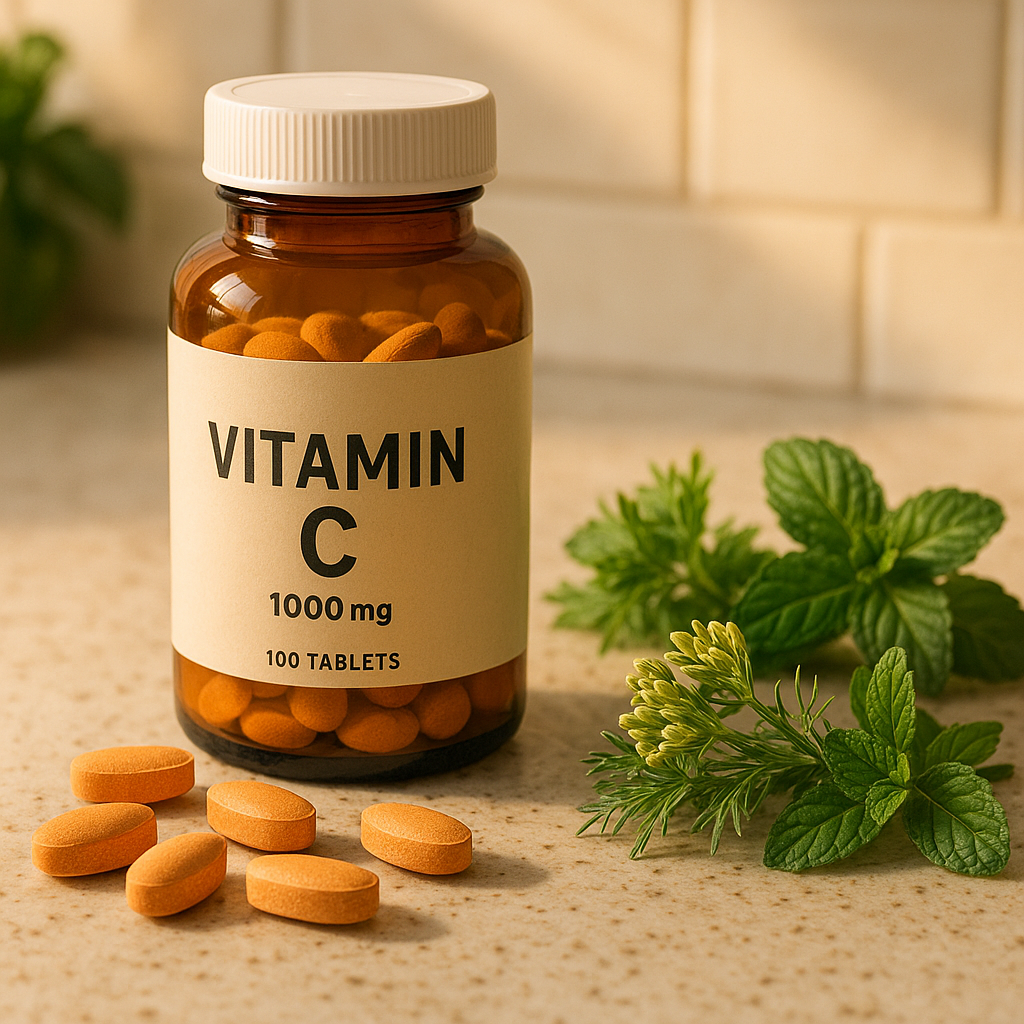
Dividing your daily intake into two or three doses limits excess concentration in the stomach. Instead of 1,000 mg at once, opt for 3 × 300 mg. You avoid saturation and acidity spikes while ensuring continuous distribution for the cells.
Favor Buffered Forms
Ascorbates (sodium, calcium) have a pH close to neutral. Their use significantly reduces the burning sensation. If you have tried pure ascorbic acid without success, switch to an equivalent dose of calcium ascorbate: tolerance is often surprisingly better.
Combine with Neutral Foods
A tablet taken after a meal or accompanied by yogurt lightens the acid load. Proteins and dietary fats partially neutralize the effect of ascorbic acid, an ideal client for an already buffered environment. Cherry on the cake, this also promotes slower and thus gentler absorption.
When to Adjust or Consult
If, despite these adjustments, the burning persists, it is better to check with a healthcare professional. An underlying gastritis, chronic reflux, or a drug interaction can amplify discomfort. Before feeling guilty, remember that vitamin C remains one of the most studied and safe micronutrients – sometimes just a simple adjustment of the form or intake schedule is enough.
Frequently Asked Questions
Does vitamin C systematically cause stomach pain?
No, this reaction depends on the ingested form and individual sensitivity. Pure ascorbic acid tablets are the most likely to cause irritation.
Which form of vitamin C is the gentlest on the stomach?
Buffered ascorbates and liposomal formulas limit acidity. They maintain a more neutral pH at the time of dissolution.
How to distribute the daily dose?
Split your intake into two or three doses (e.g., 200–300 mg morning, noon, and evening) to avoid acidity spikes and ensure continuous release.
Can vitamin C be taken with a meal?
Yes, taking your supplement just after a meal allows food components to mitigate the direct acidic effect on the mucosa.
When should you see a doctor?
If you experience persistent pain, burning that does not subside, or more frequent reflux despite adjusting the form and dosage.