Sommaire
Top flowers that repel mosquitoes to put in your garden
TL;DR : Yes, certain flowers and aromatic plants release molecules (citronellal, linalool, geraniol, nepetalactone, thymol…) that help keep mosquitoes at bay — especially at close range. Plant them en masse near living areas (terrace, windows, dining area), crush some leaves if needed, and combine with the elimination of stagnant water. Alone, a plant does not replace an approved skin repellent nor a mosquito net — think “a bouquet of solutions.”

Mosquito-repellent flowers: myth or reality?
In nature, many plants produce essential oils that disrupt mosquitoes’ olfactory sensors. In the garden, this effect is real but very localized (generally within less than a meter, sometimes more if you crush the leaves). The scent fades with wind and heat, hence the importance of multiplying the plants and placing pots very close to the areas where people sit.
Remember: plants help, but they do not replace structural measures (no stagnant water, mosquito nets, fans) nor an approved skin repellent if you are at risk (tiger mosquito zones, travel).
Top 15 flowers & aromatics that help repel mosquitoes
Here is a proven selection in a temperate climate (mainland France). Each profile indicates the key scent (dominant molecules), the strengths, the limitations, and a planting tip.
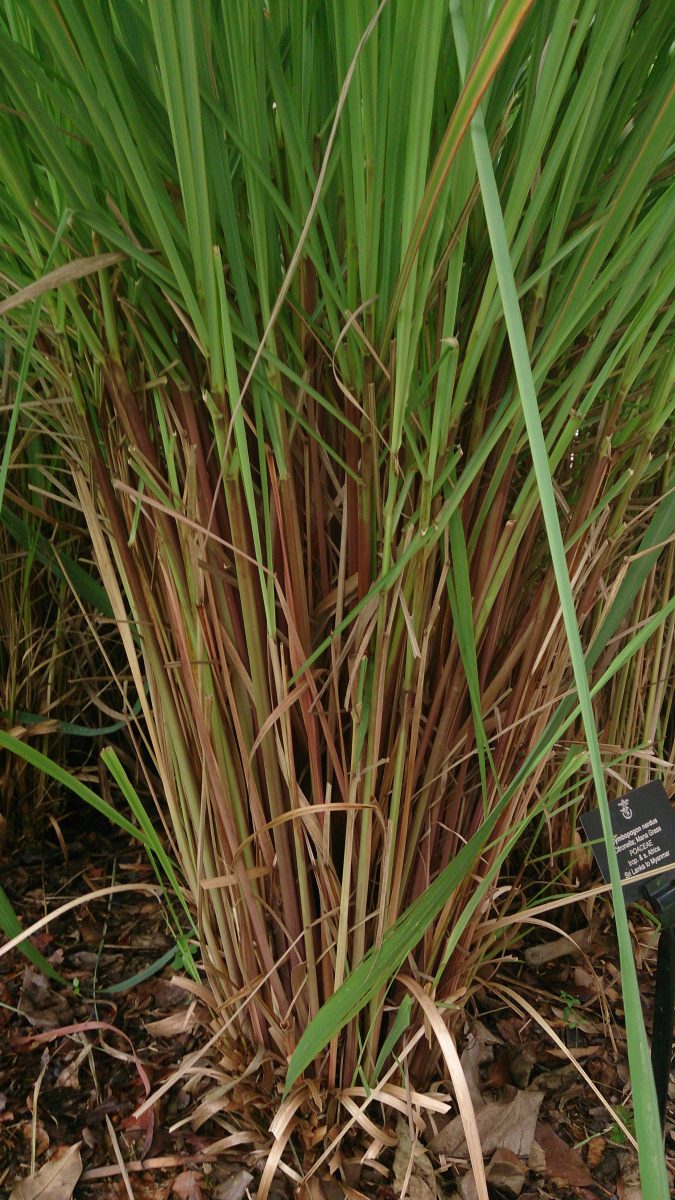
1) Lemongrass (Cymbopogon nardus / citratus)
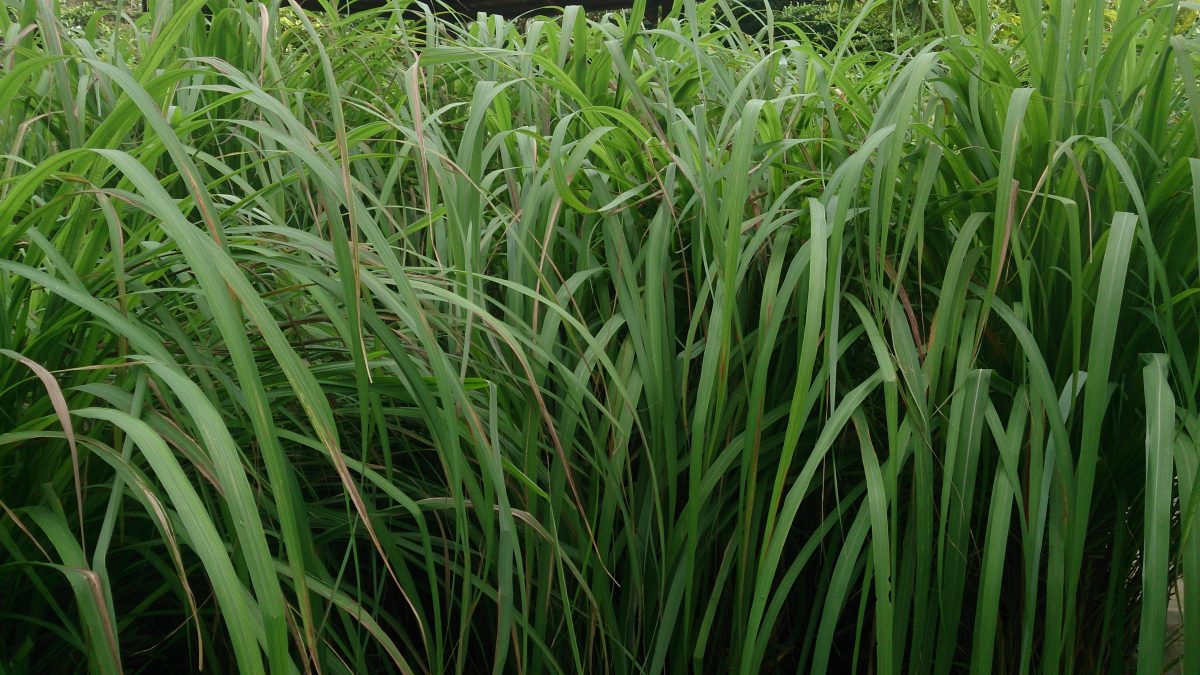
- Key scent: citronellal, citronellol, geraniol.
- Strengths: strong smell when crushed, fast growth in pots, exotic look.
- Limitations: frost-sensitive (bring indoors in winter); very localized effect if not crushed.
- Where to plant: large pots at the edge of the table/garden lounge; full sun.
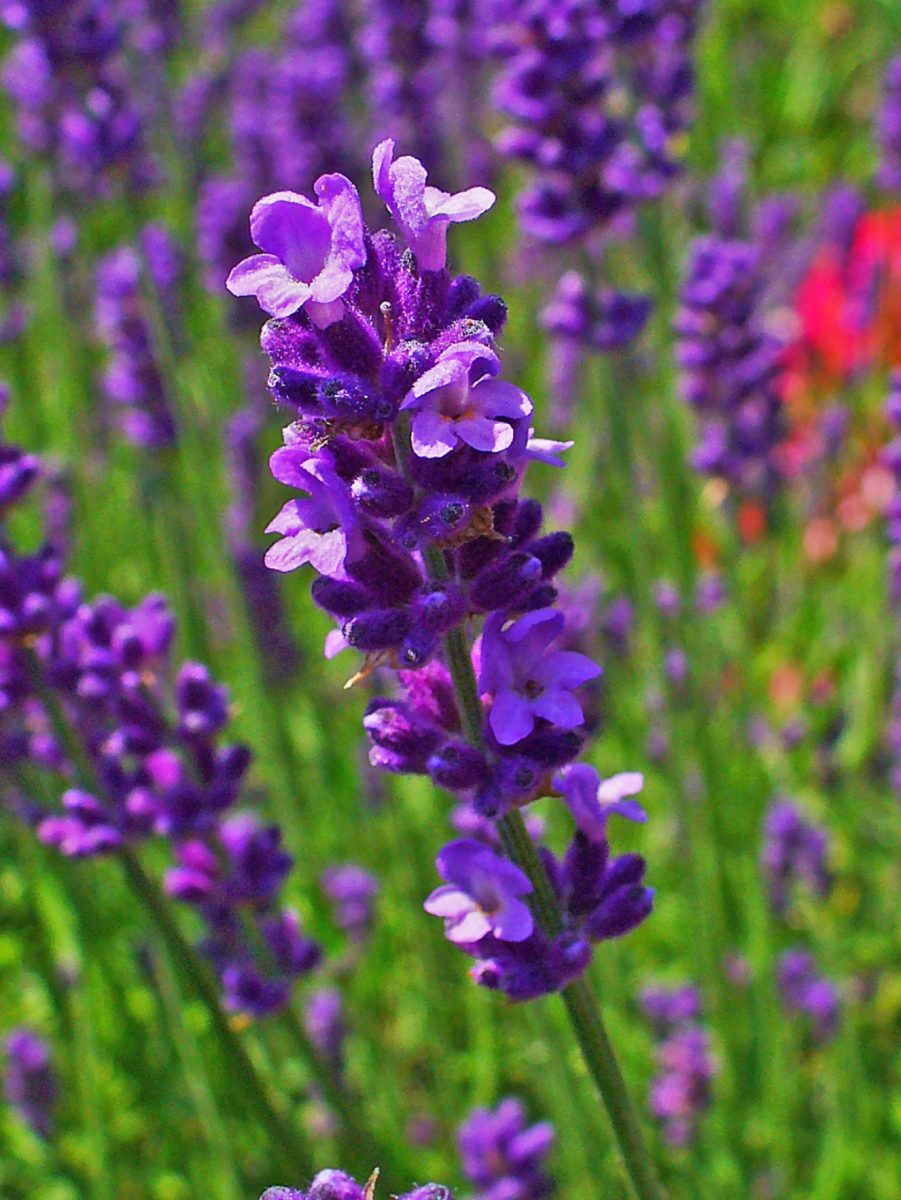
2) True lavender (Lavandula angustifolia)
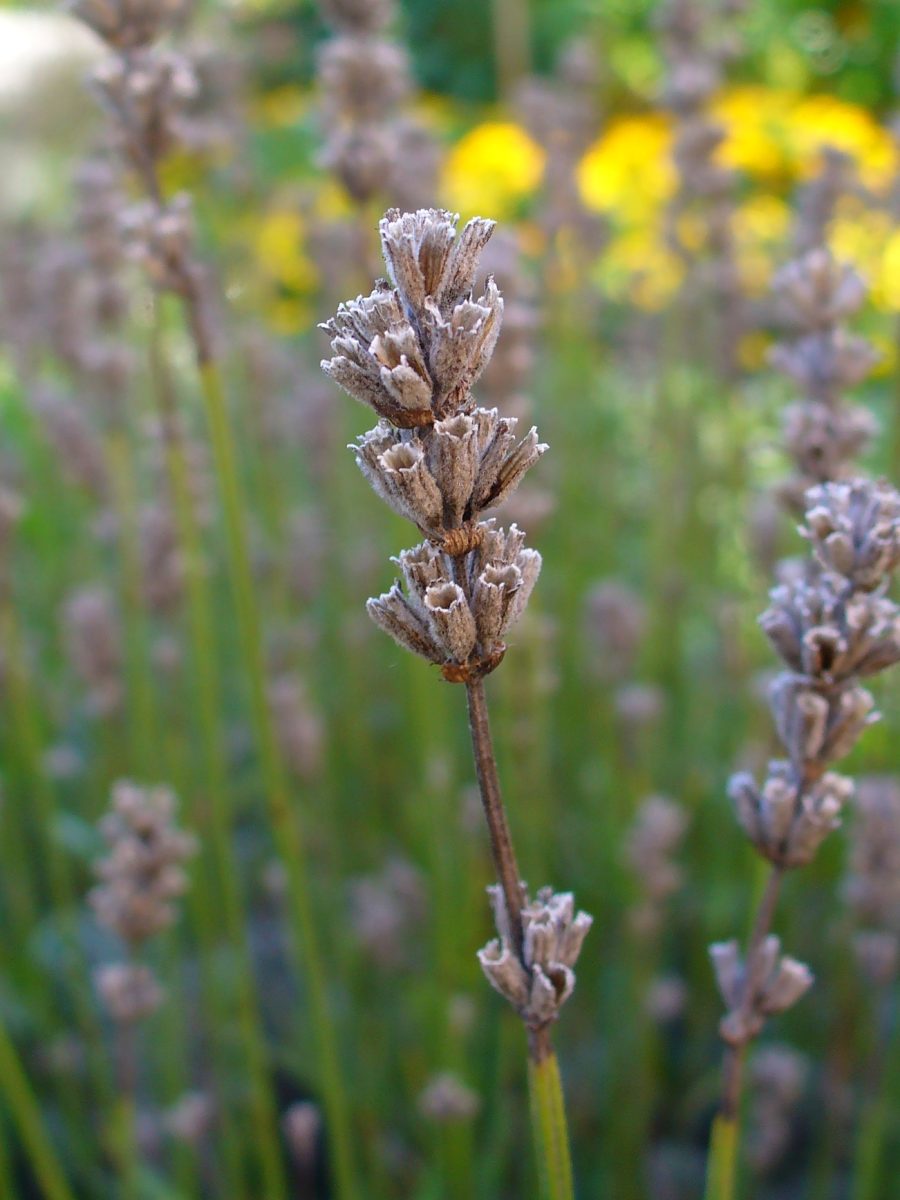
- Key scent: linalool, linalyl acetate.
- Strengths: drought tolerant; melliferous; good for border structures.
- Limits: heavy poorly drained soils = decline; prune after flowering.
- Where to plant: low hedges around the terrace; warm and well-drained exposure.
3) Marigolds / French Marigolds (Tagetes patula)
- Key scent: thiophenes, limonene.
- Advantages: long flowering, very easy to sow, colorful borders.
- Limits: scent not always appreciated; seasonal (annual).
- Where to plant: in masses along paths/dining corners; renew each year.
4) Lemon Balm (Melissa officinalis)
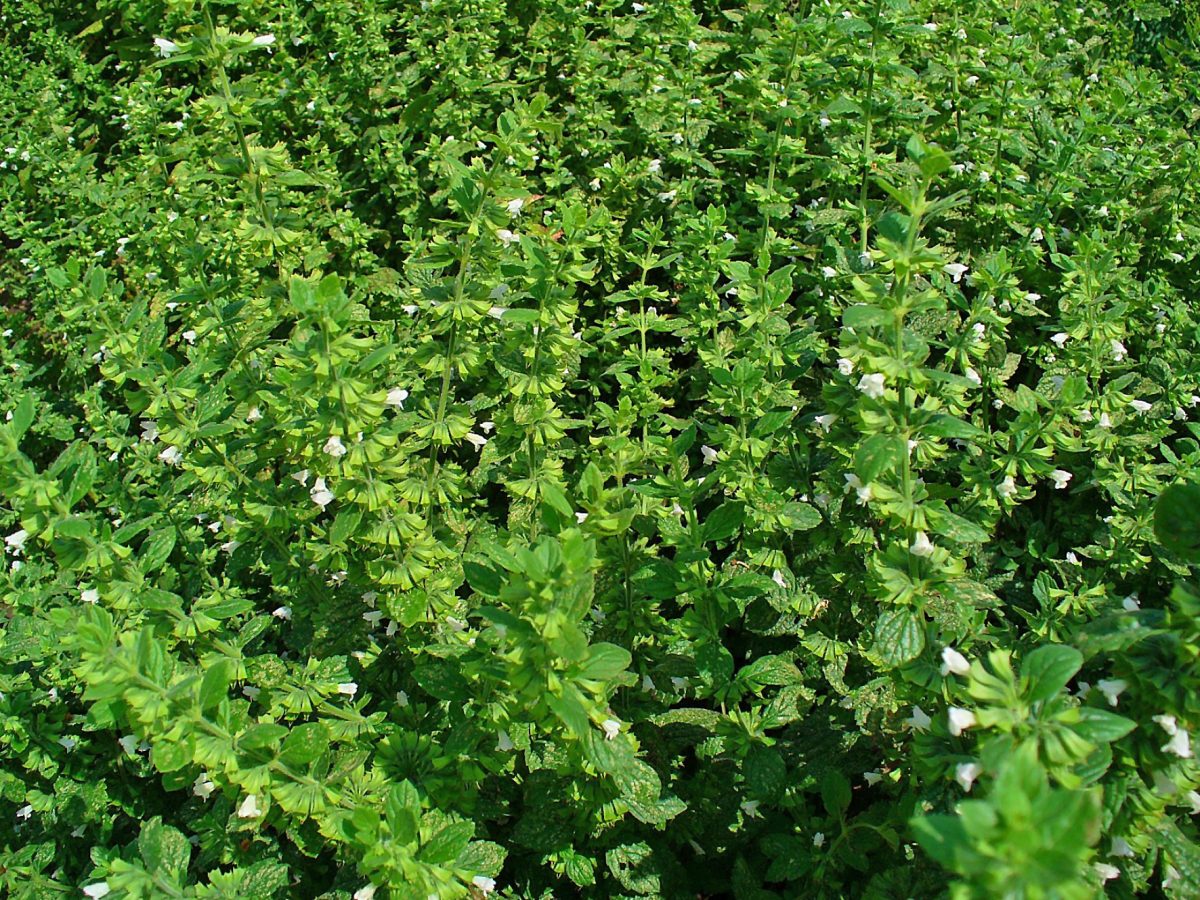
- Key scent: citral, geraniol.
- Advantages: easy, spreads by runners (quick filling), herbal teas.
- Limits: can become invasive; subtle scent without overwhelming.
- Where to plant: containers near seating; partial shade/soft sun.
5) Catnip / “Cat Herb” (Nepeta cataria)
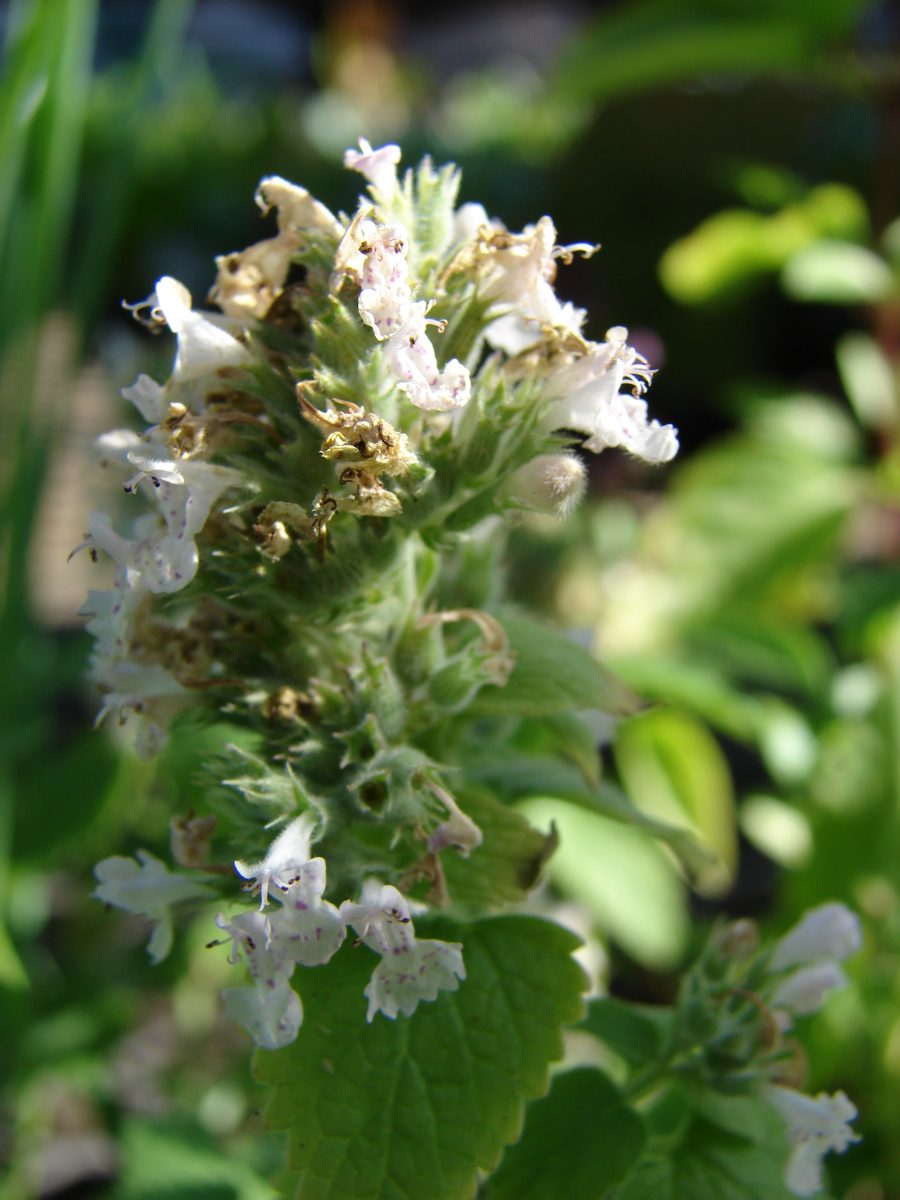
- Key scent: nepetalactone.
- Advantages: hardy, melliferous, beautiful white/purplish flowers.
- Limits: may attract cats; cut back after flowering.
- Where to plant: sunny borders, rock gardens, pots at the base of benches.
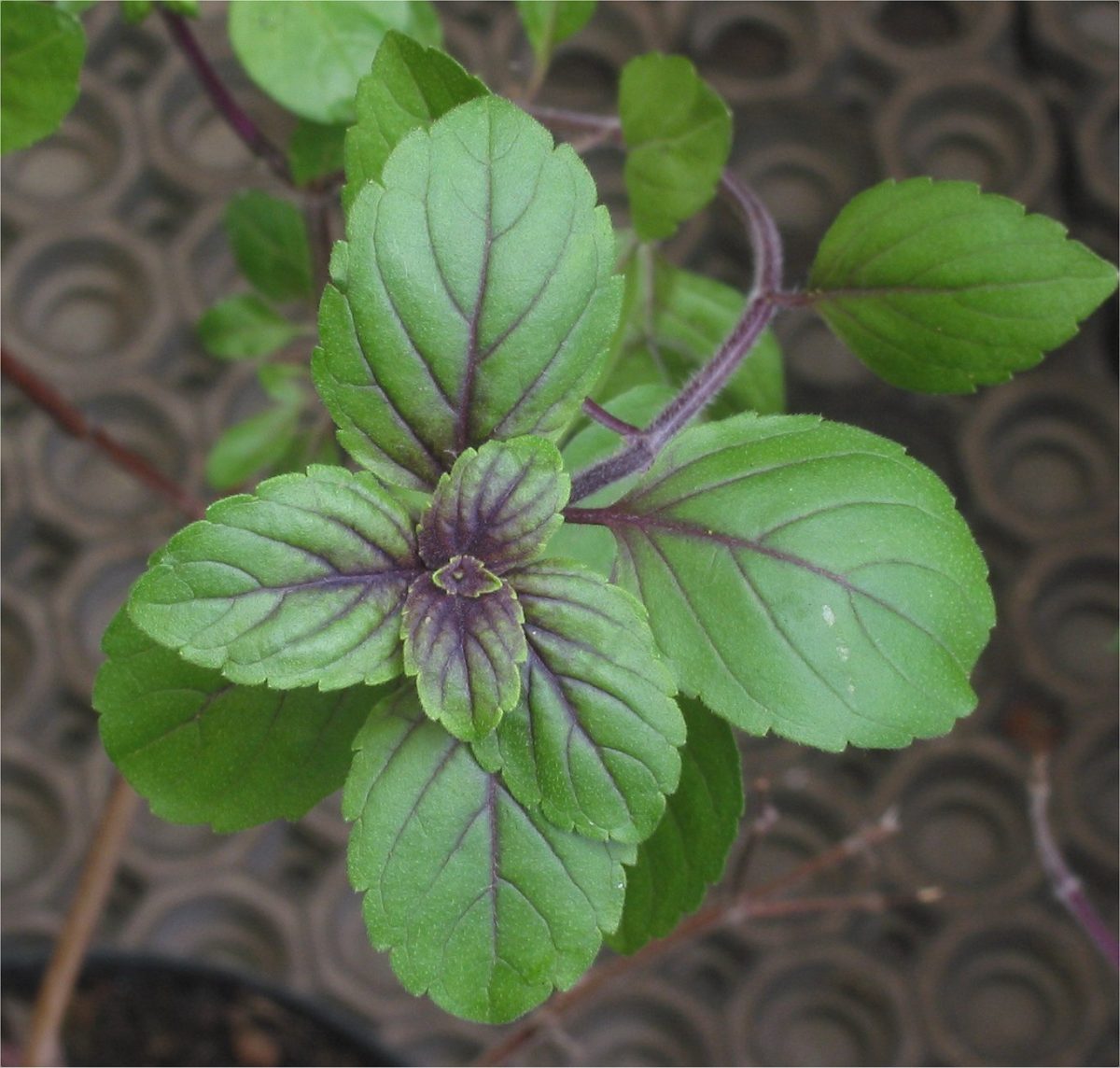
6) Basil (Ocimum basilicum, lemon, cinnamon varieties…)
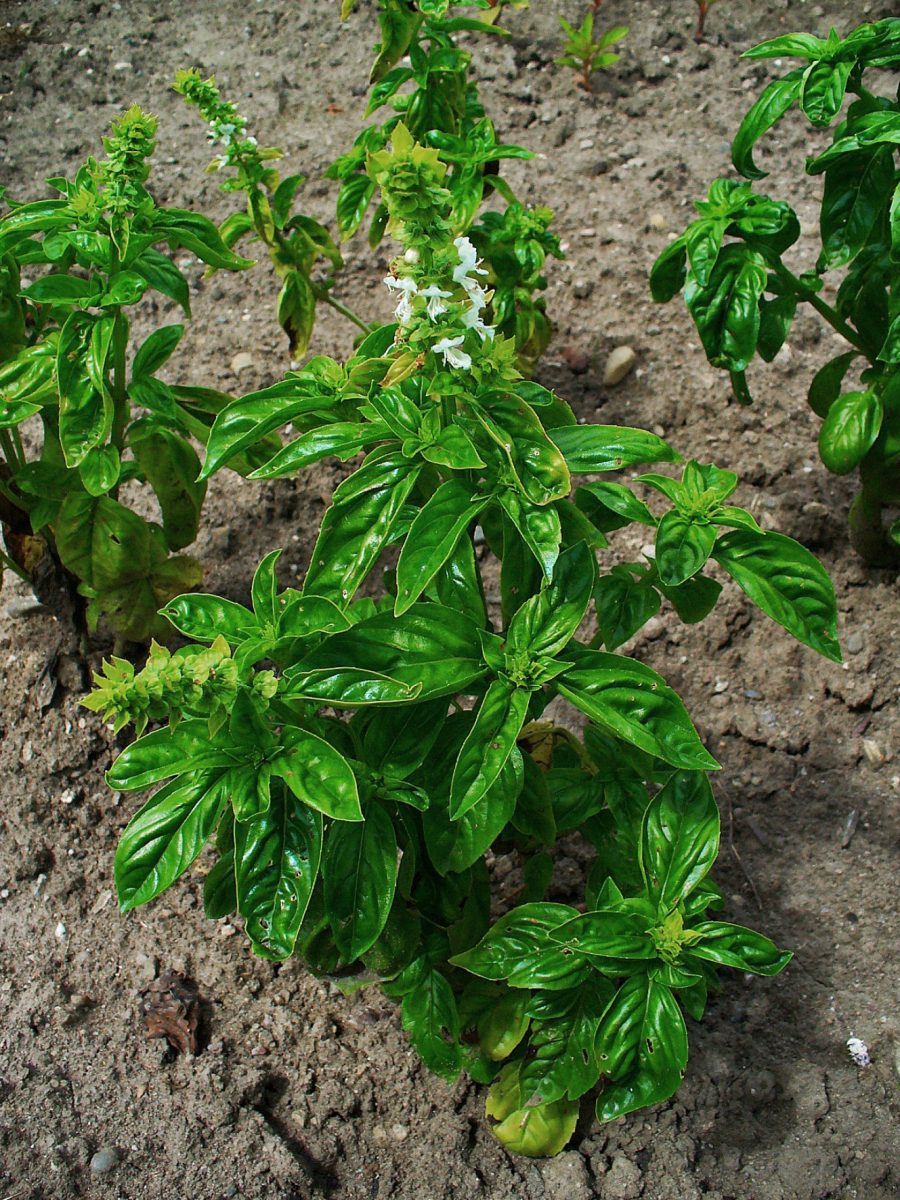
- Key scent: linalool, eugenol (depending on varieties).
- Advantages: perfect in containers on tables; culinary use.
- Limits: sensitive to cold; regular watering; renew sowings.
- Where to plant: pots on table/outdoor work surface, full sun but not scorching.
7) Peppermint (Mentha × piperita)
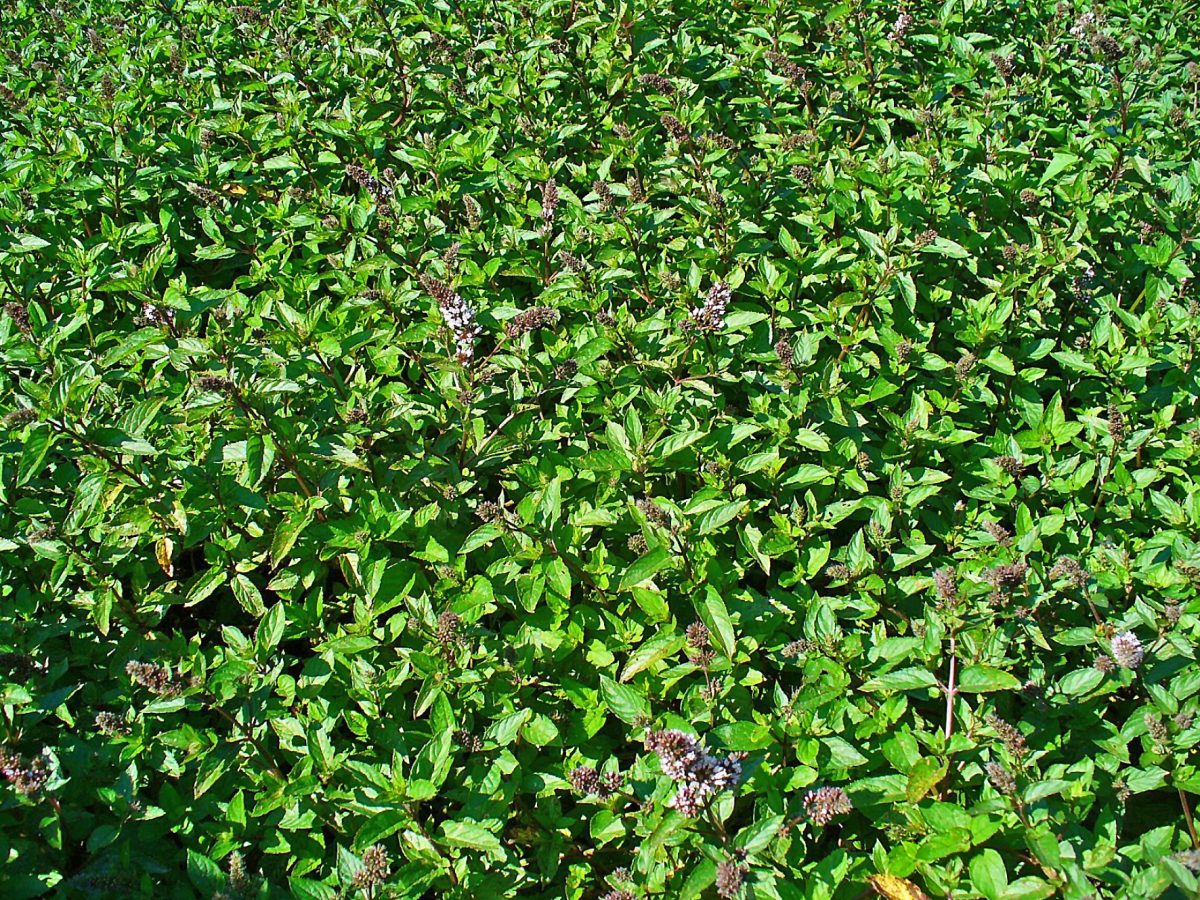
- Key scent: menthol, menthone.
- Advantages: grows quickly, easy to propagate by cuttings, drinks/infusions.
- Limitations: spreading (keep it in a pot); requires water.
- Where to plant: containers/boxes near seating areas; partial shade/soft sun.
8) Rosemary (Salvia rosmarinus)
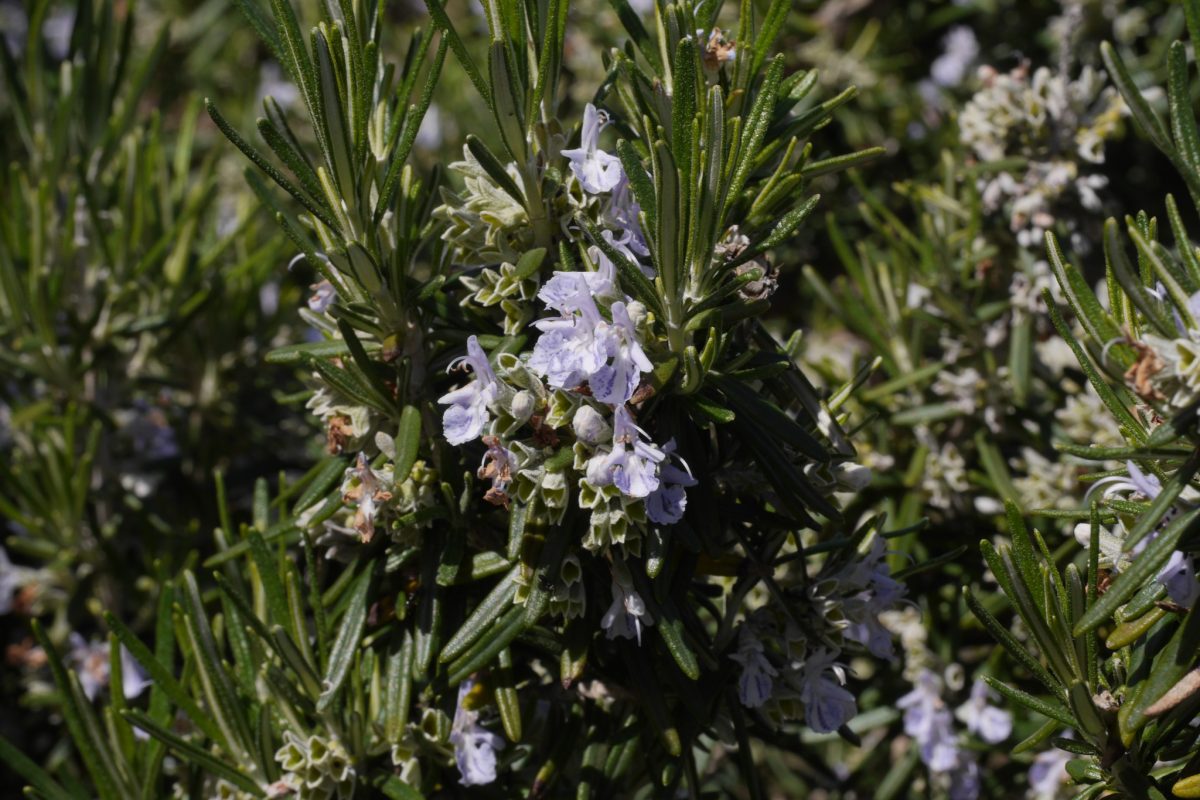
- Key scent: 1,8-cineole, camphor.
- Advantages: very frugal, drought tolerant, culinary use.
- Limitations: heavy soils = suffocation; light pruning after flowering.
- Where to plant: full sun, well-drained soils; container in a warm spot near the terrace.
9) Lemon-scented geranium (Pelargonium citronellum / ‘Citronella’)
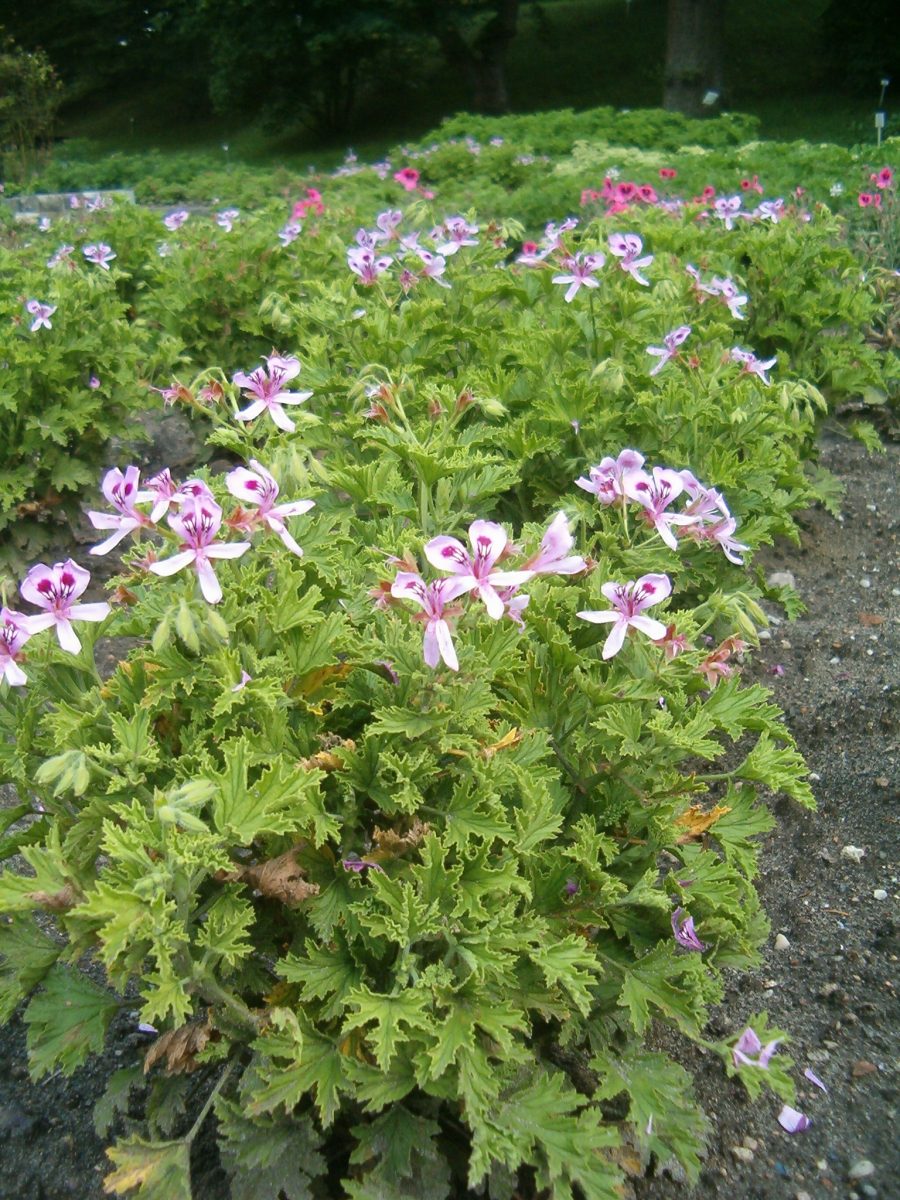
- Key scent: citronellal, geraniol.
- Advantages: ornamental, very fragrant when touched.
- Limitations: frost-sensitive (needs winter protection); mainly fragrant when crushed.
- Where to plant: window boxes at arm height, near seating areas.
10) Common thyme (Thymus vulgaris)
- Key scent: thymol, carvacrol.
- Advantages: hardy, melliferous, aromatic in cooking.
- Limitations: requires very well-drained soil; light pruning to keep compact.
- Where to plant: rock gardens, borders in full sun; containers with little watering.
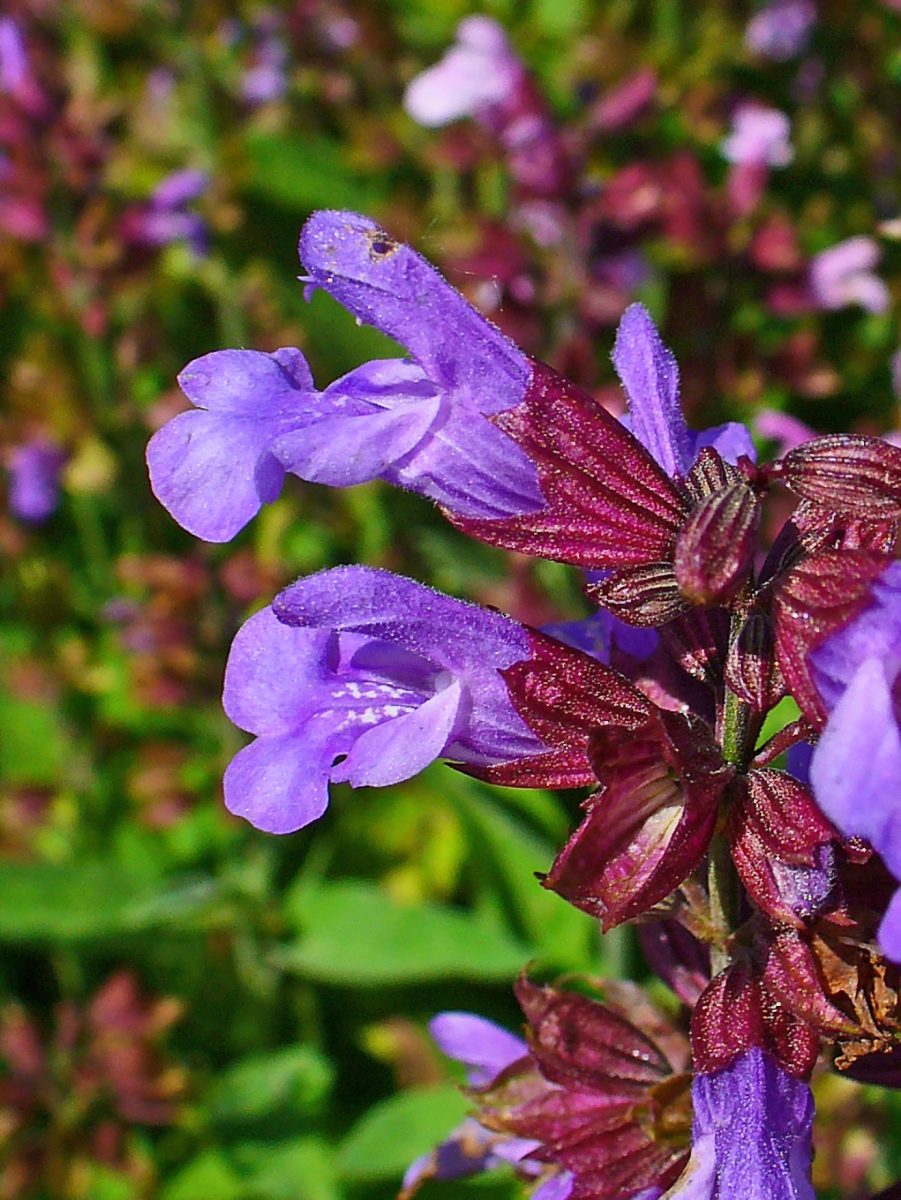
11) Common sage (Salvia officinalis)
- Key scent: thujone (very low), camphor, 1,8-cineole.
- Advantages: hardy, decorative foliage (variegated varieties).
- Limitations: hates excess water; cut back after flowering.
- Where to plant: dry beds, slopes, sunny containers.
12) Calamint (Calamintha nepeta)
- Key scent: menthone/linalool depending on ecotype.
- Advantages: cloud of small flowers for pollinators, light habit.
- Limitations: can self-seed; cut back to thicken.
- Where to plant: sunny edges, mixed pots.
13) Lemon Verbena (Aloysia citrodora)
- Key scent: citral.
- Advantages: strong scent when crushed, herbal teas.
- Limitations: semi-hardy; overwinter in cold zones.
- Where to plant: large mobile container, near seating areas.
14) Bee Balm (Monarda didyma, “bergamot”)
- Key scent: thymol, carvacrol (depending on varieties).
- Advantages: spectacular flowers, attracts pollinators.
- Limitations: possible powdery mildew; water at the base, ensure good ventilation.
- Where to plant: sunny flower beds, fresh soil.
15) Creeping Rosemary & Aromatic Mixes
Create “cocktail” planters (creeping rosemary + thyme + dwarf lavender + lemon basil + lemon-scented geranium). The blend of scents increases the “fragrant bubble” around the chairs.
Where, When and How to Plant for Effectiveness
- Proximity: place your containers less than one meter from living areas (around the table, armrests, windows).
- Flower beds and density: better to have several plants close together than a single isolated plant.
- Fragrance gestures: crush a few leaves (lemon verbena, mint, lemon-scented geranium, lemon balm) at the start of the aperitif.
- Exposure: most prefer sun (lavender, thyme, rosemary, marigolds); mint/lemon balm prefer cool partial shade.
- Watering & substrate: well-draining for Mediterranean plants (lavender/rosemary/thyme); richer and cooler for leafy plants (mint/lemon balm/basil).
- Maintenance: cut back after flowering (lavender, catmint), pinch basil, contain mints (pots).
Comparison Table (scents, maintenance, exposure)
| Plant/Flower | Scent & Key Molecules | Perceived Effectiveness* | Exposure | Maintenance | Quick Tip |
|---|---|---|---|---|---|
| Lemongrass (Cymbopogon) | Citronellal, geraniol | +++ (close proximity) | Sun | Bring indoors for winter | Crush 2–3 leaves on the table |
| Lavender (L. angustifolia) | Linalool, linalyl acetate | ++ | Sun, well-drained soil | Light pruning | Low hedge around the terrace |
| Marigold (T. patula) | Thiophenes, limonene | ++ | Sun | Annual, regular watering | Plant in mass at borders |
| Lemon balm | Citral, geraniol | ++ (on contact) | Partial shade | Can spread by runners | Keep in a pot |
| Nepeta (catnip) | Nepetalactone | ++ | Sun | Cut back after flowering | Borders near benches |
| Basil | Linalool, eugenol | + to ++ | Mild sun | Watering, pinching | Pots on the table |
| Peppermint | Menthol, menthone | + to ++ | Partial shade | Spreading | Keep in a container |
| Rosemary | 1,8-cineole, camphor | + | Sun, dry | Very low maintenance | Dry borders |
| Lemon geranium | Citronellal, geraniol | ++ (on contact) | Sun/partial shade | Overwinter | Window boxes at hand height |
*Perceived effectiveness: general indication at close range, varies according to climate, wind, planting density, and individual sensitivity.
Limits & Precautions
- Limited range: without crushing/low wind, the effect is close range. Hence the importance of densifying and placing very close to people.
- Allergies & skin: do not apply pure essential oils on the skin; some varieties are dermo-irritating. Prefer approved repellents (IR3535, icaridin, citriodiol/PMD, DEET as needed).
- Animals & children: pennyroyal (Mentha pulegium) is toxic — avoid; monitor ingestion of leaves by young children/animals.
- Environment: an outdoor fan disrupts mosquito flight and disperses CO₂ — very effective as a complement.
- Standing water: saucers, gutters, poorly sealed collectors, children’s play areas… eliminate all water for 5–7 days (larval cycle).
The winning anti-mosquito combo (plants + actions + tools)
- Plants/flowers: install 3–5 varied containers (lemongrass, lemon geranium, lemon balm, mint, lavender) around the table.
- Habitat: eliminate all standing water; clean gutters, empty saucers.
- Barriers: window/door mosquito nets, bed nets if needed.
- Comfort: outdoor fan (constant light breeze).
- Protection: approved skin repellent according to the situation (travel, tiger mosquito) + covering clothing at dusk.
FAQ — Anti-mosquito flowers & plants
Can plants replace a skin repellent?
No. They help nearby (a few dozen centimeters to 1 m), but they do not protect like an approved repellent (IR3535, icaridin, DEET, citriodiol/PMD) nor like a mosquito net.
Where should I place my containers for it to work?
Right next to you: around the table, at the base of chairs, on window sills, in terrace corners (not at the back of the garden).
Which plant has the most “striking” smell against mosquitoes?
Lemon-scented aromas are the most notable (lemongrass, lemon geranium, lemon verbena, lemon balm). Catnip (Nepeta) is also interesting.
Are citronella candles effective?
They scent the air at very short range. Place them in addition to a density of plants and a fan — but do not rely on them alone.
Are there any risks for animals?
Avoid pennyroyal (Mentha pulegium) which is toxic. Monitor animals ingesting leaves; catnip attracts cats.
How much does a plant-based “anti-mosquito pack” cost?
From about ~40–80 € for 4–6 plants in pots + 2 containers + potting soil. Expect more with large containers and already mature plants.